Low beam headlights make nighttime driving easier. They can lighten up the road without blinding the oncoming drivers, playing a critical role in road safety and legal compliance. Below, we will cover what a low beam is, low beam headlight types, maintenance tips, and more. So, read on.
What Are Low-Beam Headlights?
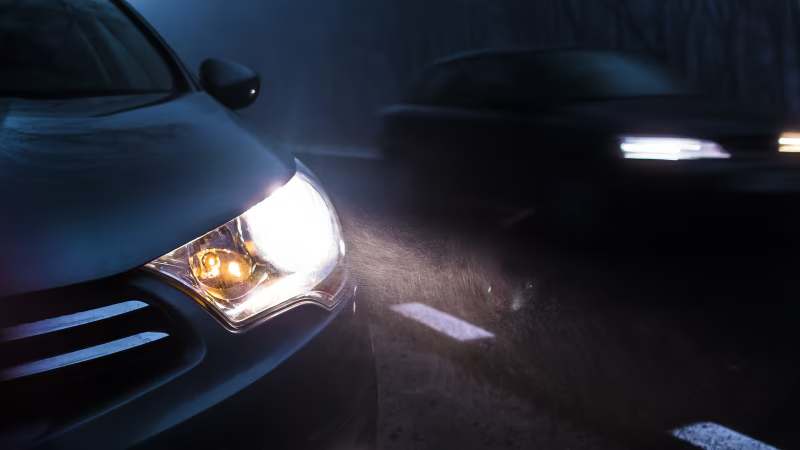
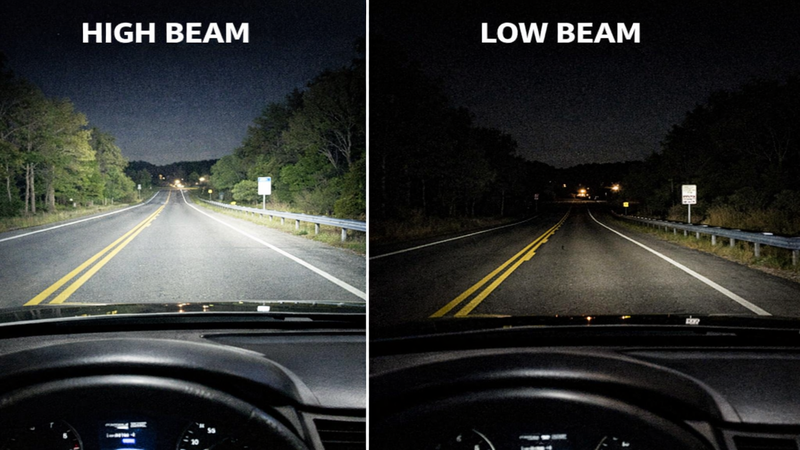
Low-beam bulbs are becoming increasingly popular for city street driving. They can illuminate the road while being angled downward. These headlights aren’t too harsh on other drivers’ eyes, thereby ensuring safe driving and clear visibility.
Low beam headlights differentiate themselves from the high beam ones by their range, glare, and purpose. The low beam headlights have a shorter range, reduced glare, and are hence safe for traffic. Alternatively, high beam headlights have a longer range, intense brightness, and, hence, aren’t safe.
To answer when to use low beam headlights, we can say that the low beams are considered safe and legal for city driving and the majority of other traffic conditions. In many regions, you are legally required to use low beams in bad weather.
Types of Low-Beam Headlight Bulbs
There are many types of low-beam headlamps. Some of the common ones are:
1. Halogen bulbs
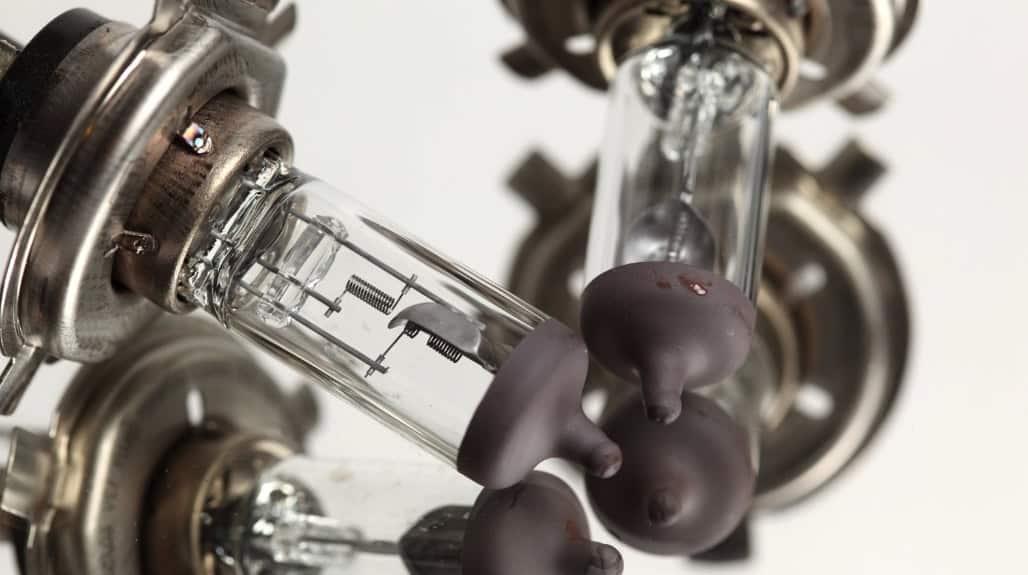
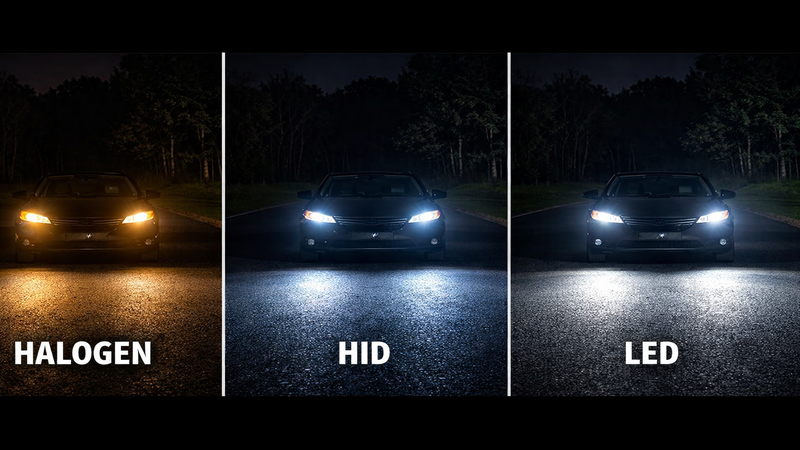
These bulbs produce light by heating a tungsten filament inside a halogen gas-filled capsule using electricity. Halogen headlight bulbs are affordable, widely available, and easy to replace. However, they have a shorter life span and low energy efficiency.
2. HID (XENON)
HID bulbs create light by passing an electric arc through xenon gas without any filament. These bulbs are much brighter than halogens, have a longer lifespan, and are relatively expensive.
3. LED
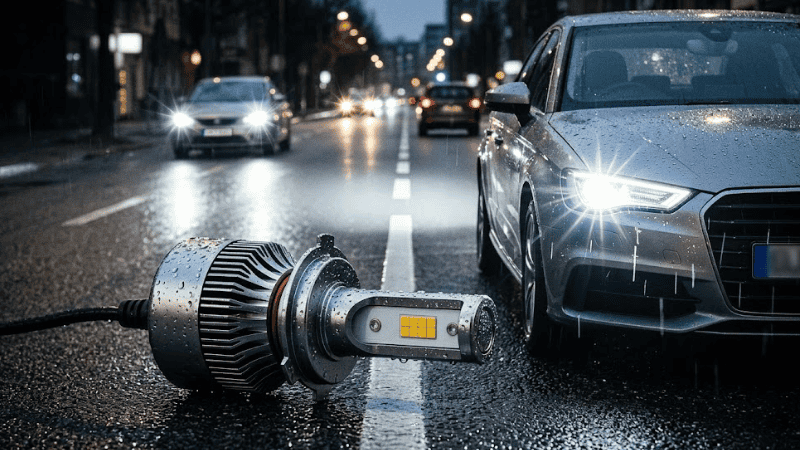
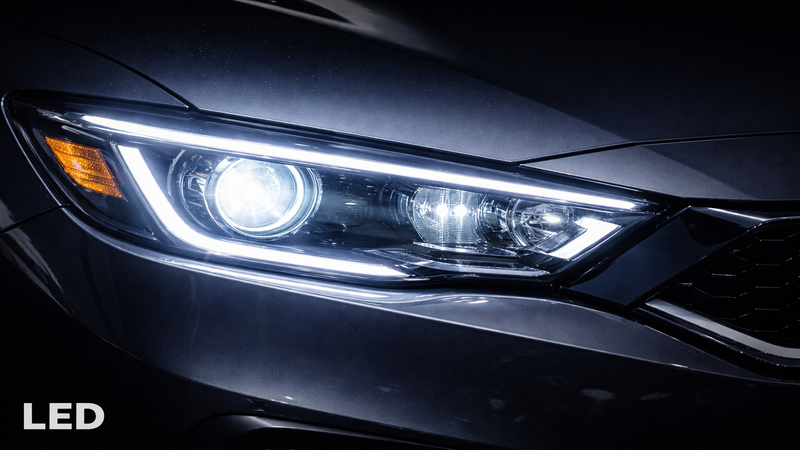
LEDs use light-emitting diodes to produce bright light while consuming less power. They are energy-efficient, bright, and have a longer life span. However, LEDs have a higher upfront cost and potential CAN bus issues.
4. Latest Technology (2025–2026)
Matrix LED, Laser headlights, and Adaptive Driving Beam (ADB) are advanced automotive lighting technologies. These systems use sensors, cameras, and software to control the light distribution in real time. Such lights offer auto-adjustment of brightness along with glare-free beam patterns.
Why LED Low Beams Are Superior?
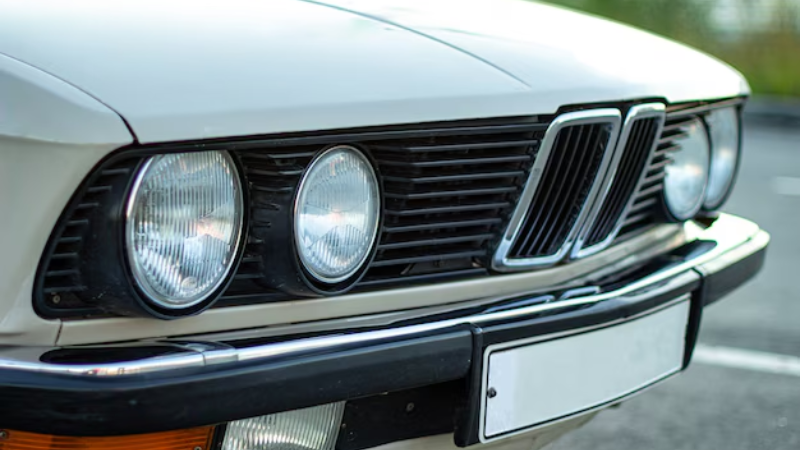
LED low beams are better than halogen and HIDs for the following reasons:
- The low power draw puts less load on the vehicle’s system, making LEDs energy efficient.
- They produce bright, clear, and daylight-like light that enhances visibility.
- LED headlights can last for around 20,000–50,000 hours.
- They turn on instantly without any warm-up delay.
- By generating less heat, they protect the housing and surrounding components.
How to Choose the Right Low-Beam Headlight Bulb
Low beam headlights must be bright enough to see. One needs to evaluate certain factors to choose the right types of low-beam headlight bulbs. These include:
Vehicle Compatibility
The bulb you choose must be compatible with your vehicle. The socket type must match the factory housing. The bulb must have CAN bus compatibility to avoid dashboard errors.
H9 bulbs have higher brightness and higher heat, and are not recommended for small housing and fog lamps. The H16 bulbs have lower power output and are too dim.H11 bulbs, alternatively, offer balanced output and are the safe choice for all applications.
Brightness Level
Brightness is measured in lumens. The recommended lumens per pair is 6,000 to 10,000. More lumens are not always better, as the higher ones can cause glare, poor visibility, and may blind oncoming drivers.
Color Temperature
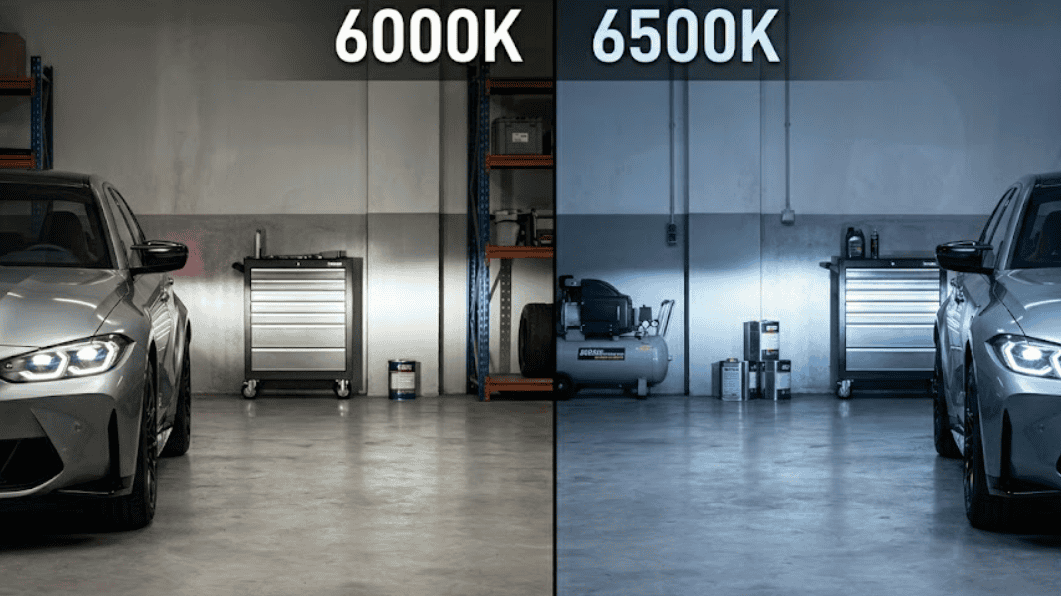
The colour temperature of a bulb affects comfort and visibility. Low light bulbs, with a colour temperature of 5000 to 6500, offer clean white and daylight-like brightness.
The one with 3,000 to 4,000 K offers a warm yellow light, which is ideal for rain and fog. Additionally, the 6500K beam headlight bulbs offer a bluish light, which contributes to eye strain.
Beam Pattern & Cut-off Line
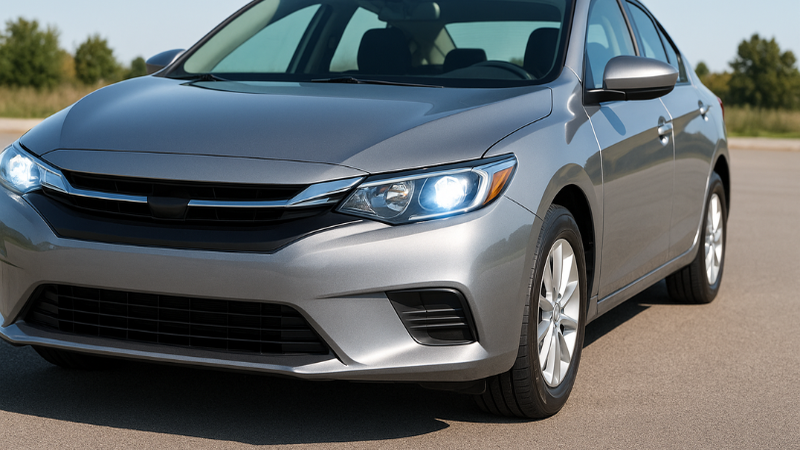
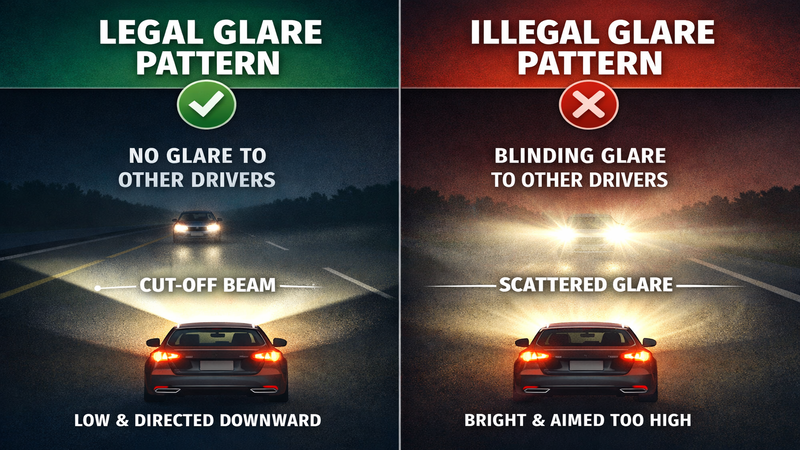
A proper beam should combine a sharp cut-off line to prevent glare and a strong, focused centre hot spot to light the road ahead.
Park the car 25 ft from the flat wall and turn on the low beams. Adjust the angle until the cut-off line is level and the hot spot is centred.
Heat Dissipation
To choose the right low beam headlight, pick one that offers proper heat dissipation. Good bulbs use fans, heat sinks, or hybrid designs to stay cool and maintain performance, ensuring longer lifespan and protecting the headlight housing.
Waterproof & Dustproof Rating (IP67/IP68)
Always choose headlights that have an IP67 or IP68 rating. The IP67 rating ensures the bulb is dustproof and temporarily water-resistant. IP68-rated bulbs are ideal for extreme weather conditions.
Installation Ease
Many headlamps are installed directly, i.e., plug and play. At the same time, some may require decoders or resistors to work correctly. Ensure you check your vehicle’s year to verify if a decoder is needed for your vehicle or not.
Brand & Warranty
Make sure you opt for a reliable LED bulb brand. A good LED manufacturer should offer clear specifications, a vehicle compatibility list, and a warranty.
Cost vs Long-Term Value
While choosing a low beam headlight, always ensure to evaluate the cost vs the long-term value of the options. An LED may cost more initially, but over time, it saves money.
| Headlight Type | Initial Cost (per pair) | Average Lifespan | Replacement Frequency (5 yrs) | Maintenance Cost | Estimated 5-Year Total Cost |
|---|---|---|---|---|---|
| Halogen | $15–$30 | 500–1,000 hrs | 3–4 times | Low energy cost, moderate replacements | $60–$120 |
| HID (Xenon) | $70–$150 | 2,000–3,000 hrs | 1-2 times | 1–2 times | $120–$250 |
| LED | $100–$250 | 20,000–50,000 hrs | Usually 0–1 times | Very low energy cost, minimal maintenance | $100–$300 |
How to Install Low Beam Headlight Bulbs (DIY Guide)
Installing the low beam bulbs on your own is simple. Follow the steps below to ensure a seamless headlight installation:
Step 1: Turn off the engine and disconnect the vehicle’s battery.
Step 2: Access the headlight housing either through the engine bay or through the wheel arch, depending on your vehicle.
Step 3: Unplug the connector to remove the old bulb.
Step 4: Now, install the new bulb and secure it in its position.
Step 5: Reconnect everything and test the low beams.
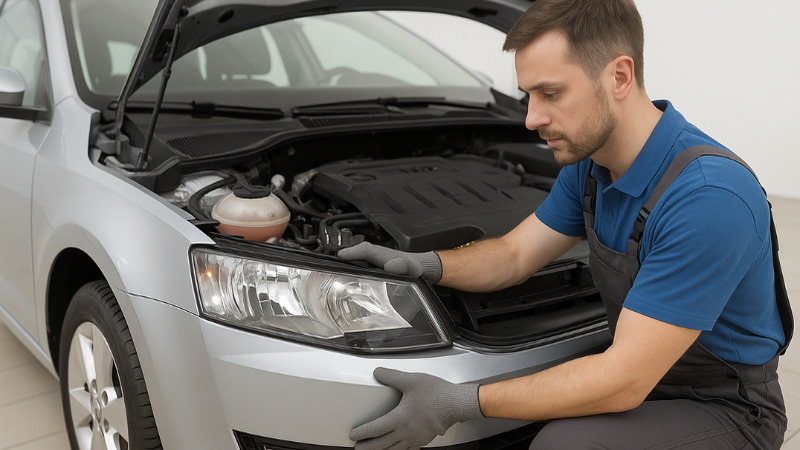
It’s important to wait and let the headlights cool before beginning. Make sure to wear gloves and safety goggles. Your hands must be dry and clean to ensure smooth installation. Try to avoid common mistakes, including touching the bulb with oily fingers, forcing it to fit, and misalignment.
For new models, it is suggested to use CANBUS-compatible bulbs to prevent dashboard error messages, flickering, and other warning signs.
Troubleshooting Low-Beam Headlight Issues
Issues with low beam bulbs are quite common and can be easily troubleshooted. For example, if the headlights are not turning on, check whether the issue is caused by a blown fuse, damaged wires, or a faulty headlight switch, and make the necessary corrections.
Dim headlights are often a result of dirty lenses, aged bulbs, and a weak battery. This is especially true when one low beam is dimmer than the other. Flickering headlights are caused by loose connectors, a failing alternator, or a failing relay.
Lastly, if one headlight is out, you can try checking for a burnt-out bulb, a faulty socket, or wiring issues. Always take yellowish vs crisp white light visibility in rain seriously, as it can affect nighttime driving.
Maintenance Tips for Low-Beam Headlights
Regular inspection of low-beam headlights helps avoid cracks, moisture buildup, housing damage, and reduced performance. We suggest cleaning the lenses using mild soap and a cloth, and avoiding abrasive cleaning materials.
Regulatory & Safety Considerations
Low-beam headlights must come with approved beam patterns, follow the brightness limits, and colour temperature regulations of your region. Typically, lights with a 4,000 to 6,000K colour temperature are acceptable.
Check with the supplier for DOT or ECE regulations to ensure proper compliance and to avoid glare for oncoming traffic.
Conclusion
The low beam headlight bulbs offer better visibility, safety, and efficiency. The LED headlight type is better than all other options owing to its longevity, clarity, and energy-saving features.
While buying a low-beam headlight, make sure to consider the beam pattern, CANbus, and heat management to make the right choice. Also, make sure to choose a reliable supplier to get benefits in the long run.
Transform Your Driving Experience With Carlight Vision Today
Carlight Vision, with its years of experience, is here to fulfil all automotive headlight demands. We offer custom automotive headlights at affordable wholesale prices. Contact us to get professional support and to transform your driving experience now.