LED headlights are the best choice for most vehicles because they offer the best balance of brightness, lifespan, energy efficiency, and long-term value. However, the best option for you depends on your vehicle, your driving needs, and your budget.
- If you want the best overall performance, choose LED headlights.
- If your priority is affordability, Halogen headlights remain the most cost-effective option.
- If you need maximum nighttime visibility, HID headlights provide powerful, long-range illumination.
- If you’re targeting premium vehicle applications, Laser headlights offer the most advanced lighting technology.
Whether you’re upgrading your own vehicle or sourcing products for your customers, understanding the differences between LED, HID, halogen, and laser headlights will help you choose the right lighting solution for your application.
Quick Overview: Comparing The 4 Types Of Headlights
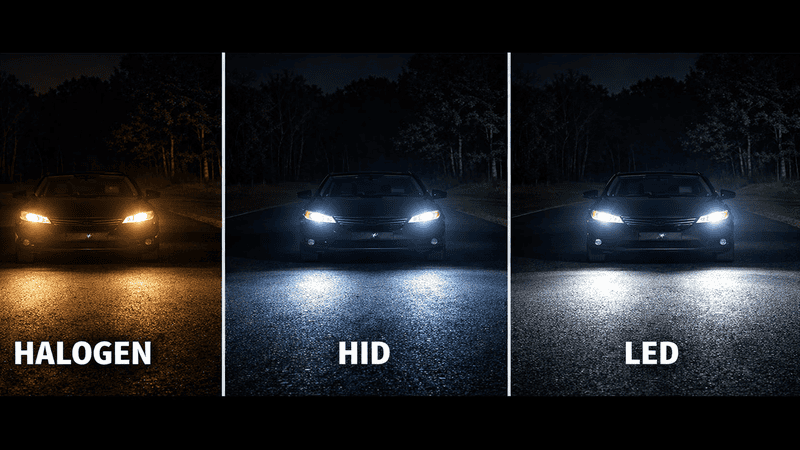
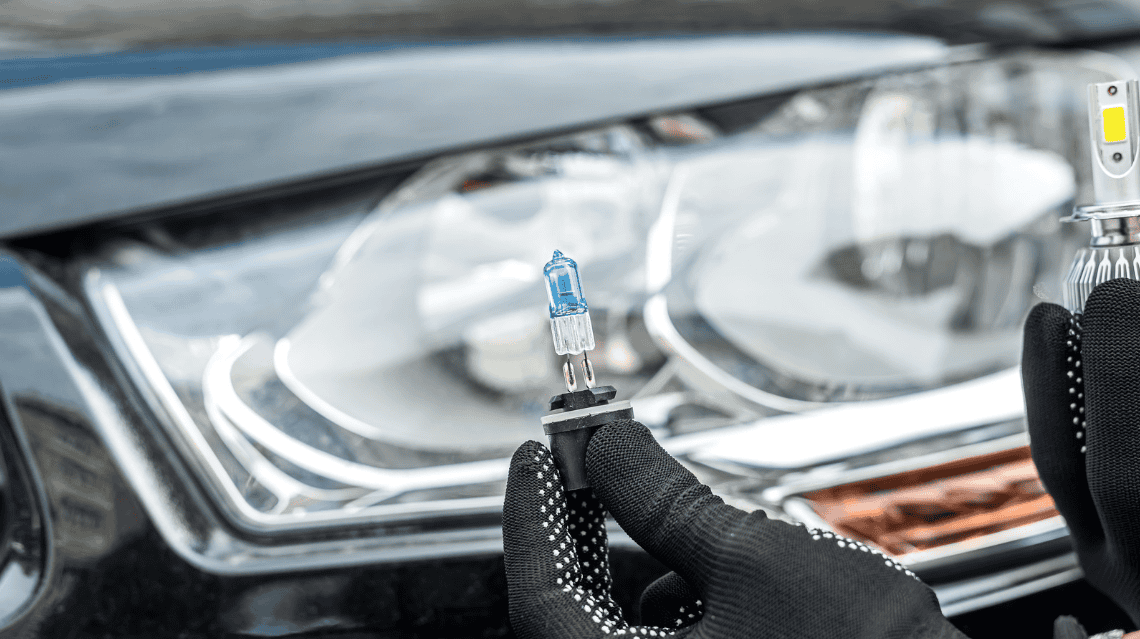
Below is a quick visual comparison of the 4 light options so you can choose the best one for your headlight housings.
| Feature | Halogen | HID | LED | Laser |
|---|---|---|---|---|
| Brightness | Low | High | High | Very High |
| Lifespan | Short | Medium | Long | Very Long |
| Cost | Low | Medium | Medium–High | Very High |
| Energy Efficiency | Low | Medium | High | Very High |
| Warm-up Time | Instant | Requires warm-up | Instant | Instant / assisted system |
| Upgrade Difficulty | Very Easy | Moderate | Moderate | Difficult (OEM only) |
| Best For | Budget vehicles | Night driving/highway use | Most modern drivers | Luxury/high-performance vehicles |
Halogen Headlights: Budget-Friendly and Easy to Replace
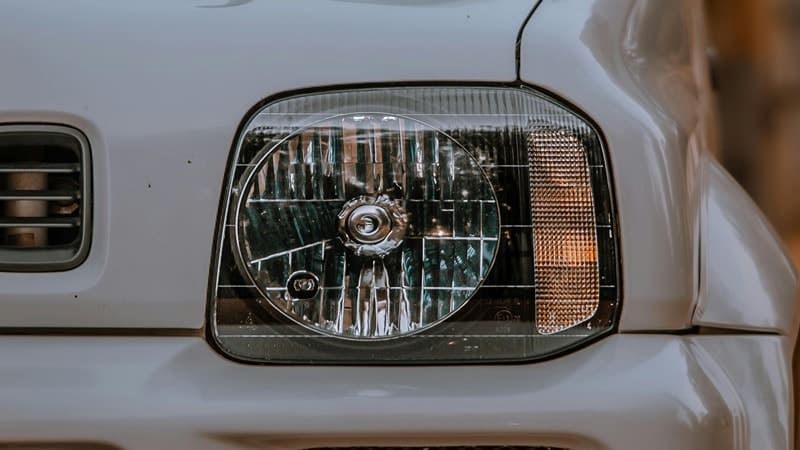
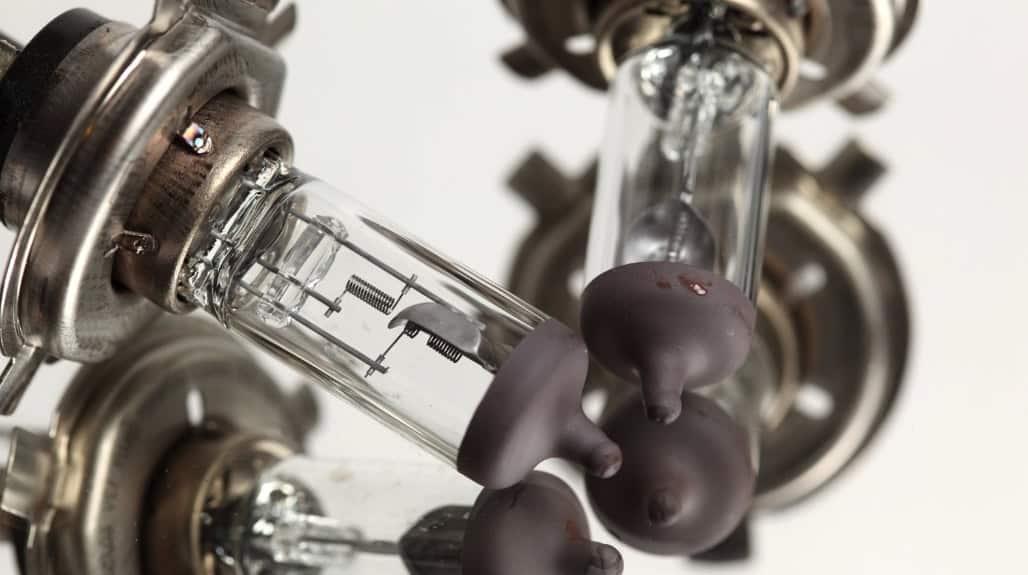
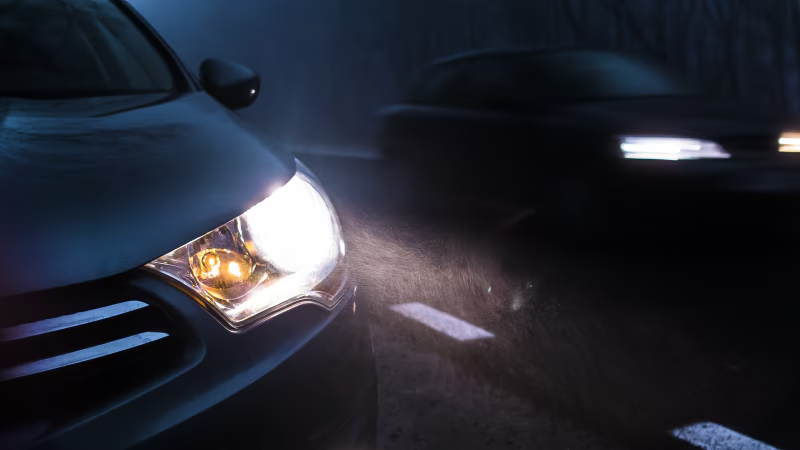
Halogen headlights use a tungsten filament enclosed in a glass capsule filled with halogen gas to produce light. When electricity passes through the filament, it heats up. This emits a bright, warm beam suitable for nighttime driving without blinding oncoming traffic.
Halogen headlights are widely used due to their simple design and low production cost. They are easy to install in a projector housing. It is also easy to replace them without requiring complex modifications.
Conversion kits and spare parts for Halogen headlights are readily available almost everywhere. This makes maintenance convenient. They also perform reliably in a variety of weather conditions.
Limitations:
- Lower overall brightness and light colour compared to advanced lighting systems
- Shorter lifespan, requiring more frequent replacements
- Higher heat generation, which reduces efficiency
- Slightly higher energy consumption relative to modern alternatives
Halogen headlights are ideal for budget-conscious drivers. Get these if you prioritise affordability and easy maintenance over advanced performance. They commonly light up older vehicles and daily-use city driving options.
HID Headlights: Powerful Brightness for Night Driving
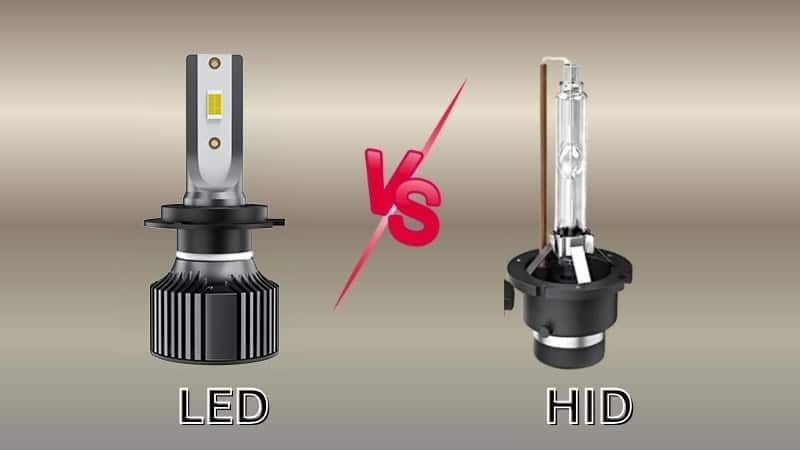
HID stands for High-Intensity Discharge. These produce light by creating an electric arc between two electrodes inside a gas-filled bulb. This generates a bright beam in a decent colour temperature once the gas reaches peak ionisation.
HID headlights offer strong illumination and a wide light spread, improving road visibility at night. They consume less power than older lighting technologies while delivering higher brightness.
They also offer a crisp, white light that makes a big difference in clarity in the dark. In addition, they perform well for long-distance highway driving.
Limitations:
- Require a short warm-up time before reaching full brightness
- Higher initial installation and replacement cost
- More complex system, making repairs less simple
- Can be a bit sensitive to voltage fluctuations
HID headlights are best suited for drivers who frequently travel on highways or poorly lit roads. Here, they help with long-range visibility.
They are commonly used in country vehicles. They are ideal where strong nighttime illumination and enhanced road coverage are needed. This is especially true for long-distance and night-heavy driving routines.
LED Headlights: Efficient, Bright, and Long Lasting
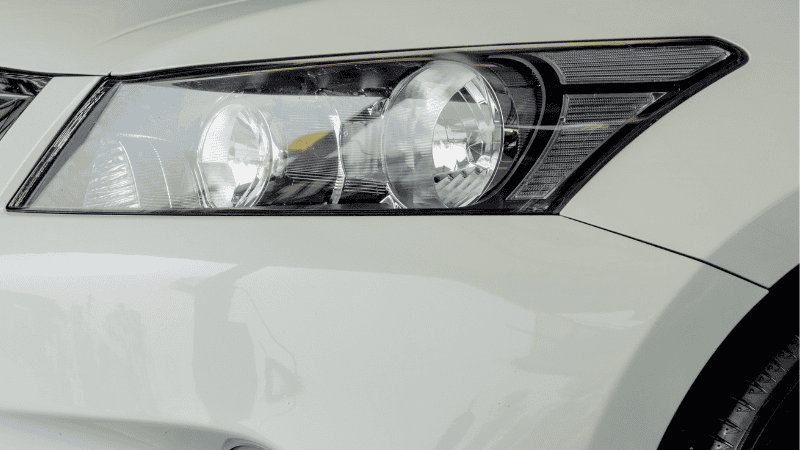
LED headlights produce light when an electric current passes through a semiconductor diode. This causes it to emit photons. This process generates light efficiently with minimal heat loss and high energy conversion.
LED headlights offer high-energy efficiency with low power consumption. They also have a long operational lifespan with reduced replacement needs.
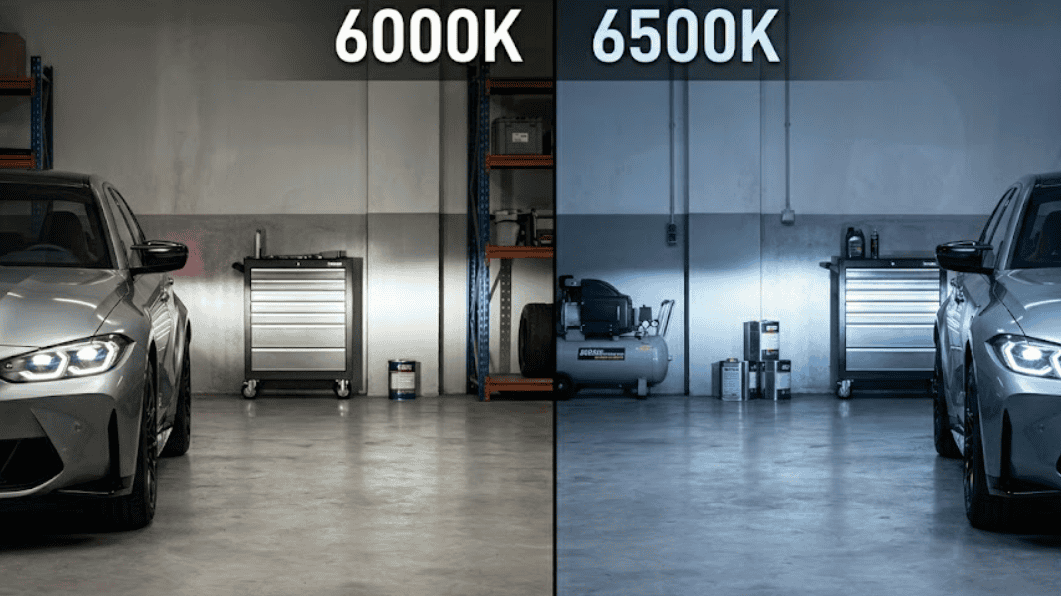
Moreover, LEDs offer a crisp, blue-colored full brightness without delay or feeling dimmer. Their strong and clear light output makes them ideal for tough driving conditions, rain, and inclement weather.
Limitations:
- Higher initial installation cost
- Can generate heat that requires cooling systems
- Repairs are more complex due to the integrated design
- Performance may vary with poor-quality units
LED headlights are ideal for modern drivers who want a balance of efficiency, brightness, and durability. They are commonly used in daily commuting, urban driving, and newer vehicles.
LEDs are ideal in cases where long-term reliability and low maintenance are important.
Laser Headlights: Premium Lighting With Maximum Beam Distance
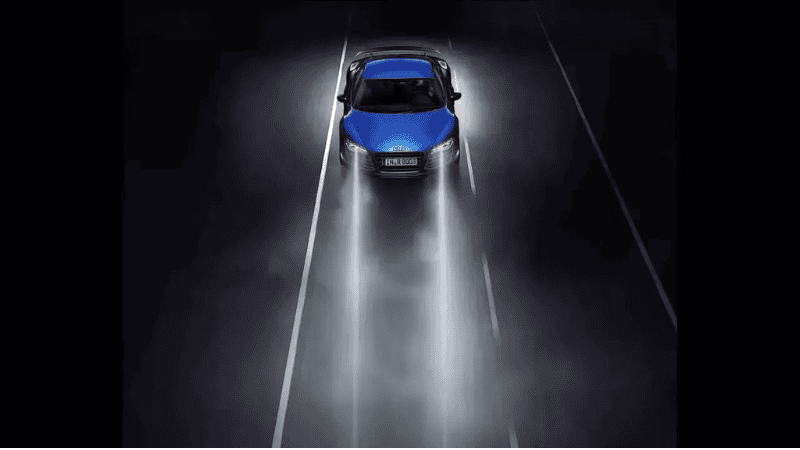
Laser headlights use laser diodes to generate a concentrated beam of light. This beam is then converted into visible illumination through a phosphor-based process. This technology allows for extremely focused and high-intensity light output.
Laser headlights offer an extremely long beam projection for superior visibility. Thanks to their highly efficient light concentration system.
They also have a compact design that allows advanced headlight structures. Laser bulbs ensure zero flickering even under high-speed driving conditions.
Limitations:
- Very high manufacturing and installation costs
- Limited availability in standard vehicles
- Complex system requiring specialised maintenance
- Primarily restricted to high-end automotive applications
Laser headlights are best suited for luxury and high-performance vehicles. These are best where maximum road reach and advanced lighting technology are prioritised.
These lights are used in premium cars. They are designed for high-speed highway driving and cutting-edge innovation.
HID vs Halogen: Is The Extra Brightness Worth It?
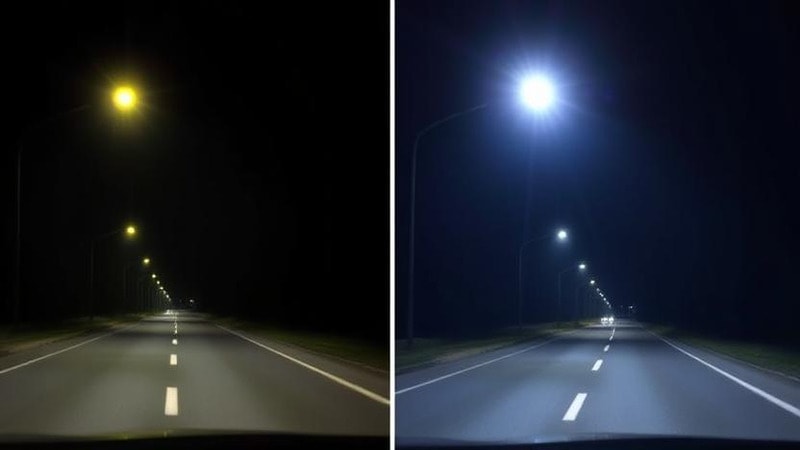
HID headlights are much brighter than halogen, but performance depends on the proper housing. In halogen reflector housings, HID can cause glare and reduce visibility. Projector setups, on the contrary, handle light more cleanly.
On real roads, HID works best for dark highways and long drives where visibility is a major point. However, it costs more to install and replace, making halogen a simpler, low-maintenance choice.
HID Bulbs vs LED: Which Has Better Light Output For Modern Vehicles?
LED headlights provide better overall light output for most modern vehicles. While HID bulbs can produce higher raw lumens, LED headlights deliver a more focused beam pattern, instant brightness, lower energy consumption, and better compatibility with today’s vehicles. For most drivers, LEDs offer superior real-world visibility.
LED systems integrate more effectively with modern adaptive lighting features. These include adaptive headlights, matrix beam systems, and automatic high-beam control. Their compact design and precise control allow manufacturers to build smarter setups. Such setups adjust to road conditions in real time.
Instant illumination gives LEDs a clear advantage since there is no warm-up delay. This improves reaction time in city and stop-start traffic.
This is why most OEMs are shifting toward LED technology. It aligns better with current vehicle electronics, efficiency goals, and advanced safety systems.
LED vs Halogen: Which One Is Better
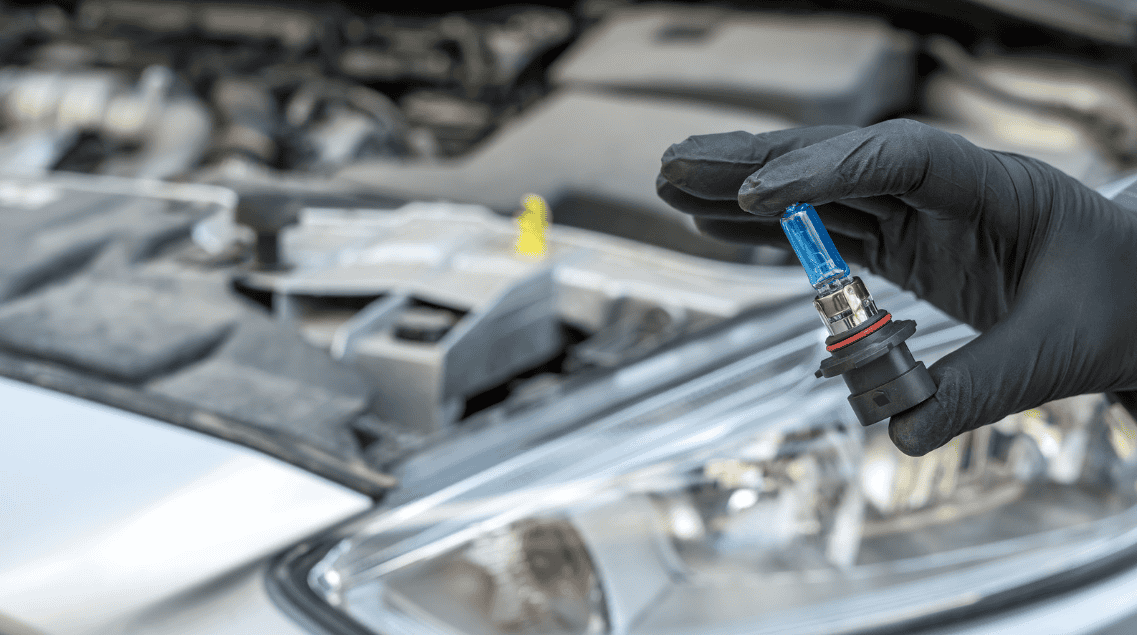
LED headlights are the better choice for everyday driving because they are brighter, more energy-efficient, and longer-lasting than halogen bulbs. They improve visibility for both low beams and high beams while reducing maintenance and replacement costs.
LED bulbs can be installed in halogen housings, but results vary depending on build quality and alignment. While LED is brighter on paper, brightness does not always mean better road visibility if the beam is not properly focused.
Poor LED retrofits can lead to glare, scattered light, and weak cutoff lines. This reduces actual driving comfort and safety in vehicles as common as Toyota and Hyundai.
Halogen assemblies offer predictable beam patterns, lower electrical load, and simpler long-term maintenance. This makes it reliable for everyday use despite lower efficiency and brightness.
LED vs. HID vs. Halogen vs Laser Headlights: Which Is The Best?
LED headlights are the best overall option for most drivers because they offer the best balance of brightness, efficiency, lifespan, affordability, and reliability. Laser headlights are the most advanced technology, HID headlights provide strong brightness, and halogen bulbs remain the most economical choice.
Choosing between OEM replacement and performance upgrade depends on your goal. If you stay with OEM parts, you get guaranteed compatibility, stable performance, and no risk of electrical or beam issues.
Upgrading can improve brightness and efficiency, but it only works well when the system is properly matched to your vehicle setup. Compatibility matters more than waiting for any technology ranking.
The right choice depends on your housing type, electrical system, and exact bulb fitment, not just brightness claims. Even the most advanced headlight will perform poorly if it is not designed for your car’s system.
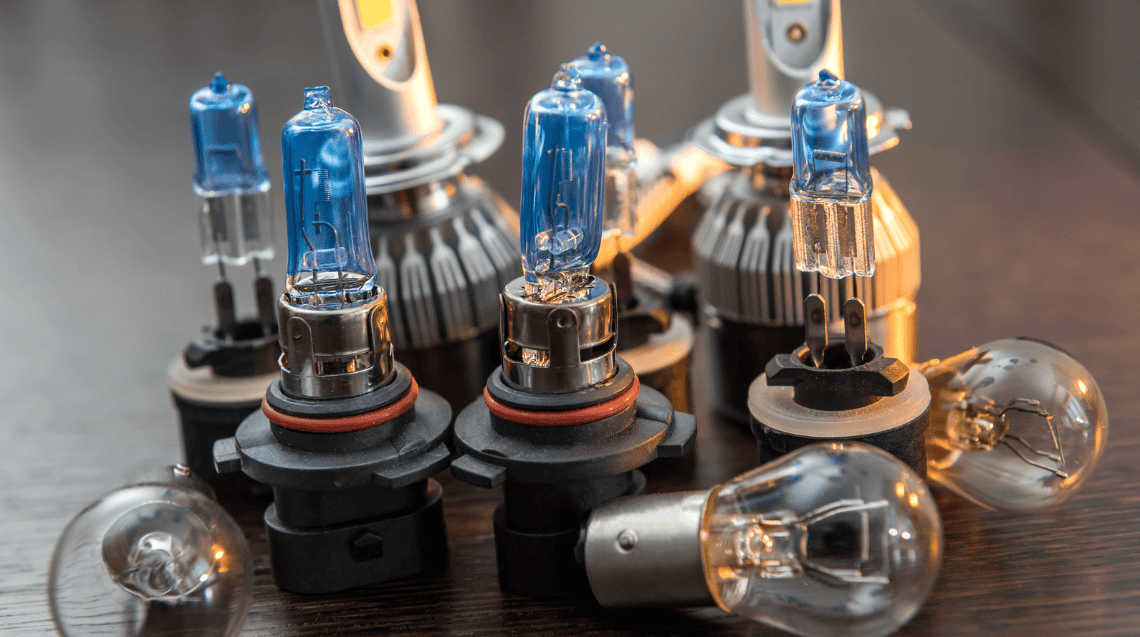
Best replacement choice by vehicle setup:
- Halogen vehicle: halogen replacement or properly designed LED conversion
- OEM HID system: HID replacement is usually the safest and most reliable option
- Factory LED/laser systems: OEM-level replacements are strongly recommended
How To Choose Headlight Bulbs and a Brand?
Choosing the right replacement headlight bulb is all about real-world performance. A good bulb should deliver a clean, focused beam pattern. It improves visibility without causing glare or uneven light distribution.
Instead of chasing high lumen numbers, focus on how well the light is projected on the road. A properly designed beam ensures clear cutoff lines, better contrast, and safer night driving in all conditions.
The correct choice depends on your housing type, wiring system, and fitment compatibility. Even a high-quality bulb will underperform if it does not match your vehicle’s specifications.
Brand reputation, testing standards, and consistency matter more than performance promises. Trusted manufacturers prioritise durability and proper thermal management over promising specifications.
For reliable options and professionally engineered lighting solutions, explore Carlight. We focus on vehicle-specific headlight performance and compatibility like no one else.
Conclusion
LED headlights are the best choice for most vehicles because they provide the best combination of brightness, lifespan, energy efficiency, and long-term value. Halogen remains the most affordable option, HID excels in long-range visibility, and laser headlights are reserved for premium vehicles.
The right choice ultimately depends on your vehicle’s headlight housing, bulb compatibility, and driving conditions.
Need Help Choosing the Right Headlight Bulb?
At Car Light Vision, we specialise in LED headlight bulbs, HID replacements, fog lights, and vehicle-specific lighting solutions. Our team can help you identify the right bulb type, compare compatibility options, and recommend products that match your vehicle or business requirements.
Contact us today for personalised support, pricing, and wholesale options tailored to your needs.