If you’re trying to choose between 6000K and 6500K headlights, the real difference is how the light feels on the road, not how bright it is. For most drivers, 6000K gives you a cleaner and more comfortable white light, while 6500K looks cooler and more blue, which many people prefer for style.
In this guide, you’ll see how 6000K and 6500K actually perform at night, in rain and fog, and which one you should choose based on your driving needs or your business market.
Let’s get started.
6000K LED vs 6500K LED Headlight Bulbs: The Difference
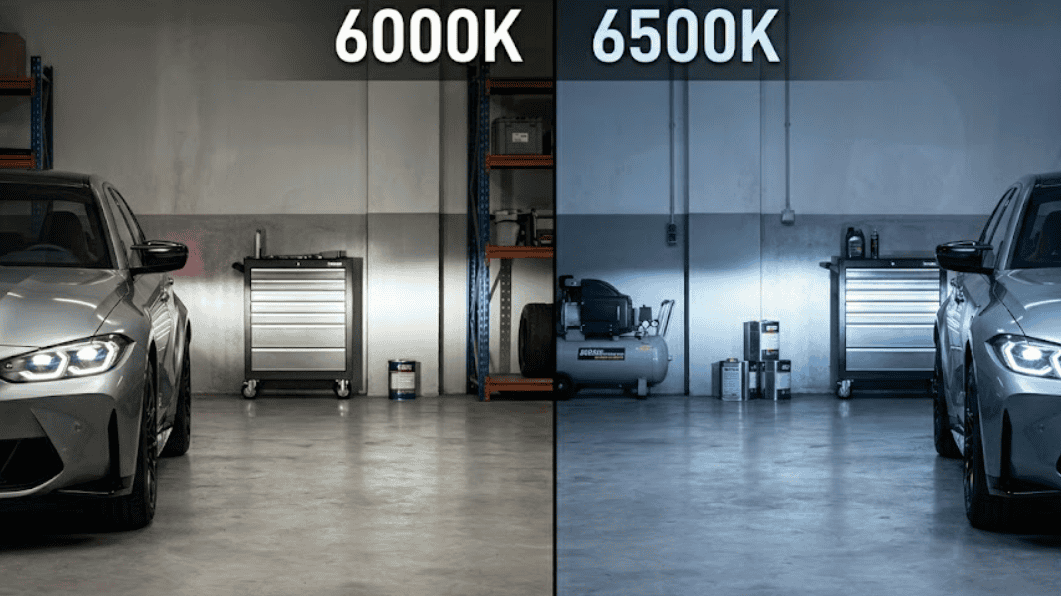
6000K color temperature is known as “Alpine White” or “Diamond White.” It produces a clean, pure white beam that closely resembles natural daylight at noon without yellow or strong blue undertones.
This color is widely used in automotive lighting as it offers a balanced, natural look with strong road clarity and reduced eye strain.
6500K, on the other hand, is known as “Cool Daylight.” It mimics an overcast sky and produces a cool white light with a slight ice-blue or arctic tint. It is often preferred by those who want futuristic headlight bulbs.

However, the blue shift at 6500K can slightly reduce contrast in certain driving conditions compared to lower Kelvin ratings, thus compromising
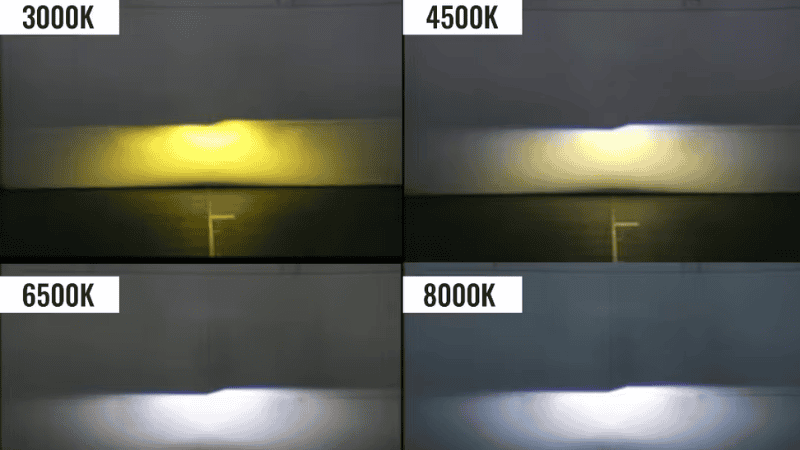
The Kelvin (K) scale describes color temperature, not heat or brightness. It measures how warm or cool the light appears to the human eye. In automotive lighting, higher Kelvin values shift toward blue tones, while lower values appear warmer and more yellowish.
| Kelvin Rating | Color Appearance | Common Automotive Application |
|---|---|---|
| 3000K – 4300K | Warm Yellow / Amber | Traditional halogen bulbs, optimal fog lights |
| 5000K – 5500K | Neutral, Soft White | Factory OEM HID and LED bulbs |
| 6000K | Diamond White | Modern aftermarket LED upgrades |
| 6500K | Cool White with Blue Tint | Tech-forward, aggressive aftermarket styling |
| 8000K+ | Deep Blue to Violet | Custom show cars (not recommended / often illegal) |
Comparing LED vs Halogen Headlights: Which Offers Better Visibility
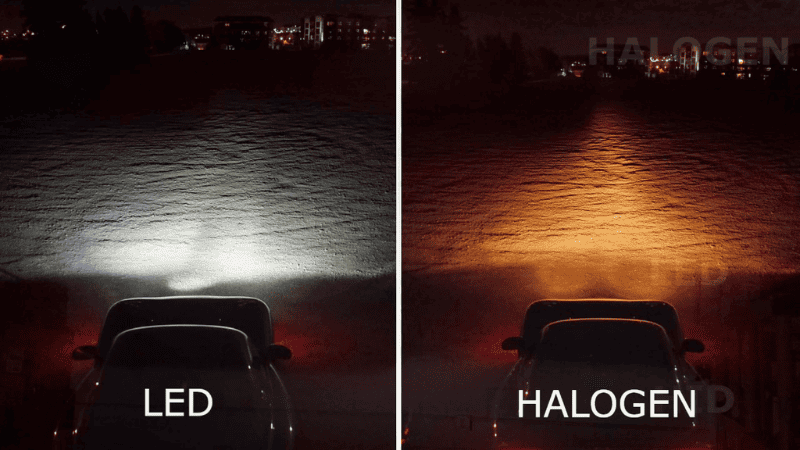
Halogen headlights’ colour temperature typically ranges from 3000K to 4300K, producing a warm yellow light that looks older and less sharp on modern roads. This warmer tone reduces contrast and can make peripheral road details appear less defined compared to neutral white light.
LED headlights at 6000K–6500K color temperature shift to a clean, cool white or slightly blue tone, improving road clarity with bright illumination.
This gives vehicles a more modern appearance. The higher contrast also helps drivers detect road signs and obstacles more quickly.
| Feature | Halogen Headlights | LED Headlights (6000K/6500K) |
|---|---|---|
| Color Temperature | 3000K – 4300K (Warm Yellow) | 6000K – 6500K (Cool White/Blue) |
| Energy Efficiency | Low (high heat loss) | High (uses ~60% less power) |
| Average Lifespan | 500 – 1,000 hours | 30,000+ hours |
| Road Clarity | Lower contrast, slower detection | High contrast, faster recognition |
LED systems provide better efficiency, longer lifespan, and balanced brightness, making them a more advanced option compared to traditional halogen lighting.
Is 6500K Too Bright for Headlights?
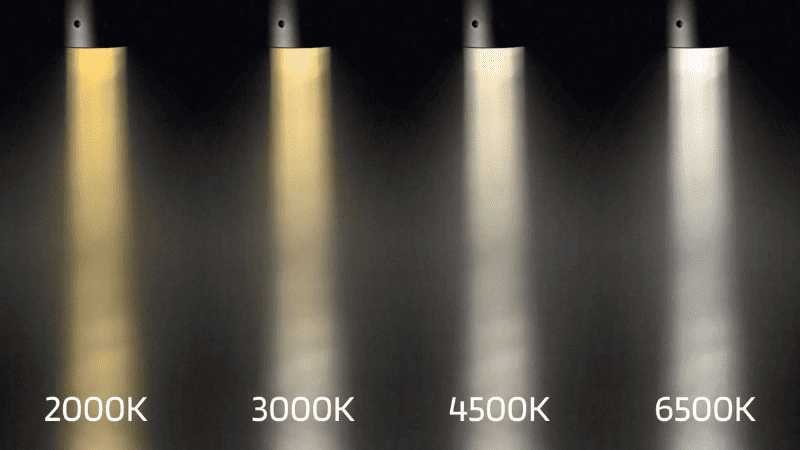
6500K is not “brighter” than 6000K because Kelvin and lumens measure different things. Lumens define actual light output, while Kelvin defines colour appearance. A 3,000-lumen bulb at 6000K produces the same warm white light as a 3,000-lumen bulb at 6500K.
The only difference is visual tone. 6000K appears pure white, while 6500K shifts slightly toward blue, but the total light energy remains identical.
Why 6500K “Feels” Brighter to the Human Eye?
The human eye is more sensitive to blue-rich light in low-light conditions due to scotopic vision (rod cell response). Because 6500K contains more blue wavelengths, it creates stronger short-range contrast.
This enhanced contrast makes road objects appear sharper, which can trick drivers into perceiving them as “brighter,” even though the actual light output is the same.
Does 6500K Have More Glare for Eyes?
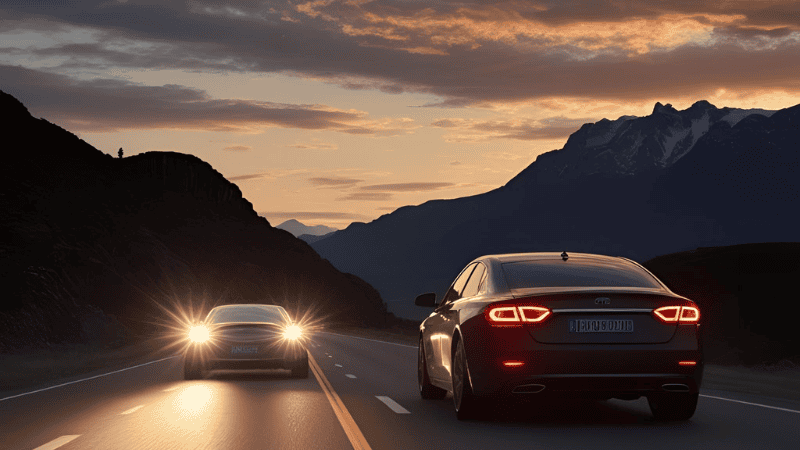
6500K visible light can feel sharper, but it is often more tiring for the eyes on long drives. Its stronger blue content can increase eye strain, dryness, and headaches during extended nighttime driving.
This is because cooler light can suppress melatonin, which keeps you more alert but may reduce comfort. In comparison, 6000K pure white light is slightly softer on the retina and more comfortable for long-distance driving.
Visibility in Rain, Fog, and Snow
6500K light contains more blue wavelengths, which are more easily scattered by moisture in the air. This scattering effect, known as Rayleigh scattering, reflects light back toward the driver in fog, rain, or snow.
This can create a glare or “white wall” effect that reduces forward visibility. In contrast, 6000K provides better all-weather penetration with less reflection and clearer road definition.
Below is a safety summary for a better understanding:
- 6500K: sharper look but more eye strain over time
- 6000K: balanced comfort and better weather performance
- In poor weather, lower Kelvin generally improves visibility
- For long night drives: 6000K is usually the safer option
Why Are New LED Headlights So Bright For Oncoming Drivers?
Modern LED headlights use advanced semiconductor chip designs, such as CSP or flip-chip LEDs that produce highly concentrated and efficient light output.
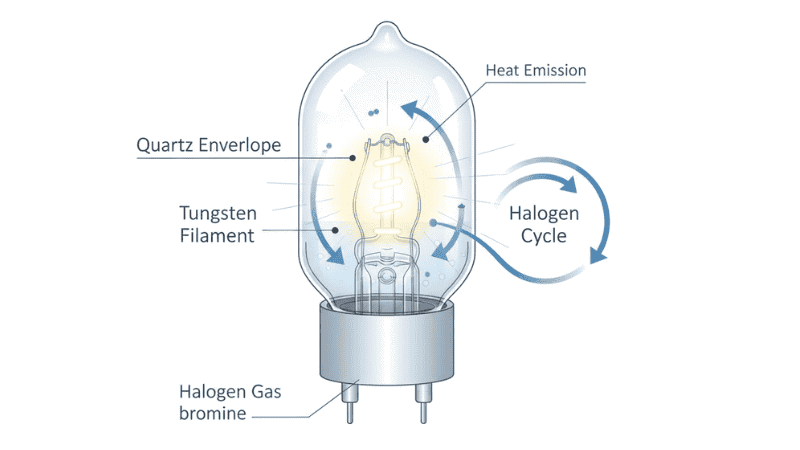
Unlike halogen bulbs, which rely on heating a filament, LEDs generate light more directly and with far less energy loss.
This allows LED systems to deliver higher luminous flux in a tighter, more controlled source, improving efficiency and road illumination.
The Real Culprit of Glare
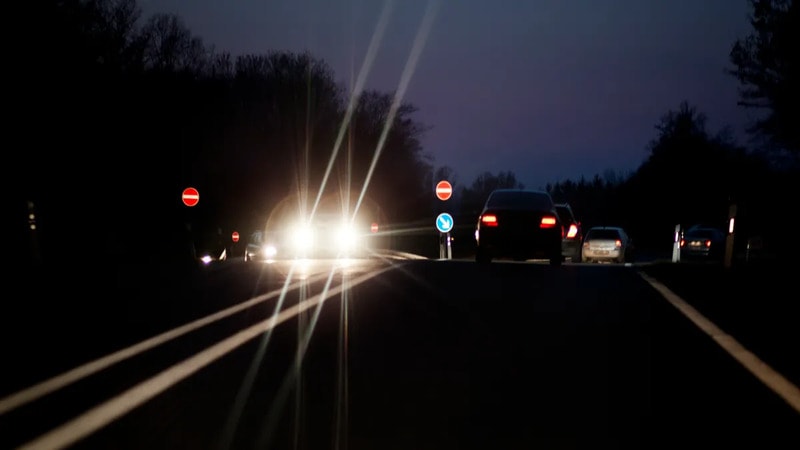
Excessive glare from LED headlights is usually not caused by 6000K or 6500K color temperature. Rather, it is due to poor beam control. The issue often comes from installing high-power LED bulbs into reflector housings designed for halogen filaments.
When the beam pattern is not properly focused, light scatters instead of forming a sharp cutoff line, causing glare for oncoming drivers.
Proper alignment and compatible housing design are more important than color temperature in preventing this issue.
What Is the Best Brightness for LED Bulbs?
Many “high-lumen” claims, like 40,000 lumens, are misleading because they do not reflect real usable light output.
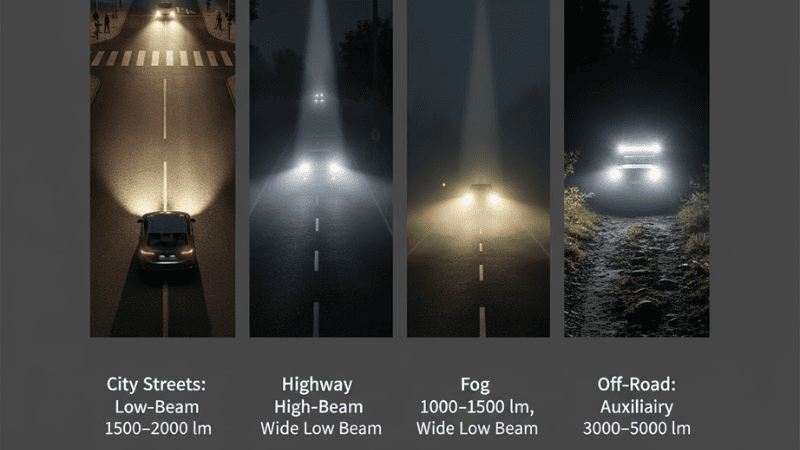
What matters is true effective lumens combined with proper optics and heat control. For safe and practical driving, below are the clear ranges that work best:
- Low Beams: 1,500 to 2,500 lumens per bulb is ideal for daily street driving
- High Beams: 3,000 to 4,500 lumens per bulb works best for highways and rural roads
- Over-spec risk: 8,000+ lumen claims often lead to poor heat dissipation and reduced lifespan
Higher output without proper design does not improve visibility; it often reduces reliability and safety.
How to Balance Brightness and Road Courtesy
The key to safe LED headlight performance is not just brightness, but correct alignment with the headlight housing optics. A properly focused beam ensures light goes on the road, not into oncoming traffic.
When the LED focal point matches the housing design, you get a clean cutoff line, better road visibility, and reduced glare for other drivers. Improper alignment can make even moderate lumens uncomfortable and unsafe.
Are 6500K Headlights Legal?
In most regions, both 6000K and 6500KLED headlights are legal because they fall within the approved “white light” range defined by regulations such as US DOT (FMVSS 108) and ECE standards. These rules focus more on beam performance than exact color temperature.
As long as the light appears white and meets brightness and glare limits, both 6000K and 6500K are generally considered compliant under vehicle lighting law frameworks.
The Retrofit Legal Issues: Bulbs vs. Whole Assemblies
The real legal issue is not color temperature, but how the light is installed and projected. Installing aftermarket LED bulbs into a housing designed for halogen can disrupt the intended beam pattern.
This can lead to glare, poor cutoff control, and potential non-compliance with local vehicle lighting law requirements. For full legality and safety, a DOT and ECE-approved integrated LED headlight assembly is often the most reliable option.
How to Choose the Right Headlamp
Choosing between 6000K and 6500K LED headlights depends on how, where, and what you drive. The right choice is not about brightness, but about matching light behavior to real driving conditions. Below are some ways to ensure the right color temperature match:
1. Analyze Daily Driving Conditions
If you regularly drive in fog, rain, snow, or mixed weather conditions, 6000K is the safer option because it offers better clarity and reduced glare in low visibility.
If your driving is mostly on well-lit highways or dry urban roads, 6500K works well for a sharper, modern look with strong contrast.
2. Consider Vehicle’s Aesthetic Goals
6000K gives a clean, OEM-style luxury appearance, often preferred for sedans and SUVs. It delivers a balanced, premium white look without strong blue tones.
6500K, on the other hand, gives a more aggressive, custom aesthetic with a slight blue tint, commonly used in sport-oriented builds.
3. Assess Sensitivity to Blue Light Glare
If you are sensitive to bright or blue-heavy light, 6000K is more comfortable for the eyes, especially during long night drives.
6500K can feel more intense due to its cooler tone, which may cause more visual fatigue for some drivers over extended use.
Conclusion
If you want something that works well for everyday driving and offers better comfort at night, 6000K is usually the safer choice. It feels more natural on your eyes and performs better when the weather gets bad.
If you’re more focused on appearance or your customers prefer a modern, slightly blue look, then 6500K might fit your needs better.
For most people, the difference isn’t about brightness; it’s about how your eyes feel and how confident you are when driving at night. So instead of chasing numbers, choose the one that actually fits your driving style, your vehicle setup, or your market demand.
Boost Your Sales with the Right Kelvin Rating!
As a leading automotive lighting manufacturer, Car Light Vision provides premium, high-flux LED solutions with perfect beam patterns that your customers will love. Contact us today for expert guidance, personalized recommendations, and wholesale LED lighting options tailored to your vehicle.
FAQs
Q1: Is 6000K or 6500K better for night driving?
For most drivers, 6000K is better for night driving because it feels more natural and easier on your eyes. If you drive for long hours or often drive on dark roads, 6000K will usually feel more comfortable for you.
Q2: Is 6500K too bright for headlights?
No, 6500K is not actually brighter. The brightness comes from lumens, not Kelvin. But 6500K can feel more intense to your eyes because it has more blue light, which makes the road look sharper.
Q3: Are 6500K LED headlights street legal?
In most places, yes. 6500K is usually legal as long as your headlights produce white light and the beam pattern is properly controlled. What matters more is how your lights are installed in your vehicle, not just the color temperature.
Q4: Which color temperature is best for driving in rain and fog?
For bad weather, 6000K is usually better for you because it reduces glare and gives clearer road definition. 6500K can scatter more in fog and rain, which may reduce visibility.
Q5: Why are most aftermarket LED headlights rated at 6500K?
Because 6500K looks more “modern” and blue-white, and many customers prefer that style. For brands and distributors, 6500K sells better because it looks brighter and more upgraded, even if performance is similar to 6000K.
Q6: Why do brands choose 6500K instead of 6000K?
It’s mostly market demand. 6500K is more popular in aftermarket products because it looks more aggressive and premium to buyers. If you’re selling headlights, 6500K usually matches what your customers already expect.