Learn how heat affects LED headlight brightness, reliability and service life, how common cooling designs work, and what test data to check before choosing an upgrade..
Why heat management matters
When comparing automotive LED headlight bulbs, wattage and advertised lumen figures do not tell the whole story. LEDs convert part of their electrical input into heat, and the bulb’s thermal design helps manage that heat during operation. If heat is not transferred away effectively, the LED and its driver may operate outside their intended temperature range. This can reduce light output, affect color consistency and shorten component life.
The size of these effects depends on the LED package, driver design, bulb construction, ambient temperature, headlamp enclosure and operating conditions. For that reason, sustained output and documented test conditions are more useful than peak figures alone.
This guide explains the main cooling approaches and the evidence shoppers can use to compare products. Product-specific figures should be read alongside the test method and conditions listed with them.
What can happen when an LED headlight runs too hot?
Reduced light output at operating temperature
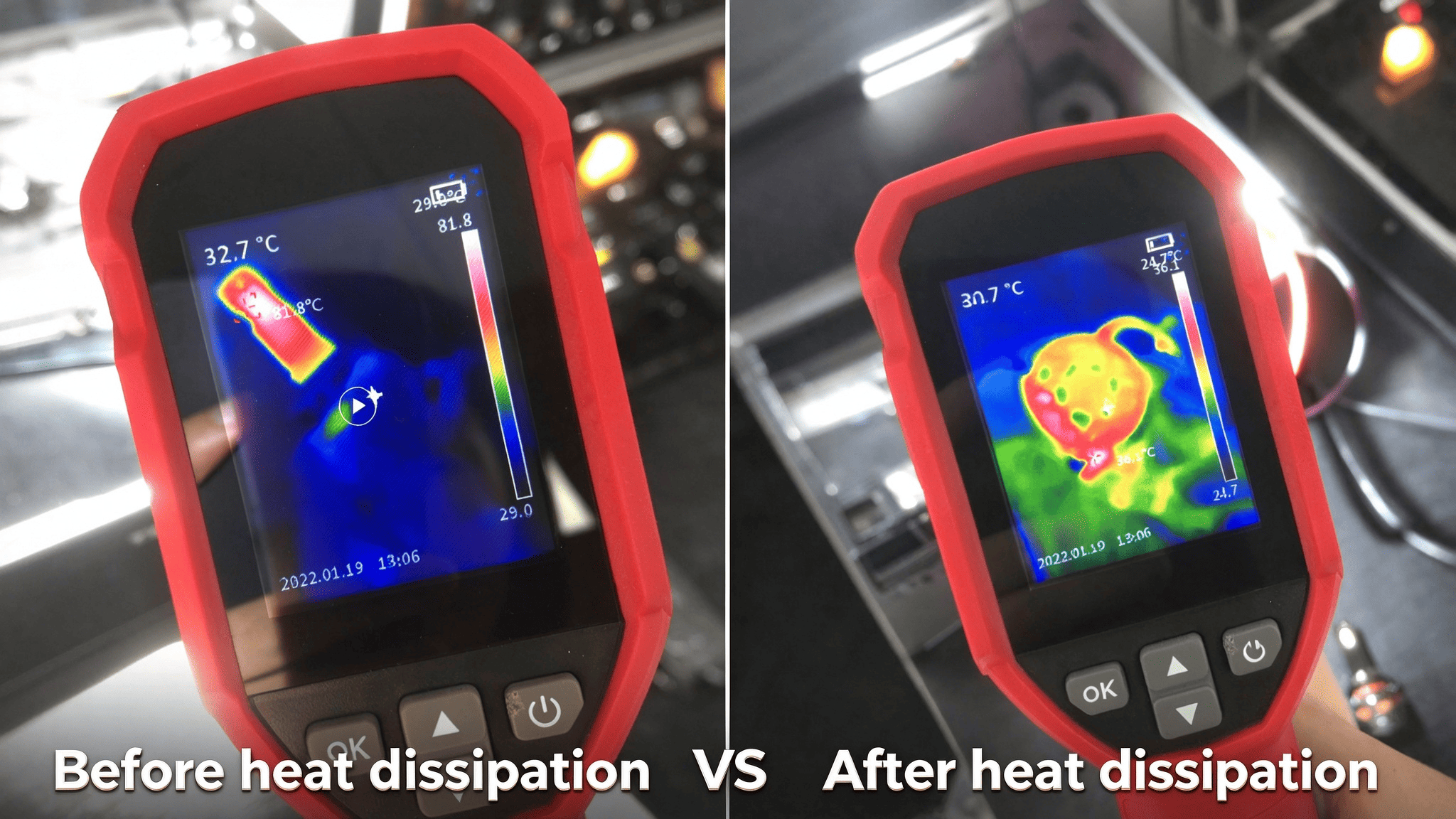
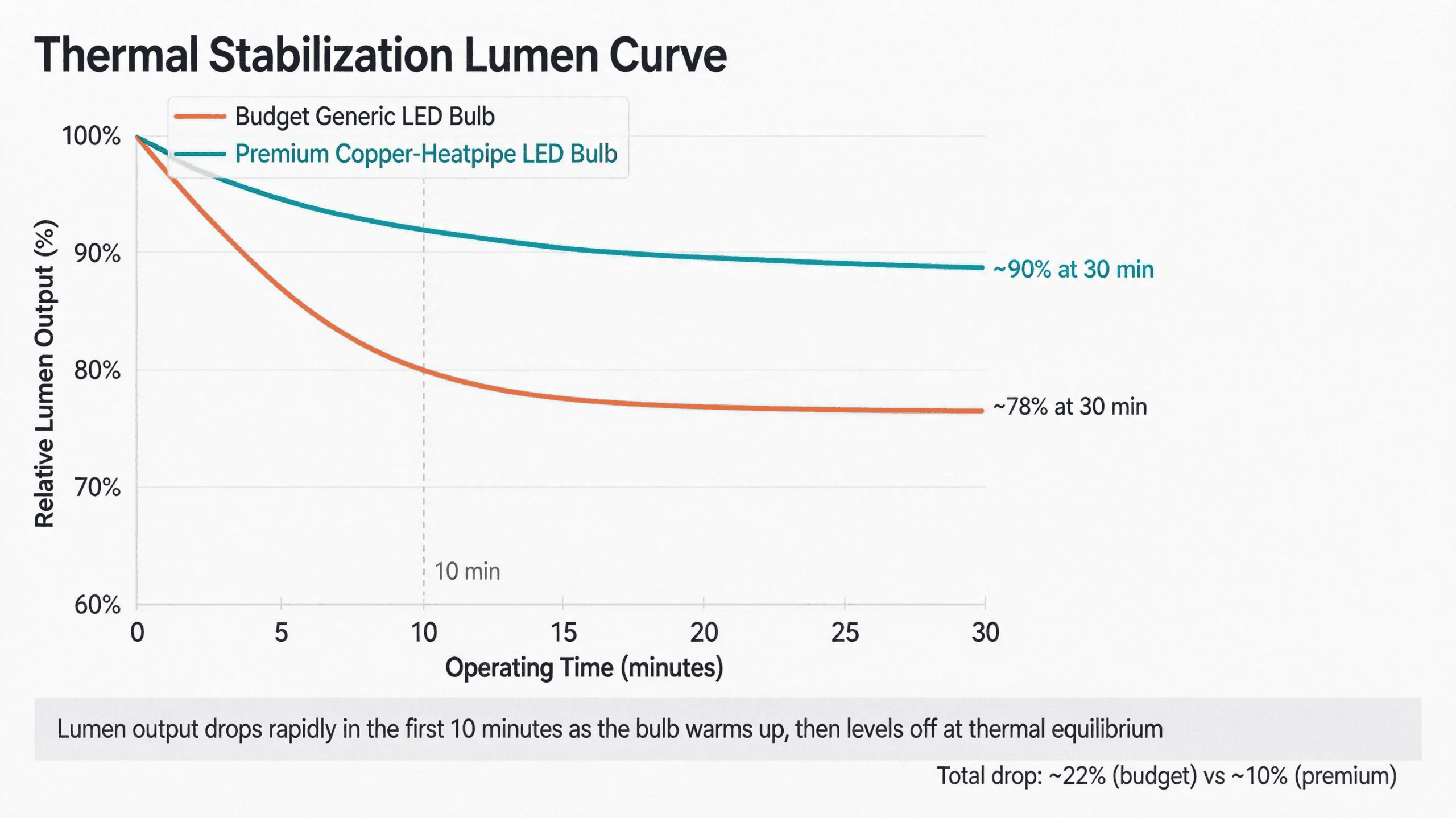
LED performance changes with temperature. A bulb may produce less light after it warms up than it does immediately after switch-on. The amount of change varies by LED and system design, so compare measurements taken after the bulb reaches a stable operating temperature.
LED output can change as a bulb warms, but the direction and size of the change depend on the LED, driver, thermal path, supply voltage and test setup. Do not assume every bulb produces more light at cold start; compare measurements taken after a clearly defined stabilization period.
Temperature may affect LED efficiency, while changes in driver behavior and electrical resistance can also affect the complete bulb’s output. The cause and magnitude should be established with measurements of the actual product rather than inferred from temperature alone.
For product comparisons, report the measured light output after the bulb has reached the stated stabilization criterion. Include the instrument, voltage, ambient temperature, enclosure and measurement method
| Specification | Details |
|---|---|
| Temperature range | 30°C to 60°C ambient temperature in a controlled temperature oven; this was the study setup, not a general claim about sealed-headlamp temperatures. |
| Measurement method | Controlled temperature oven, illuminance meter, spectrometer with integrating sphere, thermocouples and a 13.2 V supply. |
| Data type | Actual laboratory measurement (not modeled) |
| Quantified result | For that test lamp, measured illuminance decreased at different rates depending on beam and measurement direction. Reported ranges: low beam 14.9%–19.2%; high beam 20.1%–24.1% across directions. These are illuminance results for the study sample, not general luminous-flux loss rates. |
What regulations and studies can tell us
- UN Regulation No. 112 includes a stability-of-photometric-performance test for complete headlamps under specified operating conditions. It does not establish a universal 30-minute stabilization rule for aftermarket LED bulb lumen ratings. ADR 101/00 specifies requirements for replaceable LED light sources; cite the exact applicable clause before describing a test time or procedure as mandatory.
- A peer-reviewed study of one automotive LED lamp measured illuminance at ambient temperatures from 30°C to 60°C and reported decreases that varied by beam and measurement direction.
Color and beam consistency
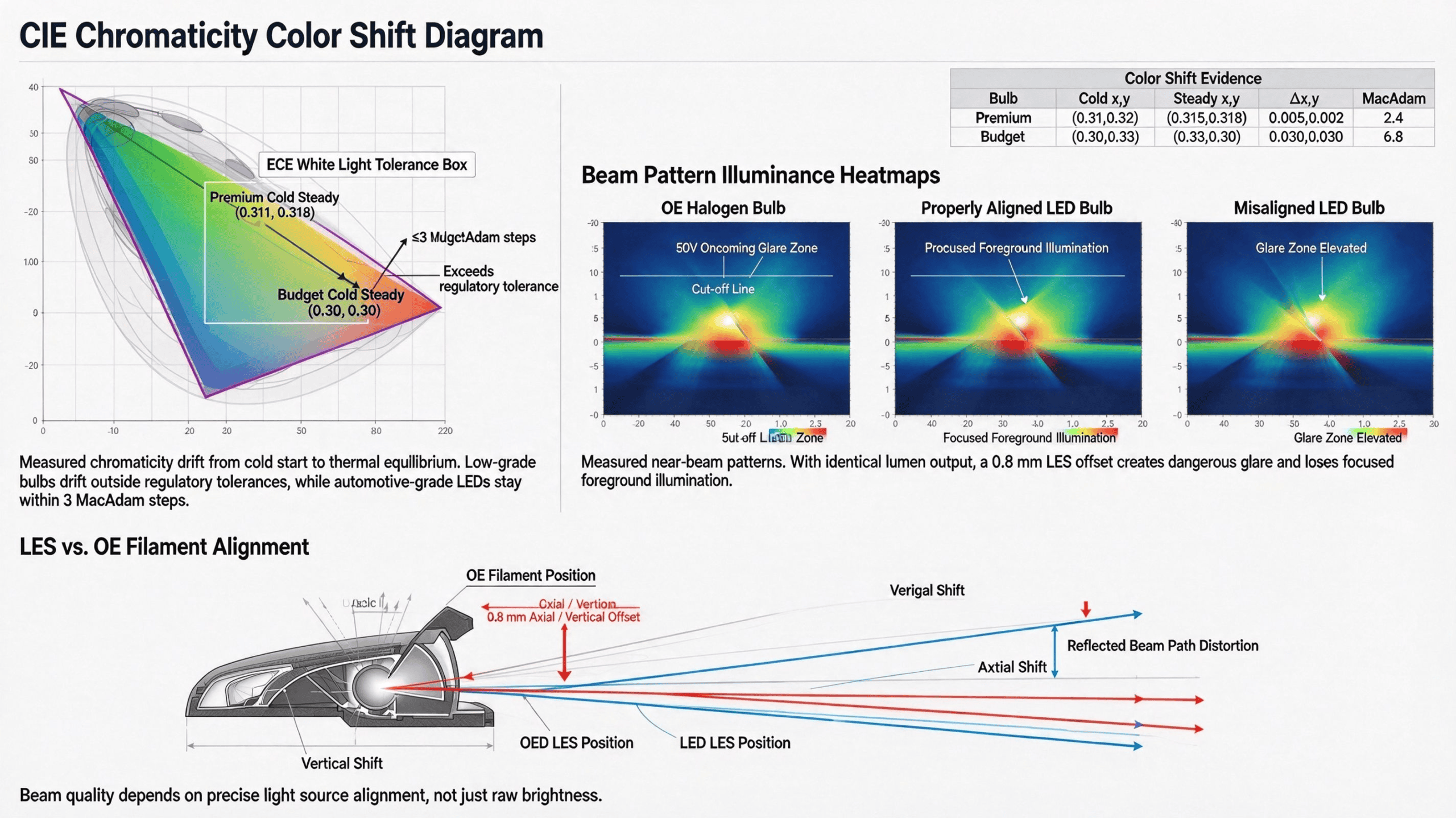
Temperature can affect LED color and long-term material stability. For a headlight, the position and orientation of the light-emitting surface also matter: a replacement bulb that does not match the intended optical geometry may produce an unsuitable beam or excess glare. Thermal claims should be kept distinct from beam-pattern claims, which need their own photometric testing.
Shorter component life
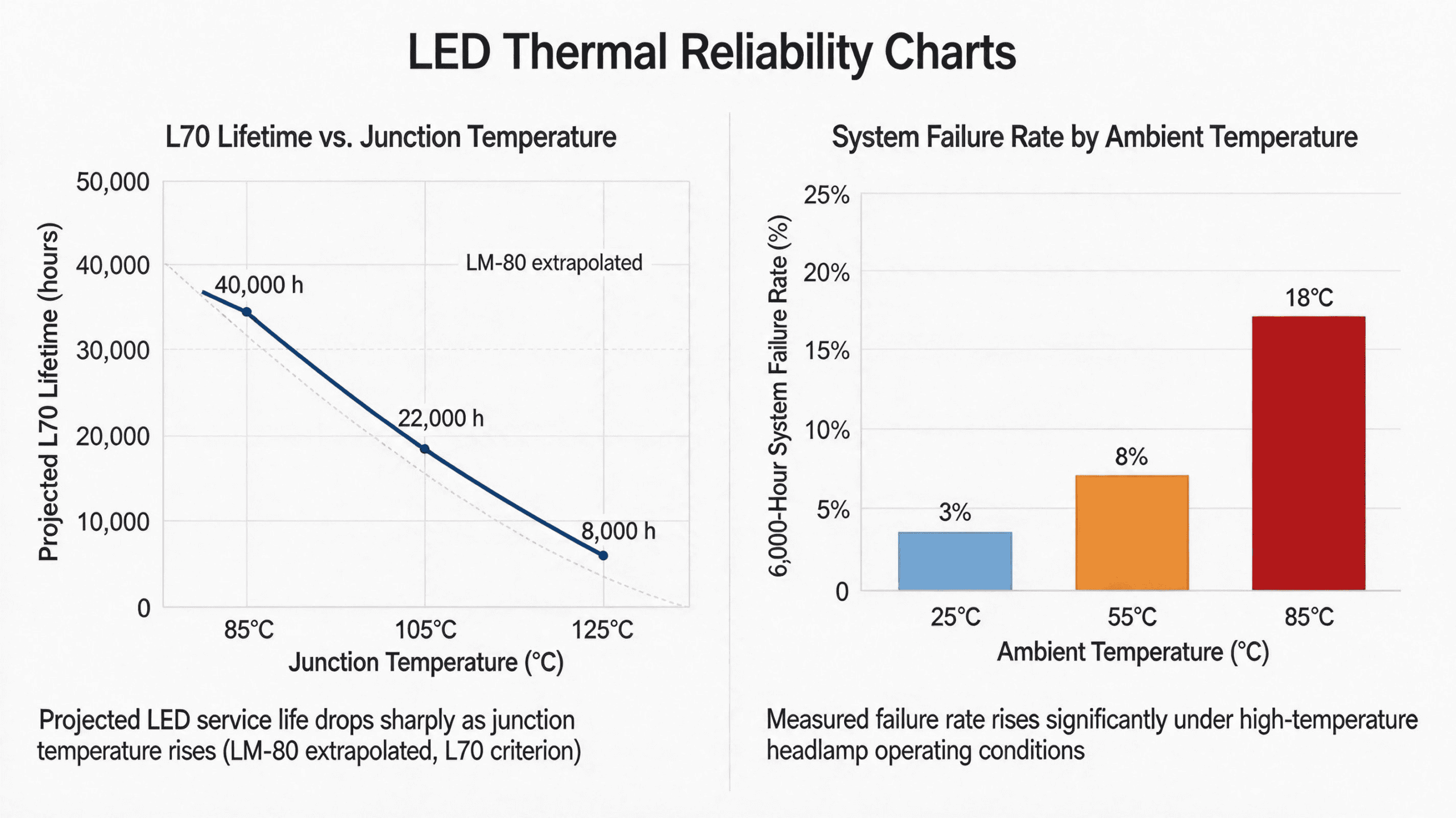
High operating temperatures can accelerate degradation in LED packages and driver electronics. Actual service life depends on the complete design and use conditions.
Effects on the headlamp assembly
An LED conversion kit can change the thermal and electrical conditions inside a headlamp enclosure. Compatibility depends on the vehicle, lamp design and installation.
| Parameter | Details |
|---|---|
| Test source | carlightvision-supplied summary attributed to a TÜV SÜD 2024 aftermarket LED compatibility bench test. The report, report number and lab confirmation were not included with this document; do not present as independently verified until attached. |
| Tested vehicle / headlamp models | VW Golf Mk7 OEM H7 reflector headlamp; Honda Civic 10th Gen OEM H11 projector headlamp. |
| Measurement method | Sealed environmental chamber (40°C ambient), 1-hour continuous operation to thermal steady state; thermocouple monitoring of lens inner surface, reflector substrate, bulb connector, and wiring harness terminals |
| Data type | Empirical laboratory measurement |
| Key measured results | Reported results: reflector setup, 12–18°C local reflector-surface increase with selected poorly matched LED bulbs; projector setup, component temperatures within <5°C of stock halogen; blocked fan, connector temperature increase >25°C. |
How LED headlight cooling systems work?
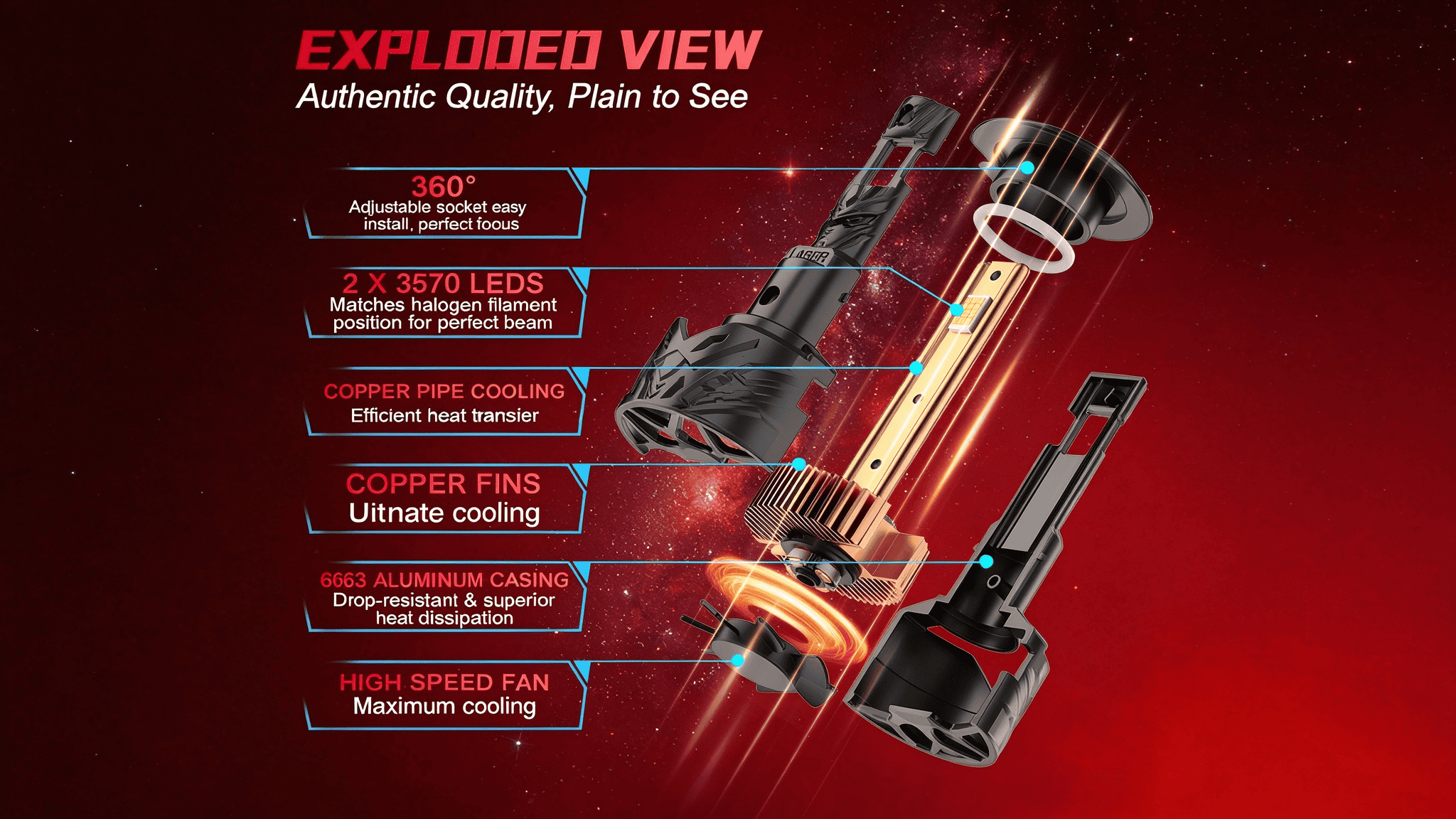
Most designs combine a thermal path from the LED board to a heat sink with either passive heat dissipation or forced airflow. Some bulbs also use heat pipes or separate the driver from the LED assembly. Each design involves trade-offs in size, noise, installation clearance, durability and serviceability.
Heat pipes and copper components
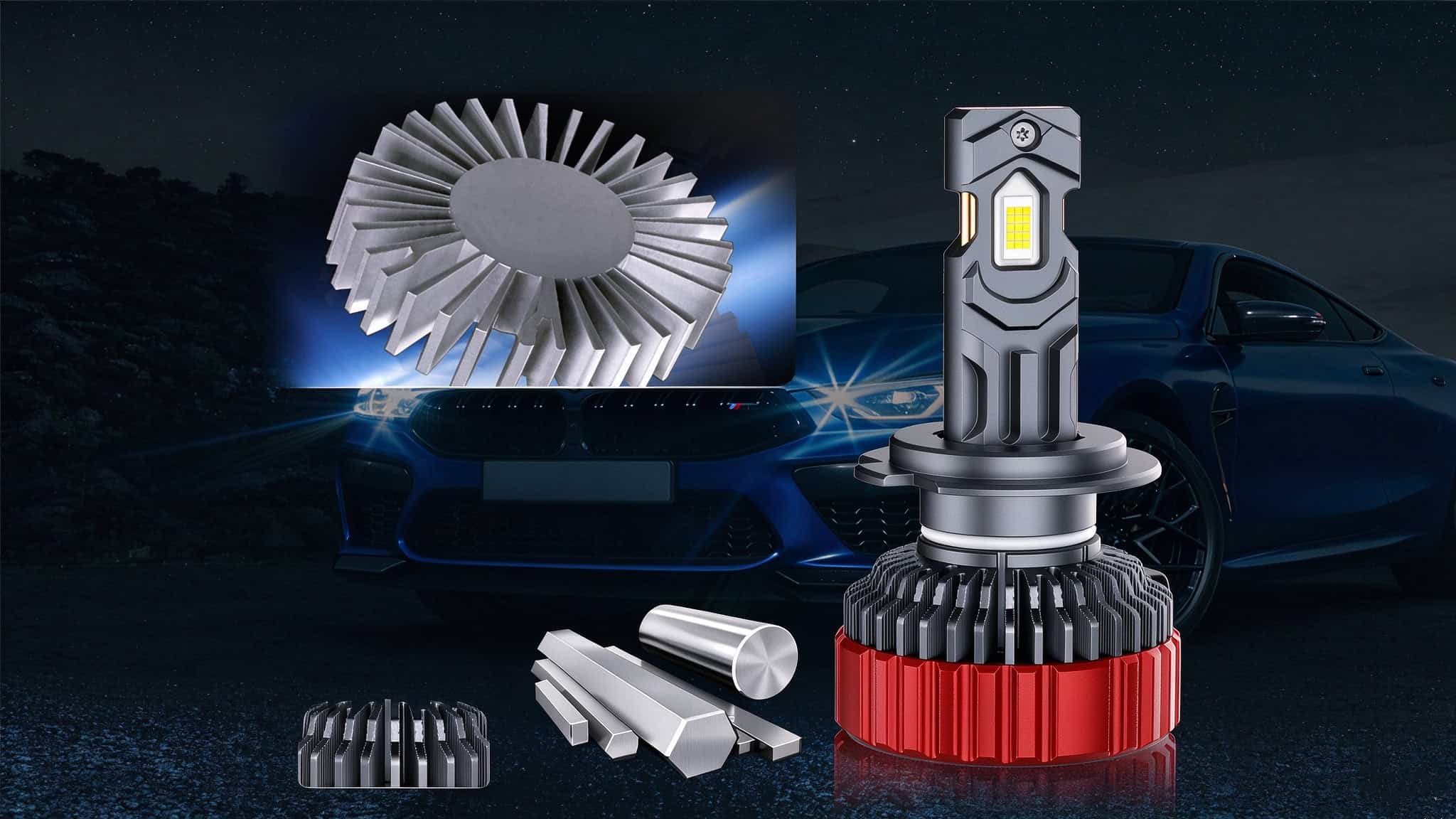
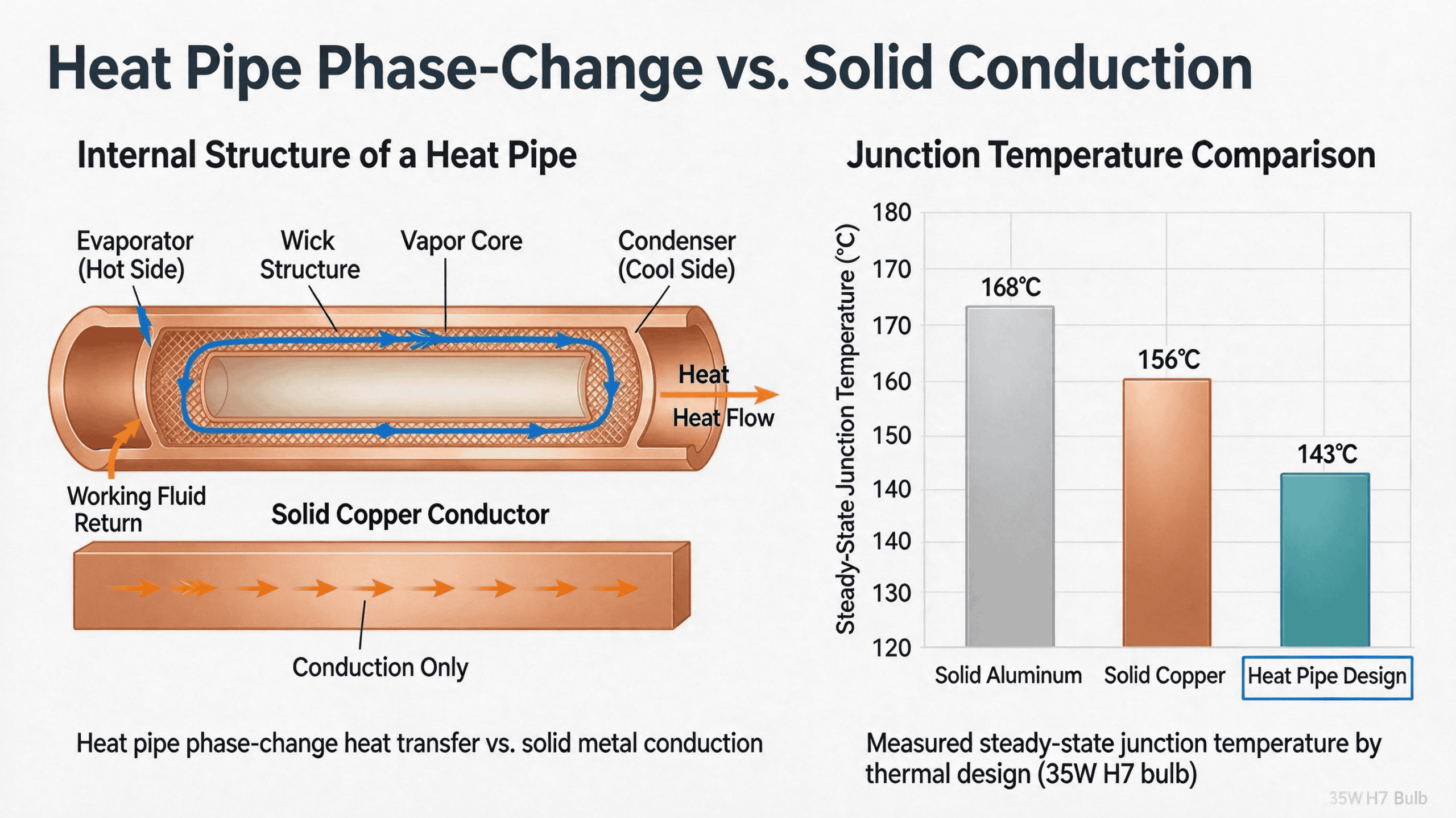
Heat pipes transfer heat through phase change in a sealed working fluid and can be useful where packaging space is limited. Copper is commonly used where high thermal conductivity is useful; aluminum is often used for finned heat sinks because it is lightweight and readily formed. Actual cooling performance depends on the complete design and installation.
Cooling fans
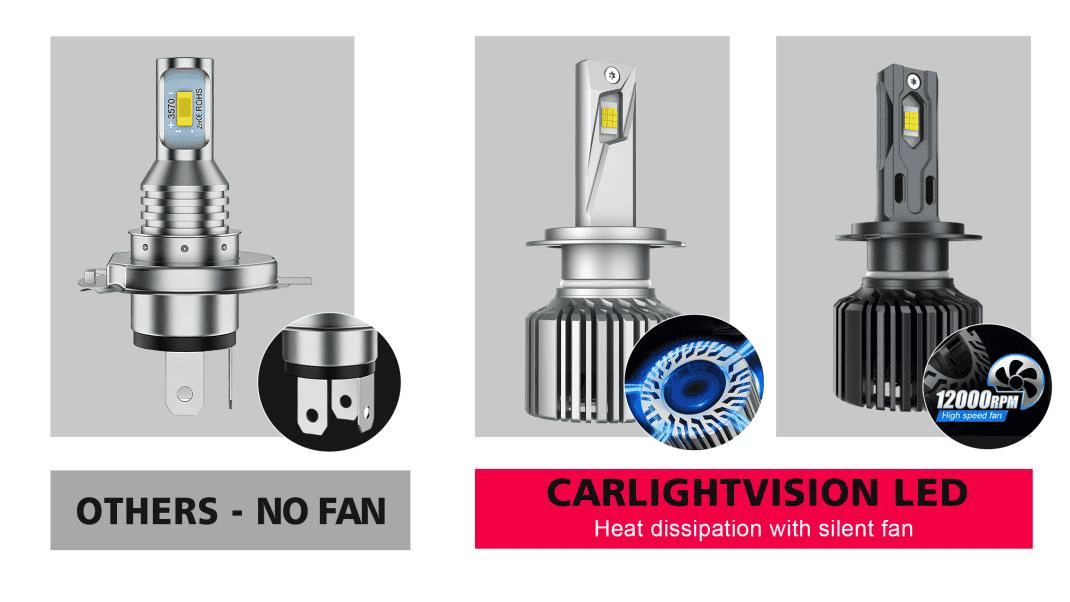
A fan can move air across a heat sink and may help a compact bulb reject heat. Its real-world value depends on airflow, operating temperature, bearing type, dust exposure, acoustic behavior and available space inside the headlamp. A fan also adds a moving component that can eventually require service or fail.
Driver location and thermal design
The driver regulates power to the LED. Separating it from the LED board may give designers more flexibility in component placement and heat management, but an external driver is not automatically cooler or longer-lasting. Installation location, enclosure temperature, electrical design and component ratings all matter.
| Item | Details |
|---|---|
| Test basis | carlightvision-supplied comparative test summary for a 60 W H11 platform. |
| Matched conditions | Identical LED array, 60W input, same measurement points, 60 min steady state |
| Comparison groups | Integrated driver mounted on LED PCB; external driver separated by 10 cm wire. Verify that LED array, electrical input, installation position and all other test conditions were controlled. |
| Measurement method | Thermocouple monitoring of LED junction and driver MOSFET case temperature; L70 life projected via Arrhenius model |
| Data type | Thermocouple measurements and an Arrhenius-based lifetime estimate are described. Supply the test report, component temperatures, model assumptions and validation before publishing the projected life effects. |
| Key result | carlightvision-reported: at 55°C ambient, external-driver configuration showed 4–6°C lower LED junction temperature and ~15% longer projected L70; at 85°C, it showed key components 18°C hotter and ~40% lower projected driver life versus integrated. These are setup-specific internal results, not general rules. |
CANBUS compatibility and load resistors
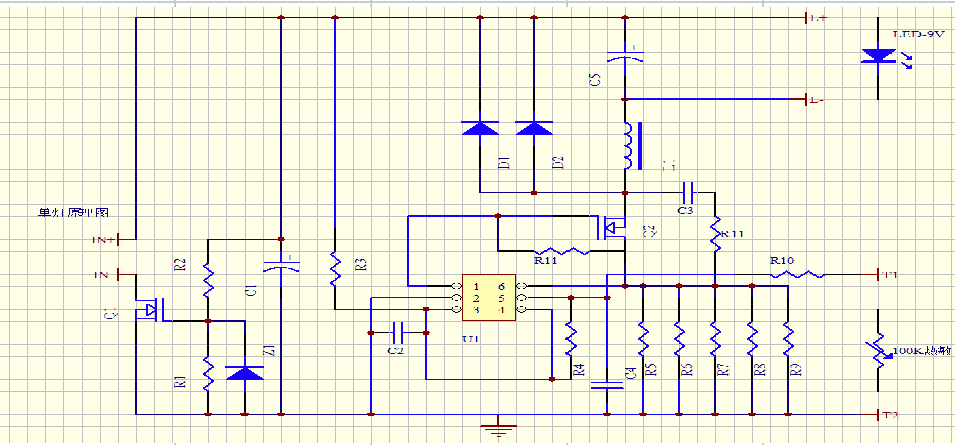
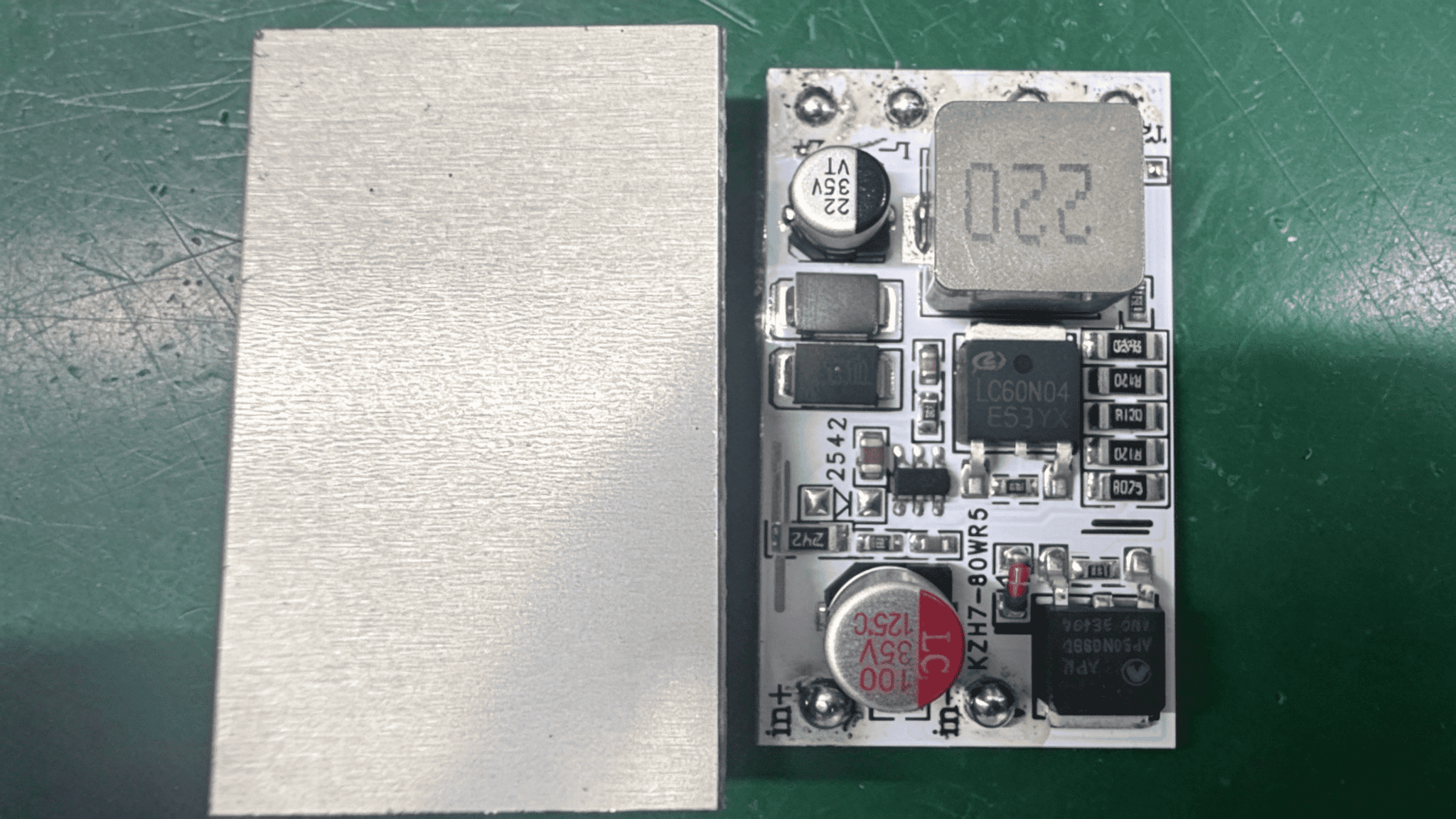
Some vehicles monitor lighting circuits and may show a warning or behave unexpectedly after an LED conversion. Compatibility solutions vary by vehicle and bulb. Load resistors can draw additional power and produce heat; their effect depends on resistor rating, installation location and duty cycle. Integrated decoding may avoid some external components, but compatibility should be verified for each vehicle rather than expressed as a universal percentage.
How to compare thermal performance
A useful comparison reports the bulb’s sustained light output together with the electrical and thermal conditions under which it was measured. At minimum, look for:
- Input voltage and current, and measured electrical power per bulb.
- Luminous flux after the bulb reaches thermal stability, with the test method and instrument identified.
- Ambient temperature and whether testing was done in free air or inside a representative headlamp enclosure.
- Test duration, sample size and whether results represent one sample or a production average.
- Temperature measurement locations and method, such as thermocouple position or calibrated thermal imaging.
- A clear distinction between measured results and lifetime projections.
Product test results
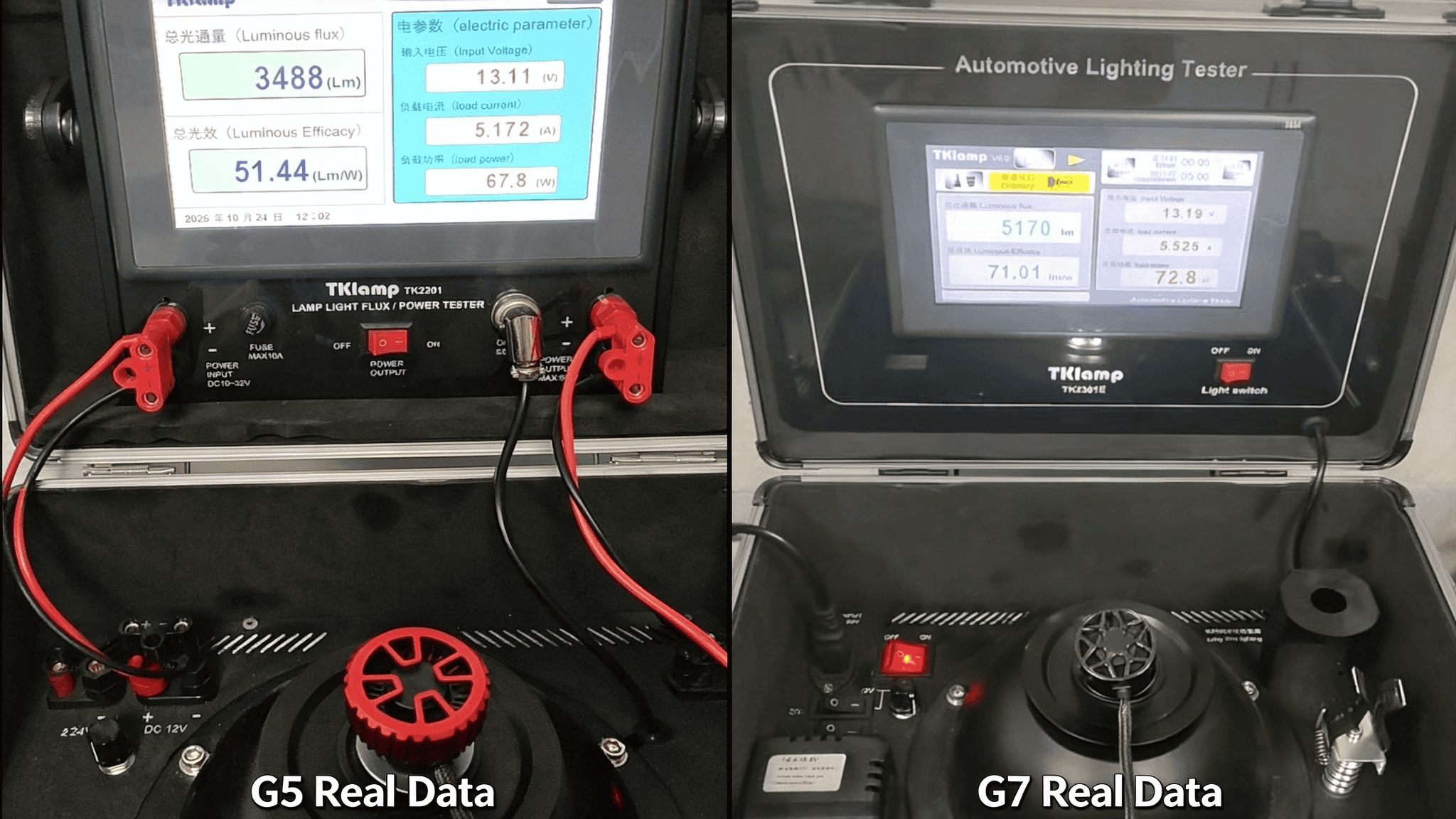
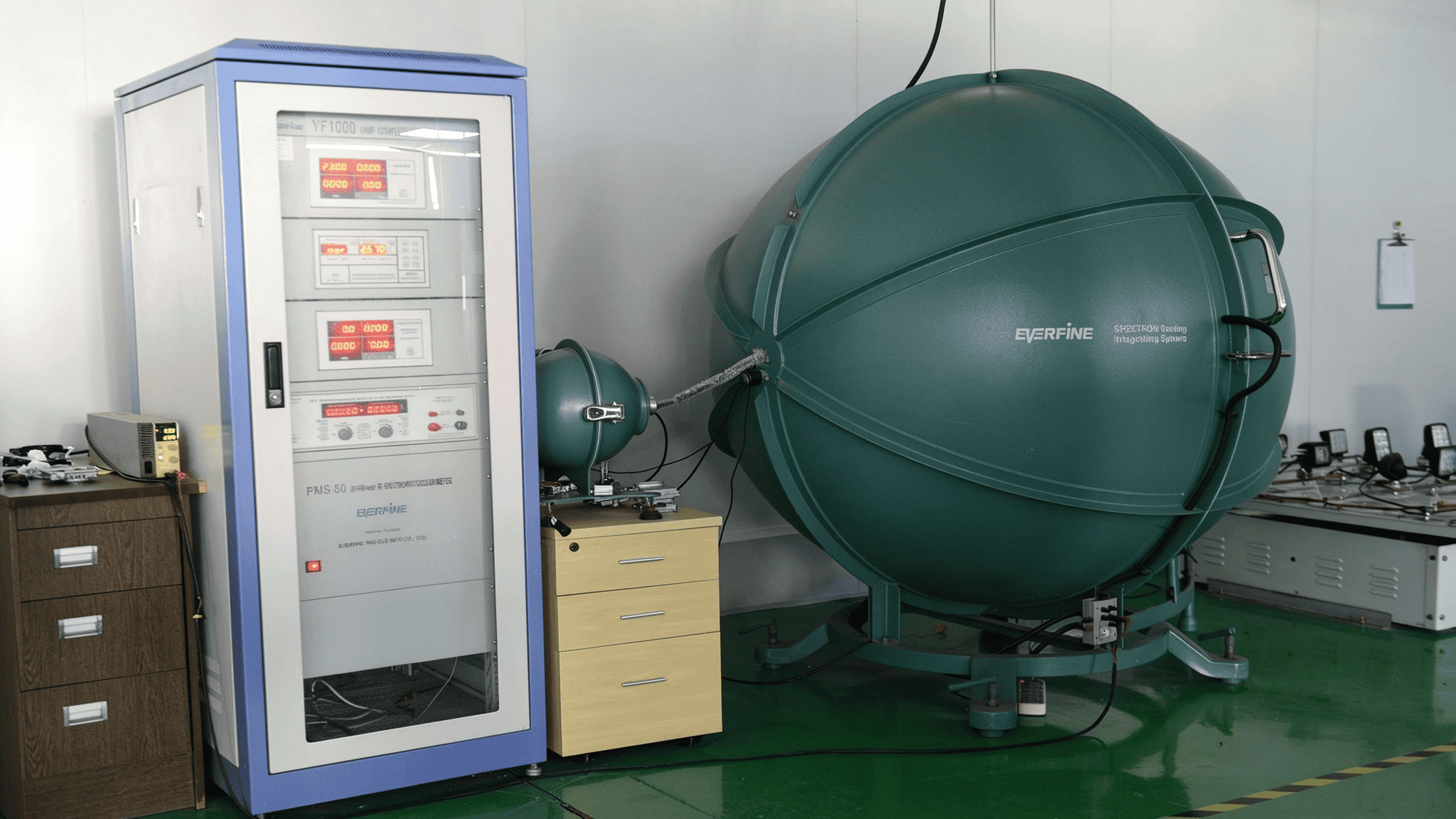
The following values are carlightvision-reported product measurements. The table summarizes the conditions supplied for this revision; retain the original instrument records and calibration documentation so the results can be independently checked.
| Bulb Model | Sample | Input | Power per bulb | Stabilized output per bulb |
|---|---|---|---|---|
| G5 H7 | 3 | 13.5V | 67.8W | 3488LM |
| G7 H7 | 3 | 13.5V | 72.8W | 5170LM |
| Efficacy(calculated) | Ambient | Test Setup | Stabilization | Instrument/calibration |
| G5: 51.44LM/W | 50℃ | Sealed H7 reflector housing | 30-minute soak, steady state reported | integrating sophere model, calibration date and uncertainly not supplied |
| G7:71.01LM/W | 50℃ | Same H7 reflector housing | 30-minute soak, steady state reported | same integrating sophere model, calibration date and uncertainly not supplied |
Reliability and aging tests
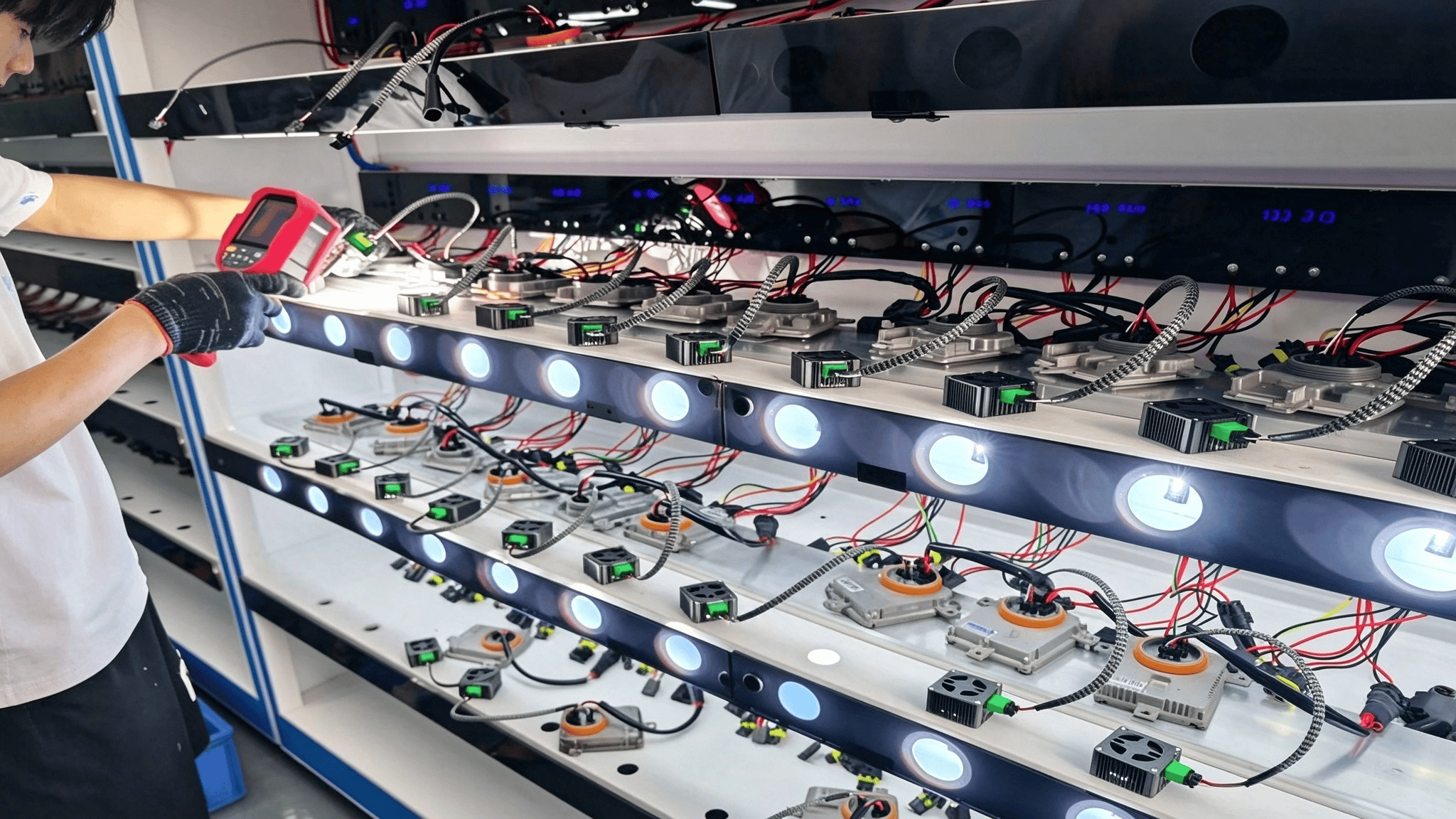
Short operating checks can reveal some early problems, but they do not by themselves establish a bulb’s service life. Reliability statements should describe the test protocol and distinguish a screening test from a long-duration life test or a projection.
A transparent report can include continuous operating time, on/off cycling, temperature conditions, sample size, failures observed, lumen maintenance and the method used to estimate any L70 value.
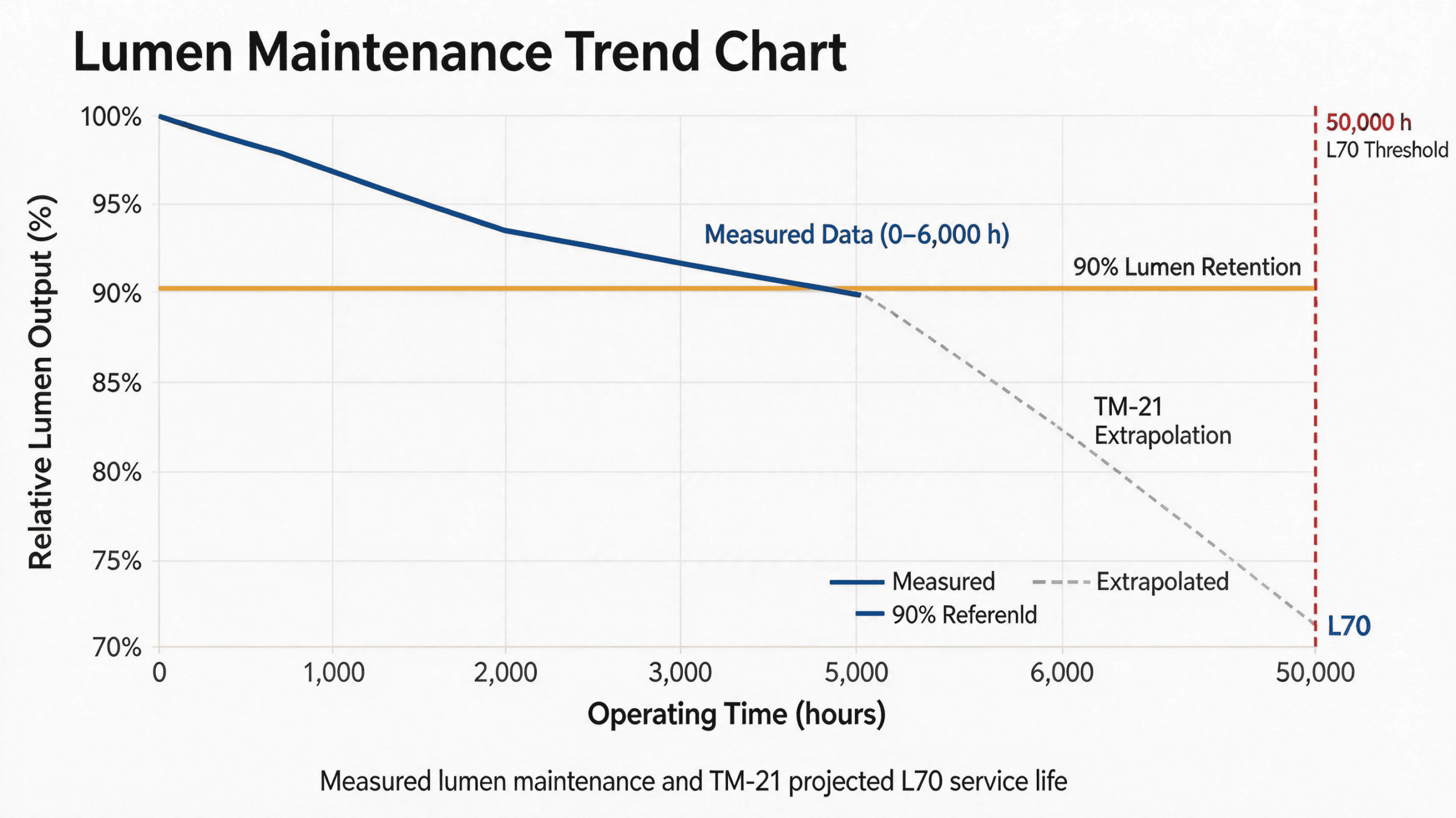
IES LM-80 measures light-output and color maintenance for LED packages, arrays and modules. TM-21 is a method for projecting LED-source maintenance from LM-80 data; it is not, by itself, a complete-bulb lifetime test. Whole-bulb life also depends on the driver, thermal interfaces, fan and other components. Identify the LED source tested, the LM-80 report, the TM-21 calculation and applicable extrapolation limits.
Production burn-in screening
| Parameter | Specification |
|---|---|
| Coverage scope | carlightvision-reported scope: 100% of production units undergo burn-in before packaging. |
| Test protocol | carlightvision-reported: 13.5 V DC, 4 hours continuous, 25°C- 35°C ambient. |
| Failure criteria | Reported criteria: no light output, >10% current drift, out-of-spec CCT shift, or decoding fault. Define the applicable CCT tolerance and measurement method. |
| Audit sample size | carlightvision-reported audit: 100 units per 1,000-piece batch for parametric verification. |
| Record basis | In-line production log and monthly SPC report are cited by the company; include record period or report identifier in published copy. |
The supplied production record states that every unit receives a four-hour burn-in at 13.5 V DC and 25°C- 35°C. The stated failure criteria are no light output, more than 10% current drift, out-of-spec CCT shift or a decoding fault. The supplied process description also reports parametric verification of 100 units per 1,000-piece batch.
Lumen maintenance and service-life claims
carlightvision-reported life-test data: 30 units were operated continuously at 55°C ambient, with a reported steady-state LED junction temperature of 105°C. Photometric readings were taken at 1,000, 3,000 and 6,000 hours. The reported 6,000-hour average lumen maintenance was 92.4%, with no catastrophic failures in the group.
Manufacturing checks that can support consistency
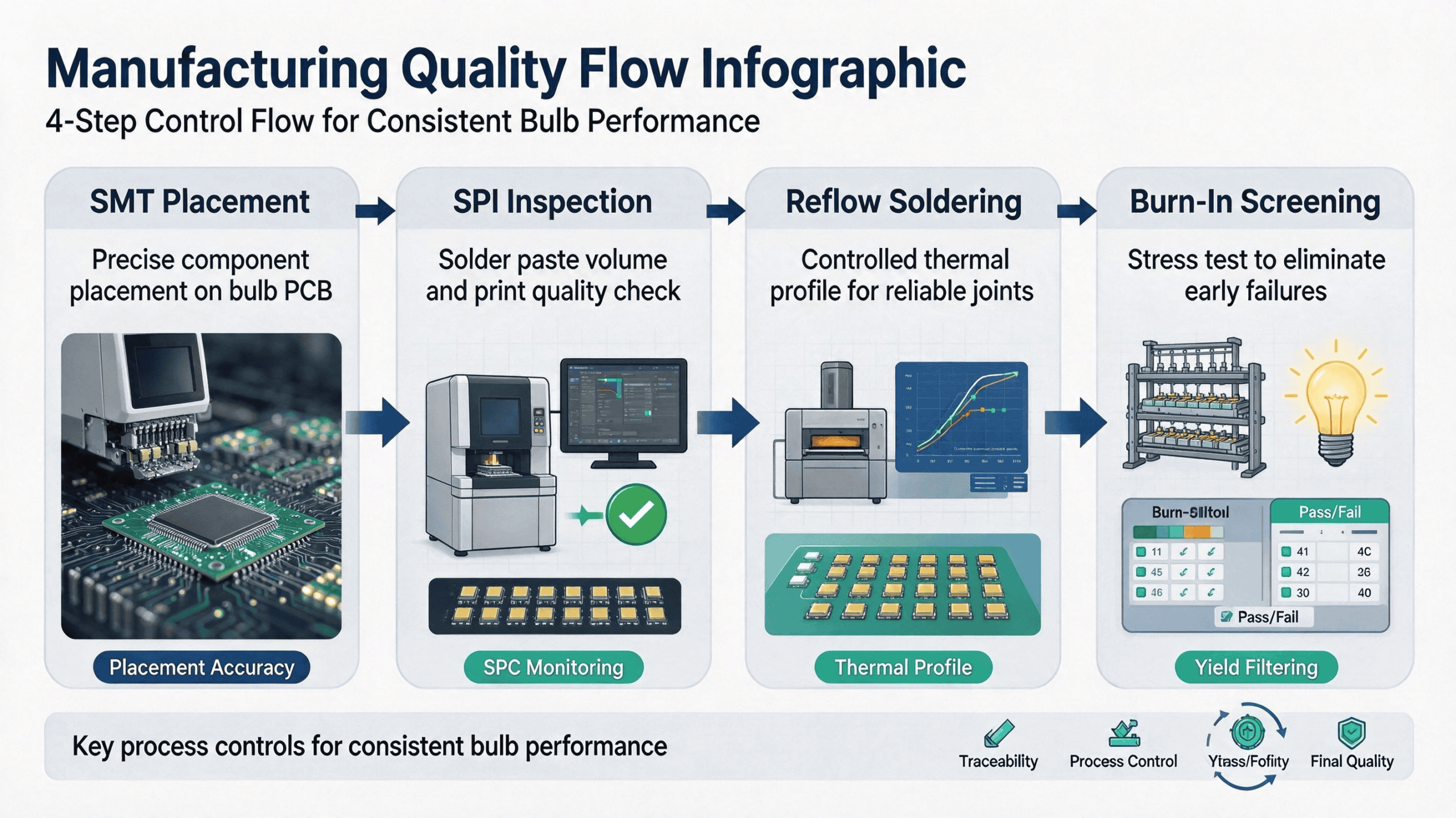
Manufacturing controls can help reduce variation, but their value is best demonstrated through process records and product-level inspection data.
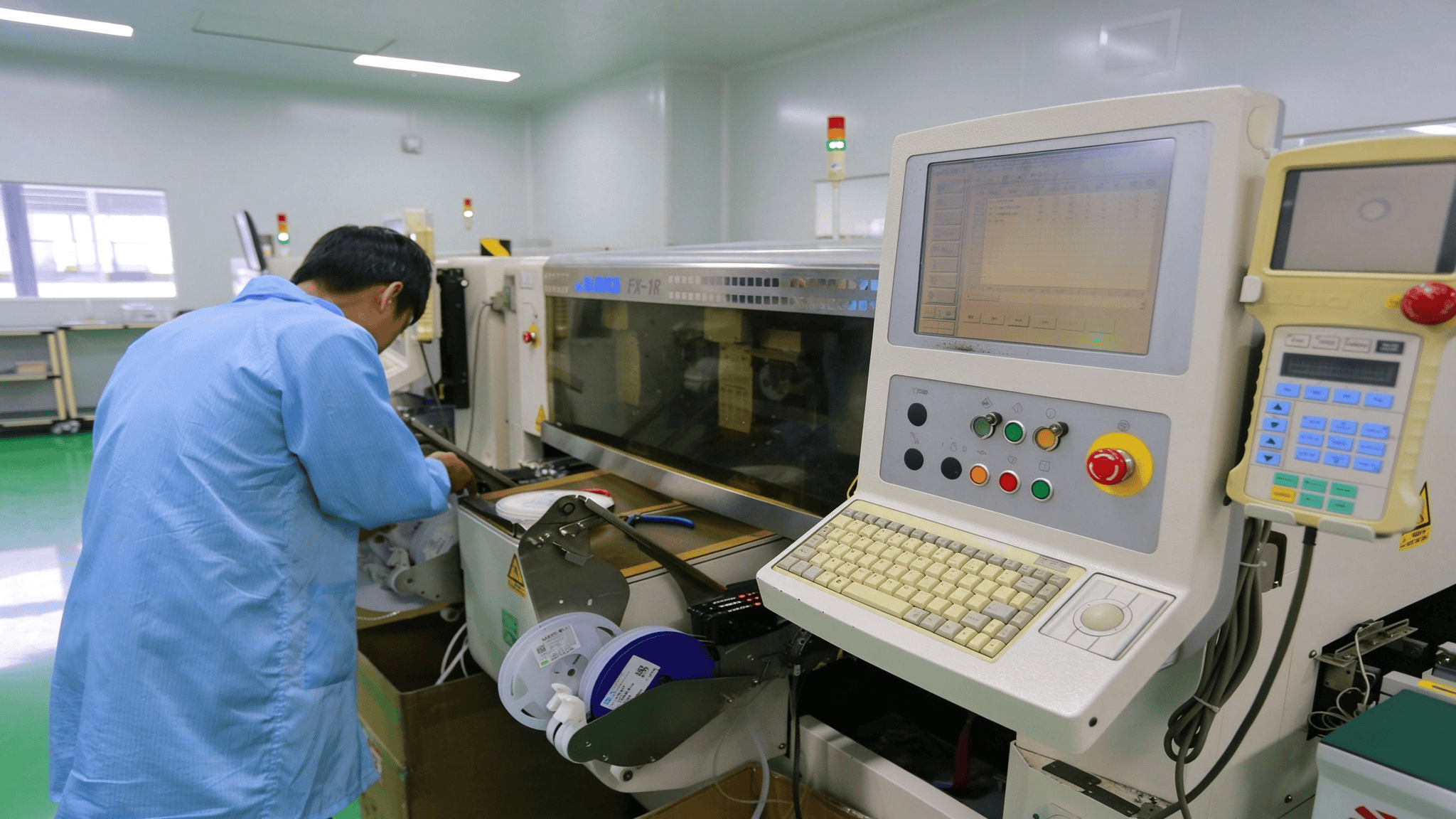
LED placement and thermal interfaces
Placement accuracy and a consistent thermal interface can help maintain repeatable assembly. If a specific tolerance or process is advertised, explain what is measured and how it relates to finished-product performance.
Soldering and production screening
Controlled soldering profiles and production screening can help identify assembly defects. Describe the inspection scope accurately, including whether testing is performed on every unit or a sample.
Product examples: G5 and G7 H7
The following product figures are carlightvision-reported measurements from three samples per model. They are not independent third-party test results. Interpret them with the stated test conditions and do not treat the lumen readings as proof of beam compliance in every vehicle.
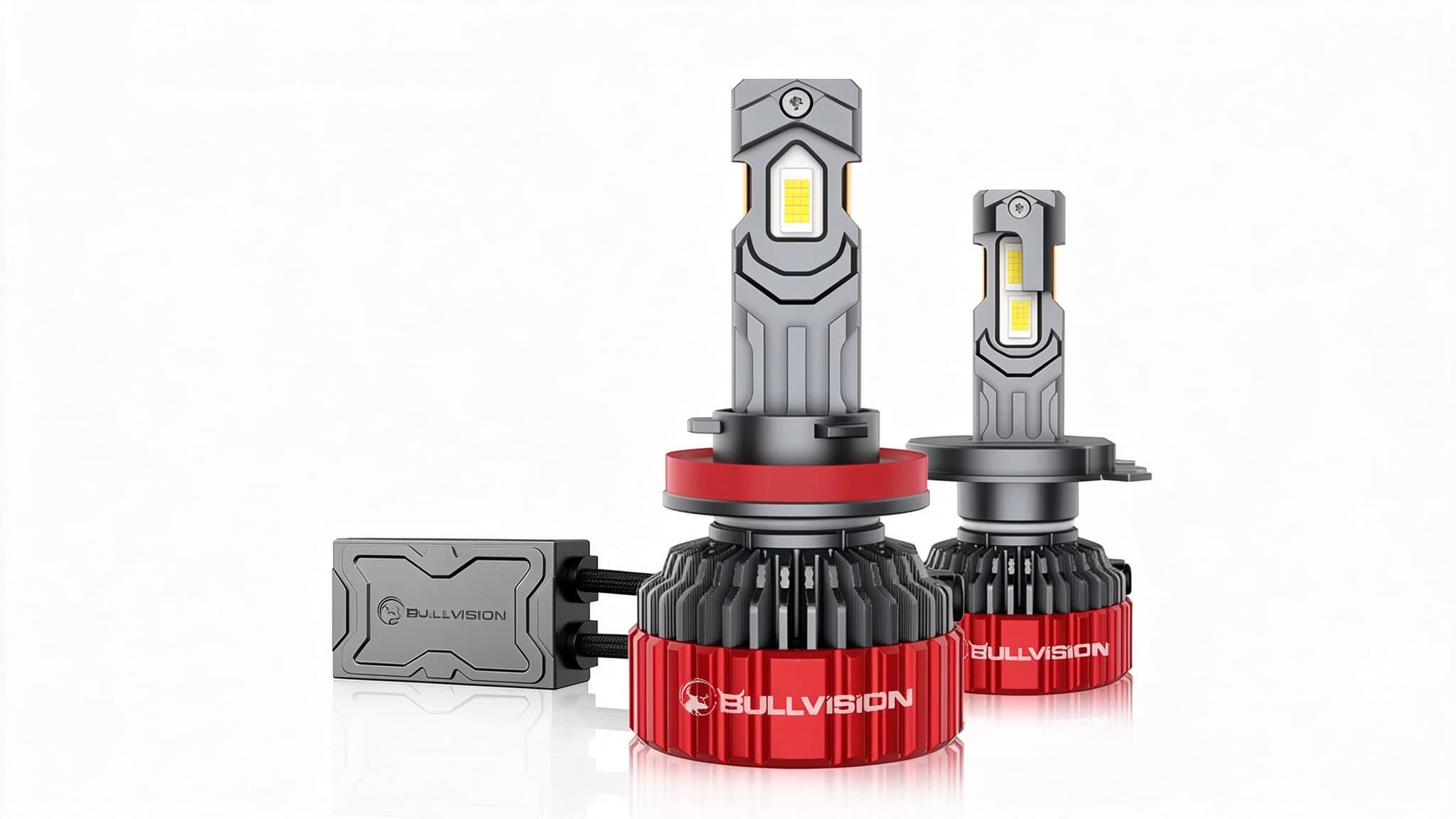
G5 series
Cooling design: Fan Cooling
Measured output: 3,488 lm per bulb at 13.5 V; three G5-H7 samples tested in a sealed H7 reflector housing at 50°C after a 30-minute soak and steady-state check.
Measured power: 67.8 W per bulb. Reported service-life rating: 50,000 hours.
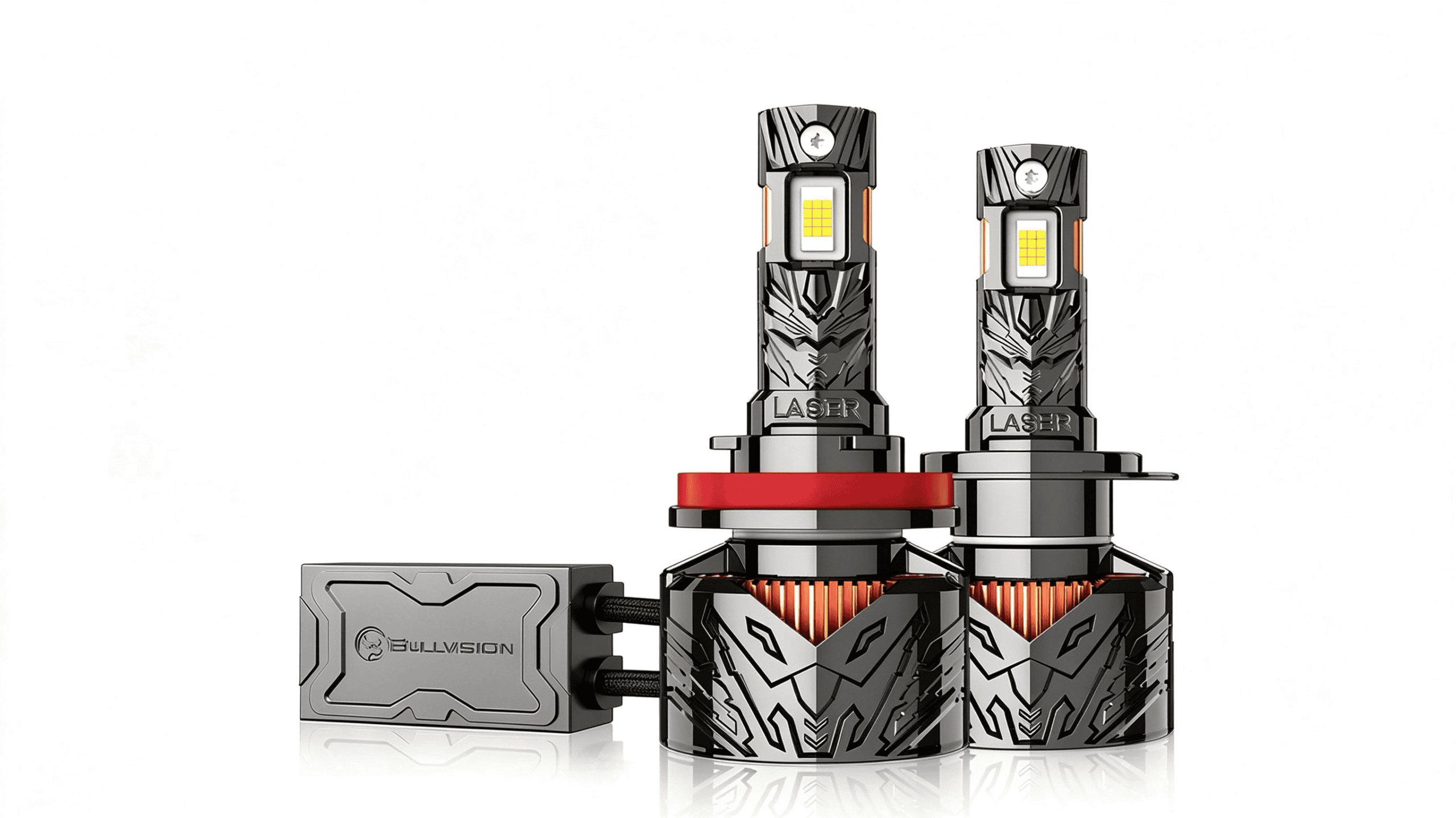
G7 series
Cooling design: Fan Cooling.
Measured output: 5,170 lm per bulb at 13.5 V; three G7-H7 samples tested in the same H7 reflector housing at 50°C after a 30-minute soak and steady-state check.
Measured power: 72.8 W per bulb. Reported service-life rating: 60,000 hours.
FAQ
Q1: Does higher wattage always mean brighter LED headlights?
No. Wattage describes electrical input, not light output by itself. Compare measured, sustained lumens under the same test conditions, and check beam performance in the intended headlamp..
Q2: Can fanless LED headlights perform well for everyday driving?
Some can, depending on power, thermal design, enclosure and ambient conditions. Compare stabilized output and temperatures for the complete bulb rather than relying on fan presence alone.
Q3: Will a cooling fan fail before the LED?
There is no universal answer. Fan life depends on its design and operating conditions, while LED and driver life depend on temperature and electrical stress. Look for component specifications and complete-product reliability data.
Q4: Why might LED headlights appear dimmer after warming up?
LED output can change as the bulb reaches operating temperature. Confirm the cause with a controlled measurement; vehicle voltage, wiring, optics and bulb compatibility can also affect perceived output.
Q5: Is an external driver better for heat management?
It can provide more placement options, but it is not inherently better. Installation location, driver design and measured operating temperature determine the result.
Q6: Can load resistors add heat inside a headlamp?
Yes. A load resistor dissipates electrical power as heat. The amount and impact depend on its rating, duty cycle and mounting location. Follow the vehicle and component installation instructions.
Q7: How long should an LED headlight bulb last?
Check how the lifetime figure was established and what it describes. A component rating, accelerated test and complete-bulb service-life projection are different kinds of evidence.
Q8: Can hot weather affect LED headlight performance?
Higher ambient temperatures can reduce the system’s ability to reject heat. Compare results at stated ambient temperatures and in a setup representative of the intended installation.
Q9: Are copper heat pipes always better than aluminum heat sinks?
They work differently and can be combined in one design. The complete system’s measured performance is more informative than material labels alone.
Q10: Do all manufacturers run aging tests?
Testing practices vary. Ask for the test protocol, sample size, duration and results instead of relying on a general claim about manufacturers.
Choosing an LED headlight bulb: a practical checklist
Before buying, confirm the bulb base and vehicle fitment, review sustained photometric data, check thermal and electrical test conditions, and make sure the cooling hardware and driver fit inside the headlamp assembly. Confirm local road-use requirements and follow the vehicle manufacturer’s installation guidance
Effective thermal management can help an LED headlight maintain performance, but it is one part of the whole system. Choose products with clear, reproducible evidence for output, compatibility and reliability—not headline wattage or peak lumen numbers alone.
References
- Chang, C.-H., Teng, T.-P., & Teng, T.-C. (2022). “Influence of Ambient Temperature on Optical Characteristics and Power Consumption of LED Lamp for Automotive Headlamp.” Applied Sciences, 12(22), 11443. https://doi.org/10.3390/app122211443
- United Nations Economic Commission for Europe. UN Regulation No. 112, Revision 4, Annex 4: Tests for stability of photometric performance of headlamps in operation. https://unece.org/sites/default/files/2025-01/R112r4e.pdf
- Australian Government. Australian Design Rule 101/00 – Light Emitting Diode (LED) Light Sources, 2026. https://www.legislation.gov.au/F2026L00926/asmade/2026-07-09/text/original/pdf
- Illuminating Engineering Society. ANSI/IES LM-80-21: Measuring Maintenance of Light Output Characteristics of Solid-State Light Sources. https://ies.org/products/measuring-maintenance-of-light-output-characteristics-of-solid-state-light-sources/
- Illuminating Engineering Society. ANSI/IES TM-21-21: Projecting Long-Term Luminous, Photon, and Radiant Flux Maintenance of LED Light Sources. https://ies.org/products/projecting-long-term-luminous-photon-and-radiant-flux-maintenance-of-led-light-sources/
- Illuminating Engineering Society. PS-10-18: IES Position on LED Product Lifetime Prediction. https://ies.org/advocacy/ps-10-18/
- SAE International. SAE J2464: Electric and Hybrid Electric Vehicle Rechargeable Energy Storage System (RESS) Safety and Abuse Testing. Confirm current edition and scope before citing.
Written by Mark Yang | 25 Years in Automotive Lighting Quality & Sourcing