Want to upgrade your vehicle’s reverse and interior lights? But the two similar options, T10 and T15 bulbs, confuse you most of the time. Both look alike at first glance, but their performance, size, and applications differ significantly. This guide explains the key differences between T15 and T10 and helps you choose the right upgrade that fits your needs.
What Are T10 and T15 Bulbs?
T10 and T15 bulbs are two of the most commonly used automotive wedge base bulbs. They are widely used in cars for different lighting purposes. Commonly, interior illumination and safety-focused exterior lights. Although they have a similar base design, their size, power, and brightness levels are quite different.
What’s the T10 Bulb
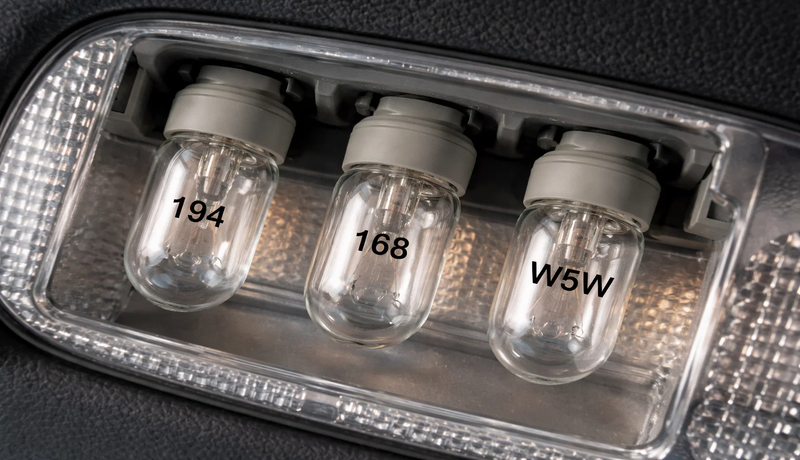
A T10 bulb is a small tubular light bulb. T stands for tubular shape, and “10” refers to its diameter. It is also known by several other names, such as 194, 168, and W5W, which often leads to confusion when identifying the correct replacement.
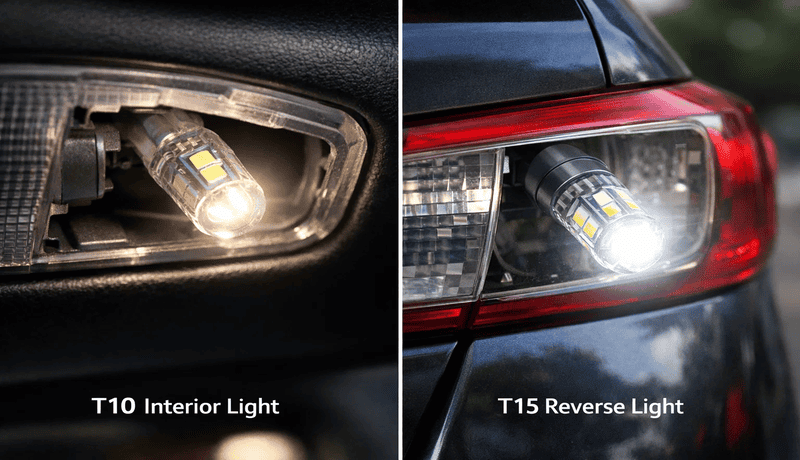
This bulb is commonly used in low-power applications, including interior dome lights, map lights, license plate lights, and side marker lights. Due to its compact T10 bulb size, it fits easily into tight spaces and is ideal for areas where moderate brightness is sufficient.
What’s the T15 Bulb
A T15 bulb is larger and designed for higher output compared to a T10. It is also referred to as 921, 912, or W16W. Different manufacturers considered 921, 912, and W16 equivalent to the T15 bulb.
T15 bulbs are typically used where stronger illumination is needed, such as reverse lights, cargo lights, and third brake lights. Their higher wattage and brightness improve visibility and safety.
Key Structural Similarity
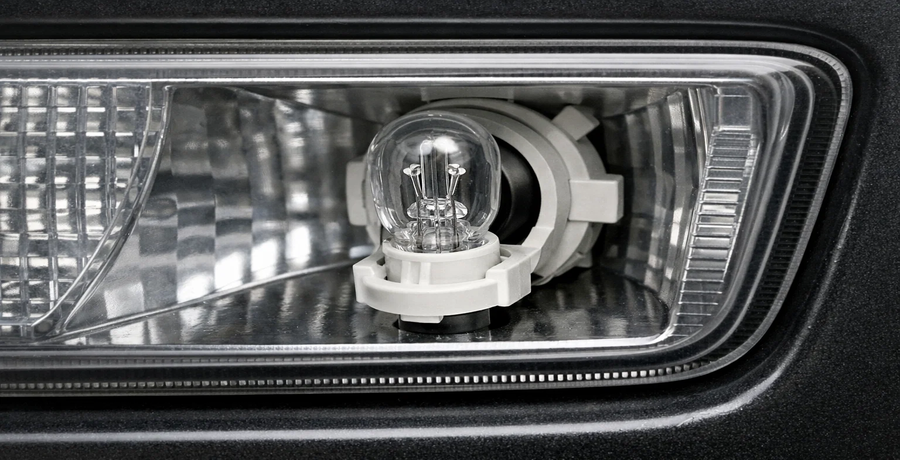
Both t10 and t15 light bulb types use a wedge base. That’s why they can be plugged directly into compatible sockets without additional connectors. This similarity often causes people to assume they are interchangeable.
However, despite having the same base type, their physical size and performance differ. This is why it’s important to check specifications instead of relying only on the socket type.
T10 vs T15 Bulbs: 3 Key Differences
Although T10 and T15 bulbs have a similar base design, the key differences become clear when you compare size, power consumption, and brightness. These factors affect where each bulb should be used and its performance.
Size and Fitment
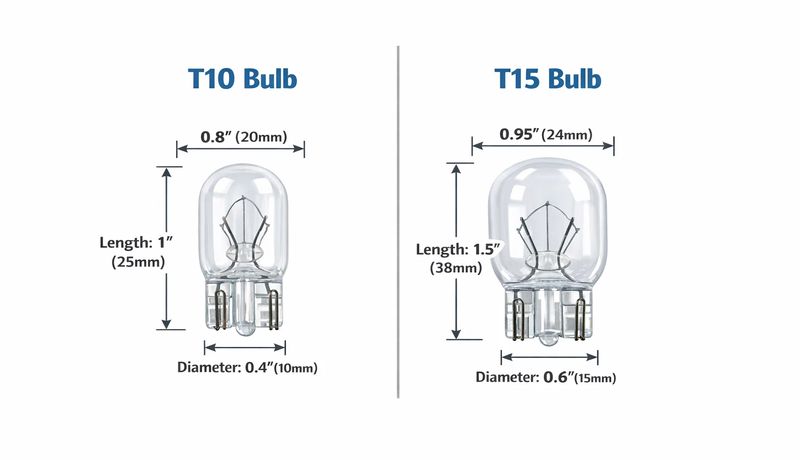
The most noticeable difference in T10 and T15 bulbs is their physical size. A T10 bulb is compact and shorter. It is suitable for small housings such as interior lights and license plate lights. In contrast, a T15 bulb is longer and slightly wider. So it can support higher output, but also needs more installation space.
This difference matters during installation. A T15 bulb may not fit properly in a T10 housing due to its length. However, a T10 may fit loosely or fail to deliver proper coverage in a T15-designed socket.
Power Consumption (Wattage)
Power consumption is another key factor that separates these two bulbs. A standard T10 halogen bulb typically operates between 3 and 5 watts, which is enough for low-intensity lighting. On the other hand, a T15light bulb usually runs between 12 and 16 watts. It provides much higher output for demanding applications.
If you refer to a T10bulb wattage chart, you’ll see that T10 bulbs are designed for efficiency rather than brightness. Modern LED options, such as the T10 LED bulb and the T15 LED bulb, reduce power usage significantly while still improving light output.
Brightness Comparison (Lumens)
Brightness is where the difference becomes most important, especially for safety-related lighting.
| Bulb Type | Halogen Lumens | LED Lumens | Typical Use |
|---|---|---|---|
| T10 (194/W5W) | 100–200 lm | 200–400 lm | Interior/plate |
| T15 (921/W16W) | 300–500 lm | 600–1200 lm | Reverse light |
Because of this, a T15 LED bulb is the preferred choice for backup lighting, while a T10 LED light bulb is better suited for interior and decorative use.
Can You Use T10 Instead of T15?
In some cases, T10 and T15 bulbs physically fit, but their performance and intended use are quite different. Using the wrong bulb can lead to poor lighting results or even safety concerns.
Same Base but Different Purpose
Both the t10 bulb and t15 bulb use a wedge base design. So they can be plugged into similar sockets. However, the base is only one part of the equation. Their size, wattage, and brightness are designed for different applications. It means they serve different purposes in a vehicle.
Using T15 in a T10 Socket
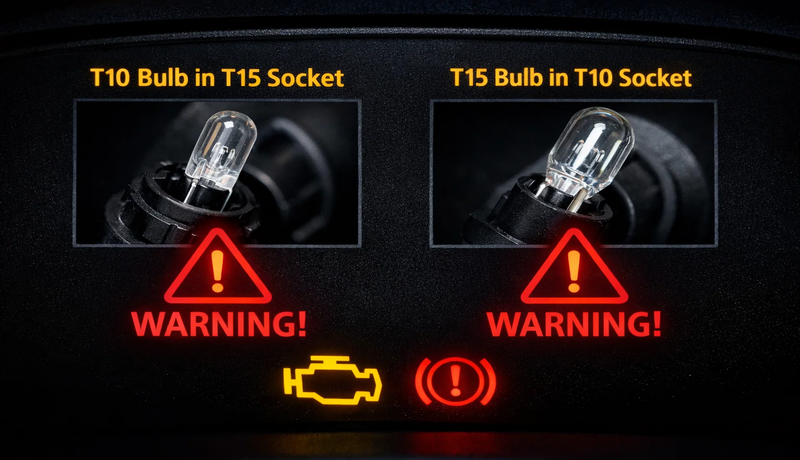
Installing a T15 light bulb in a T10 socket is usually not recommended. Because a T15 is larger and more powerful. It may not fit properly in smaller housings designed for a T10 light bulb. Even if it fits, the higher wattage can generate more heat, which can damage the housing or reduce the lifespan of surrounding components.
Using T10 in a T15 Application
Using a T10 bulb equivalent in place of a T15 is also not ideal. A T10 simply does not produce enough brightness for applications like reverse lights or cargo lighting. This can reduce visibility, especially at night. It can also affect safety when reversing or driving in low-light conditions.
Best Practice
The safest approach is to always follow the original equipment manufacturer (OEM) specifications for your vehicle. Each bulb type is selected based on the required brightness, heat tolerance, and housing size.
In some low-risk situations, such as interior lighting, switching between T10 LED bulbs and similar options can be acceptable. But for reverse or brake lights, it’s best to use the correct bulb type for proper performance and safety.
LED vs Halogen: 4 Key Differences
In modern automotive lighting, two choices, LED and halogen bulbs, are available. Both serve the same basic function, but their performance, efficiency, and lifespan differ significantly. Understanding these differences can help you make a more reliable and cost-effective upgrade.
Lifespan Comparison
One of the biggest advantages of LED technology is its long lifespan. A standard halogen bulb typically lasts between 500 and 1,000 hours, depending on usage. In contrast, LED options such as t10 led bulb and t15 led bulb can last anywhere from 30,000 to 50,000 hours.
This longer lifespan reduces the need for frequent replacements, which is especially valuable for commercial fleets or vehicles used daily.
Energy Efficiency
LED bulbs are more energy efficient than halogen bulbs. Halogen bulbs convert a large portion of energy into heat while LEDs use most of their energy to produce light. As a result, LED bulbs can use up to 70–80% less power with higher brightness.
This improved efficiency helps reduce load on the vehicle’s electrical system and supports more stable performance over time.
Heat Dissipation & Build Quality
Heat management is a key factor in bulb performance and durability. Halogen bulbs generate significant heat, which can affect surrounding components. In comparison, LED bulbs produce less heat but still require proper dissipation to maintain performance.
High-quality LED bulbs also include aluminium bodies, built-in heat sinks, and smart IC drivers. These features help regulate temperature, prevent flickering, and ensure consistent output, especially in demanding automotive environments.
Light Output & Color Options
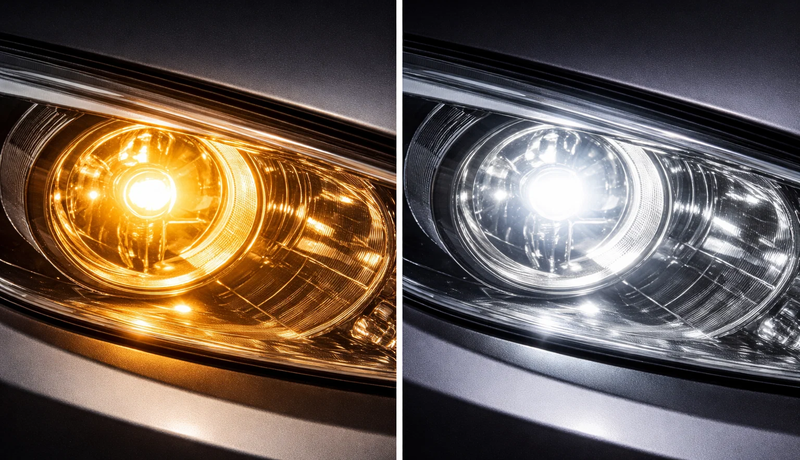
LED bulbs provide better light quality and more flexibility compared to halogen bulbs. A T10 halogen bulb usually emits a warm yellow light, while LED versions provide brighter and clearer illumination.
Options like T10 LED light bulbs and T10 LED bulbs are available in multiple colors, including white, amber, and red. In addition, LEDs provide wider beam angles and more uniform light distribution.
This improves visibility inside and outside the vehicle. That’s why LEDs are the preferred choice for both functional and aesthetic upgrades.
How to Choose T10 and T15 Bulbs
Choosing between T10 and T15 bulbs depends on your vehicle’s requirements, lighting purpose, and performance expectations.
Price Comparison (2025–2026 Market)
| Bulb Type | Halogen Price | LED Price |
|---|---|---|
| T10 | $2–$5 | $8–$20 |
| T15 | $5–$10 | $15–$30 |
Halogen bulbs are cheaper upfront, but LED options last longer. So LEDs are more cost effective over time.
What to Look for When Buying LED Bulbs
When selecting a T10 LED bulb or a T15 LED bulb, focus on features that bring stable performance:
- CANBUS error-free design to avoid dashboard warnings.
- An aluminium body or heat sink for proper heat dissipation.
- Waterproof rating (IP65 or higher) for durability.
- Plug-and-play design for easy installation.
These features are especially important for maintaining consistent brightness and preventing early failure.
Regulations & Certifications
Before purchasing, check that the bulb meets recognized safety and quality standards. Look for:
- DOT compliance for road use.
- SAE standards for automotive lighting performance.
- ECE certification for international compatibility.
These standards ensure that the bulb performs safely and is legal in its intended application.
Safety Considerations
The right brightness level is critical for safe driving. Overly bright bulbs can cause glare for other drivers. While low brightness reduces your own visibility.
For example, a T10 light bulb in a reverse light setup cannot provide enough illumination, while an overly powerful T15 LED bulb in a small housing can create excessive heat. Always match the bulb type to its intended function and avoid unnecessary modifications in safety-critical areas.
How to Install T10 and T15 Bulbs (Step-by-Step)
Installing T10 and T15 bulbs is a simple process in most vehicles. However, following the correct steps helps avoid damage and improve performance. Always turn off the vehicle and allow the bulbs to cool before starting.
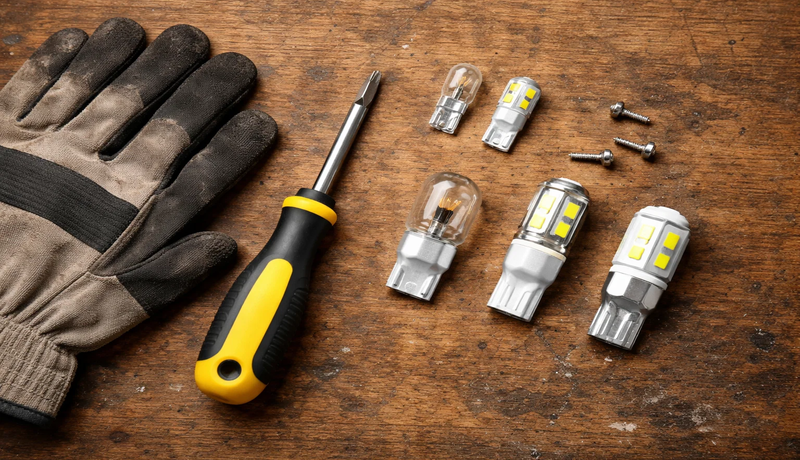
Tools You’ll Need
Before you begin, prepare the following:
- Replacement t10 bulb or t15 bulb
- Clean gloves (to avoid fingerprints on bulbs)
- Screwdriver (if the housing requires removal)
Installing T10 Bulbs (Interior Lights)
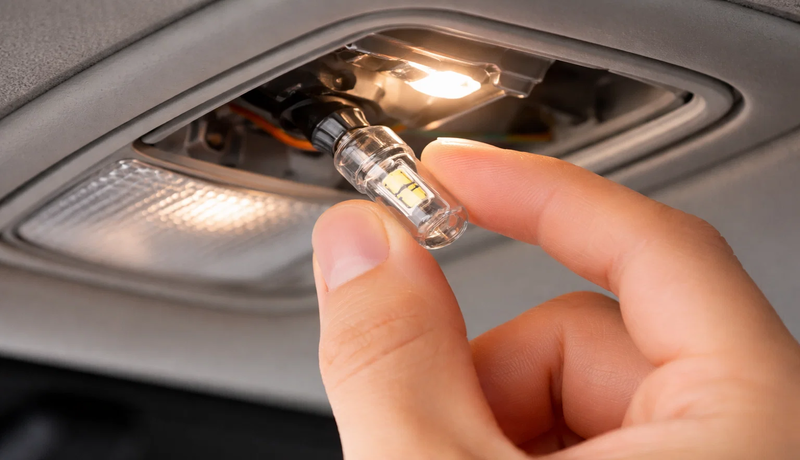
Turn off the vehicle and open the light cover using a flat tool or screwdriver. Carefully remove the old T10 light bulb by pulling it straight out of the socket. Insert the new T10 LED bulb firmly into place, making sure it fits securely. Turn the light on to test it before closing the cover, then reinstall the housing once everything is working properly.
Installing T15 Bulbs (Reverse Lights)
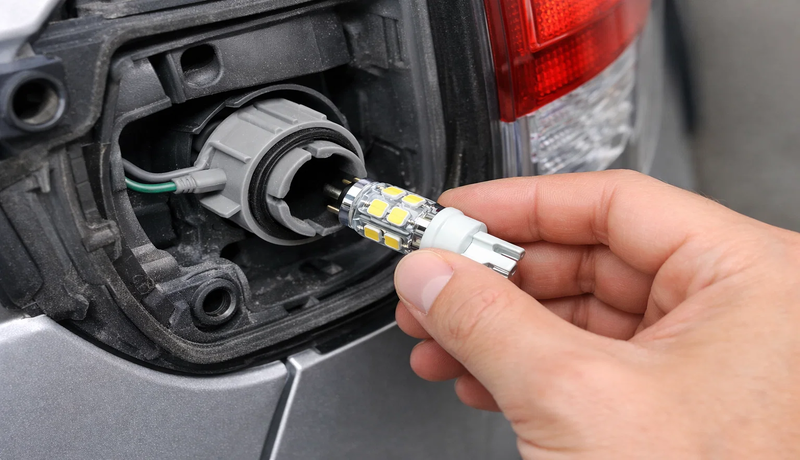
Access the rear light housing from inside the trunk or remove the outer cover. It depends on your vehicle model. Remove the old T15 bulb by pulling it out of the socket. Insert the new T15 LED bulb. Make sure proper alignment and a secure fit. Turn on the ignition and shift to reverse (with safety precautions) to test the light. Once confirmed, reassemble the housing.
Conclusion
T10 and T15 bulbs have differences in size, brightness, and application. Both have a similar base and are designed for different purposes within a vehicle. T10 bulbs are ideal for interior and low-power lighting.
T15 bulbs are better suited for high-output applications like reverse lights. If you’re considering an upgrade, LED options provide better efficiency, longer lifespan, and improved visibility. The key is to match the bulb type with its intended use for better performance and safety.
Looking for Reliable T10 and T15 Bulbs?
At Carlight Vision, we provide high-quality automotive bulbs designed for reliable performance and long-term use. Whether you need efficient T10 interior lighting or high-brightness T15 reverse bulbs, our solutions are built to meet modern vehicle standards. Contact us now to upgrade your vehicle lighting.
FAQs
Q1: Is T10 the same as a 194 bulb?
Yes, T10, 194, and W5W refer to the same bulb type and are commonly used for interior and license plate lighting.
Q2: Is 921 the same as T15?
Yes, 921, 912, and W16W are equivalent to T15 bulbs and are typically used for reverse and cargo lights.
Q3: Which bulb is better for reverse lights?
T15 bulbs are better because they provide higher brightness, which improves visibility when reversing.
Q4: Can I use T15 for interior lights?
It is not recommended, as T15 bulbs are larger and much brighter than needed for interior use.
Q5: How many lumens are ideal for backup lights?
Around 600–1200 lumens is generally considered effective for clear and safe visibility.