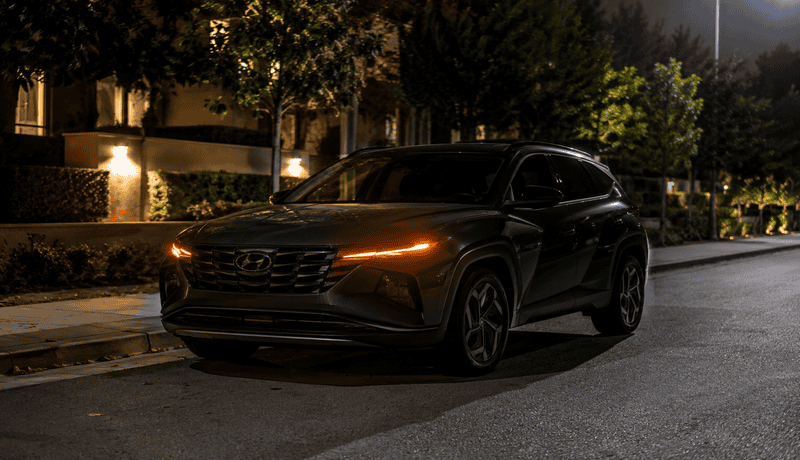
Parking lights are low-intensity lights. They make your car visible when parked in low-light conditions. Many drivers confuse parking lights with headlights, which leads to unsafe driving and legal issues. Understanding when to use parking lights helps prevent accidents and protects your car’s battery. This guide explains their purpose, usage, legal rules, and differences from other lights.
What Are Parking Lights and What Are They Used For?
Parking lights, also called sidelights, are low-intensity lights. They make your parked car visible to other drivers with a warm yellowish glow. The main purpose of parking lights is to help others see you in the dark or low-visibility conditions.
What Parking Lights Do
- Car visible from a distance: They emit a low but steady glow that helps other drivers detect your car early, even in dim conditions.
- Clear road position: They highlight the front and rear of your vehicle. So others easily judge distance and avoid tight spaces.
- Lower accident risk: A visible parked car is less likely to be hit, especially on dark roads or in areas with faster traffic.
Are Parking Lights Still a Thing?
Yes, parking lights are still used in modern cars, but their design has evolved. In older vehicles, parking lights were separate small bulbs. In modern cars, they are usually integrated into LED lighting systems or combined with other light functions.
Even with features like automatic headlights, parking lights remain important because they provide a low-power visibility option when full headlights are not needed.
Do All Cars Have Parking Lights?
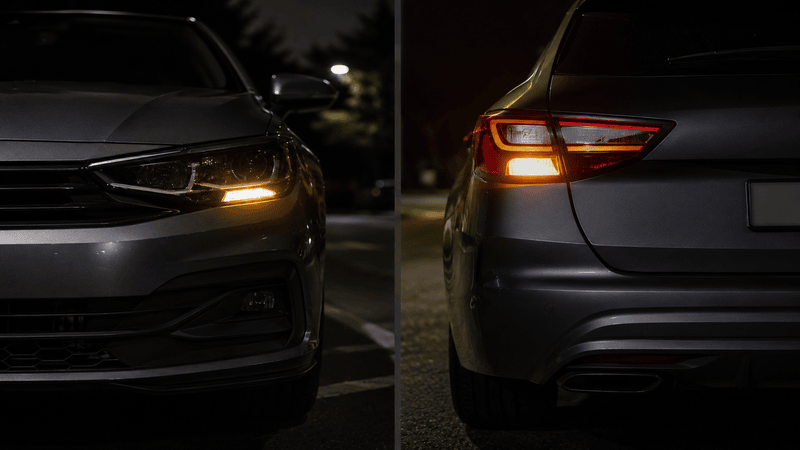
Most vehicles still have parking lights, but their implementation varies by model and manufacturer. In many modern cars, parking lights are combined with daytime running lights(DRLs) or sidelights. It means the same light unit performs multiple functions.
However, the purpose remains the same: visibility of the vehicle without using brighter lights like dipped beam headlights.
In short, parking lights are still present in modern cars, but they are often integrated into advanced lighting systems rather than existing as separate bulbs.
How to Turn On Parking Lights (Step-by-Step Guide)
You can activate parking lights through your car’s main lighting control system, a small dial or switch. It is usually located near the steering wheel or on the steering column.
You can switch them on in seconds because they are usually built as the first lighting option on the control dial.
Step-by-Step Instructions
- Find the light control: This is usually a rotary dial or light switch that controls all exterior lights, including parking lights, headlights, and automatic modes.
- Turn the dial: Rotate the dial to the parking light symbol. This symbol represents sidelights/parking lights and is typically the first or lowest setting before dipped beam headlights.
- Check the dashboard indicator: A small icon appears on the display. It confirms that your vehicle’s parking lights are active and you don’t leave them off by mistake.
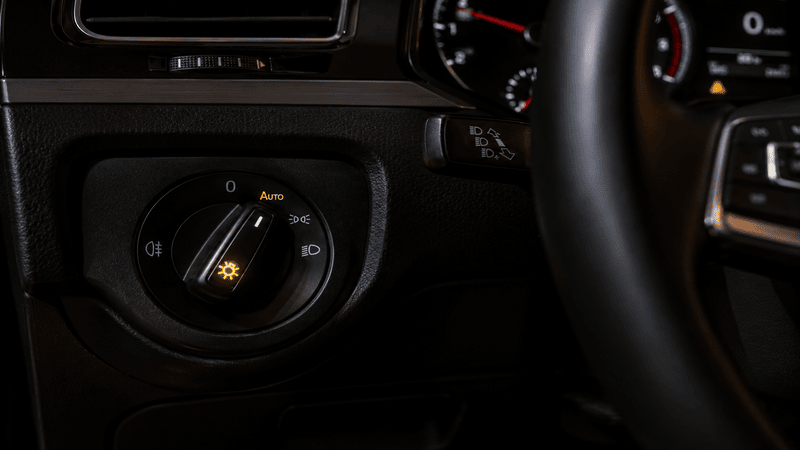
Manufacturers place parking lights as the first setting because they are meant for simple, low-risk activation when the car is not moving. This helps prevent drivers from accidentally using high-beam or dipped headlights when only visibility is needed for parking.
Where Is the Parking Light Symbol?
The parking light symbol is usually shown as two small lights with short horizontal lines on either side. It is placed on the same dial as the headlights, because both functions are part of a single lighting system.

How to Turn Parking Lights Off
To turn parking lights off, simply rotate the same control(dial or stalk) back to OFF or AUTO mode. The process depends on your vehicle.
This is important because if you leave parking lights on for a long period, it can slowly drain the battery, especially in older vehicles or halogen bulb systems.
Always confirm on the dashboard that the indicator has disappeared before leaving the vehicle.
When Should You Use Parking Lights?
Parking lights are only useful in certain situations when visibility is low. They keep the vehicle visible to other drivers in high traffic flow.
Common Situations
- Parked on a dark street: If street lighting is weak or absent, sidelights make your car visible from a distance. It reduces the chance of it being hit.
- At night: In darkness, an unlit parked car becomes difficult to detect. This is especially risky for higher-speed traffic. At 50 km/h, a driver travels over 13 meters per second and gets very little time to react.
- Low visibility conditions: Parking lights provide a steady glow that helps other drivers identify your vehicle’s position when natural light is limited, such as in fog, dusk, and low light conditions.
- Parked in residential areas or narrow roads: They help drivers judge space more accurately when roads are tight or traffic moves in opposite directions.
- Stopped in a lay-by or roadside area: They signal that your vehicle is stationary without the intensity of headlights or hazard lights.
When Not to Use Parking Lights
Parking lights cannot be used for real driving conditions. They do not illuminate the road ahead and cannot replace dipped headlights. They cannot be used as a primary lighting source as they are too dim and reduce your ability to see hazards.
Parking lights should only be used when your vehicle is parked in low visibility conditions, not while driving.
Parking Lights vs Headlights: What’s the Difference?
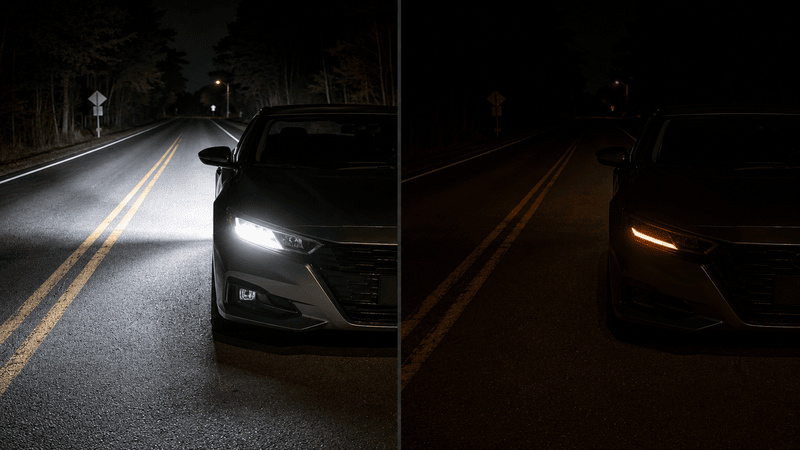
Parking lights make your vehicle visible, while headlights illuminate the road for safe driving. The main difference is function: parking lights are for being seen, and headlights are for seeing.
Using the wrong one in the wrong situation reduces safety and can lead to legal issues.
Core Differences Explained
| Feature | Parking Lights | Headlights |
|---|---|---|
| Brightness | Low intensity, soft glow | High intensity, bright beam |
| Purpose | Make your car visible | Illuminate the road |
| Usage | When the vehicle is parked | When driving in low light |
| Beam Type | No forward projection | Dipped beams and main beams |
| Effect on Drivers | Does not dazzle other drivers | Can dazzle if misused (main beams) |
Can You Drive with Parking Lights at Night?
No. Driving with only parking lights at night is unsafe and illegal in most regions. Parking lights are not designed for driving, so they fail to provide the visibility needed for safe road use.
Night driving is riskier due to low visibility; nearly half of all traffic fatalities occur at night. Parking lights cannot provide sufficient illumination, so you cannot clearly see obstacles, turns, or changes in road conditions.
Your car appears less visible compared to vehicles using proper headlights, especially from a distance or in fast-moving traffic.
Do Parking Lights Drain Your Battery?
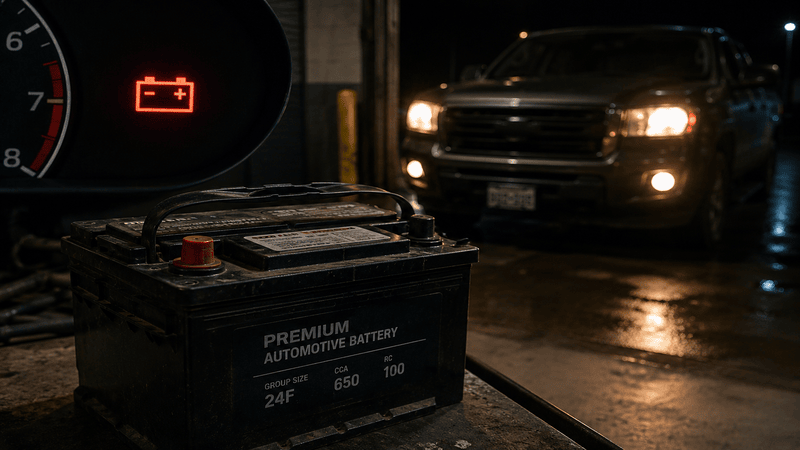
Yes, but slowly. Parking lights are the most common type of low-intensity vehicle light and consume less power than headlights, usually 5 watts or less. But it can still drain your battery over time.
Avoid leaving your parking lights on for several hours, as it can weaken the battery, especially in older vehicles. A weak or aging battery would also drain faster compared to a new one. A faulty parking light can also drain the battery fast
Modern cars reduce this risk with automatic shut-off features, but not all vehicles have this system.
Are Parking Lights Legally Required?
Parking lights have become mandatory when your parked vehicle is not clearly visible, especially on roads with higher speed limits or poor visibility.
The rule is based on visibility and risk: the faster the traffic and the darker the environment, the more important it is to make your parked car clearly visible.
Traffic laws in many regions (such as rules similar to the Highway Code) follow this principle to reduce accidents involving parked vehicles.
When Parking Lights Are Required
Parking lights are required when your vehicle is parked on a public road at night, especially on higher-speed roads. So, the drivers could see your car early to react safely.
They are also necessary in low-visibility conditions like fog, dusk, or poorly lit streets. In some regions, laws require sidelights when a car is parked in active traffic areas. The goal is to ensure your vehicle remains clearly visible to other drivers at all times.
When Parking Lights Are Not Required
Parking lights are not required while driving because headlights must be used for proper road visibility. Using only parking lights in motion reduces safety and is often not legally allowed.
They are also unnecessary during daylight when your vehicle is clearly visible. In these conditions, additional lighting does not improve safety.
If your car is parked in a well-lit or private area, parking lights are usually not needed. Good lighting already makes your vehicle visible to others.
Legal Risks and Penalties
Failing to use parking lights when required can lead to fines or penalties, depending on local traffic laws. In some regions, this also adds points to your driving record.
If your parked vehicle is not visible and an accident occurs, you will be considered negligent. This can increase your financial responsibility for damages and also impact your insurance costs.
In more serious cases, authorities treat the vehicle as a road hazard. If it is parked in a dangerous location without proper visibility, it could be ticketed, towed, or removed to prevent risk to other drivers.
Final Words
Parking lights make your parked vehicle visible in low-light conditions, but they are not meant for driving.
Use them correctly to prevent accidents and stay compliant with traffic laws. For driving, always switch to headlights for proper road visibility and avoid risks.
Upgrade Your Visibility with CarlightVision
CarlightVision helps car owners understand and improve vehicle lighting for better safety and performance.
If you want clearer visibility, longer-lasting bulbs, or guidance on upgrading your lighting system, contact us now for expert insights.
FAQ
Q1: Are parking lights brighter than headlights?
A: No, headlights are much brighter. They are designed to illuminate the road ahead up to 500–700 feet, while parking lights only give low-level visibility to make your car noticeable to others. For proper night driving, always use your headlights.
Q2: Are parking lights always on?
A: No. Parking lights only work when you turn them on manually or if your vehicle’s automatic lighting system activates them. They won’t come on by themselves while driving.
Q3: Why use parking lights instead of headlights?
A: You shouldn’t use them instead of headlights while driving. Parking lights are meant to keep your parked vehicle visible, especially in low-light areas, not to illuminate the road.
Q4: What happens if I leave my parking lights on all night?
A: Your car battery can weaken or drain, especially if it is old or only partially charged. A typical battery may lose 10–20% of its charge overnight with lights on. Always turn them off or use headlights wisely to avoid a dead battery.
Q5: Can you use parking lights instead of headlights at night?
A: No, it’s unsafe and illegal in many regions. Parking lights don’t light the road, so you risk accidents and fines. Use your headlights for proper visibility.
Q6: Will cops pull you over for LED headlights?
A: Yes, if your LEDs are too bright, poorly installed, or not DOT-compliant, you can get a ticket. Properly installed, legal LED headlights improve your night driving without legal issues.
Q7: Where is the parking light symbol located?
A: It’s on the headlight control dial, usually shown as a small light icon with short lines. You can use this to quickly locate and activate your parking lights when needed.