Before replacing an H11 bulb, it is critical to understand which alternatives truly fit, which require modification, and which should never be used. The table below provides a final compatibility verdict based on socket design, heat output, and real-world installation risks.
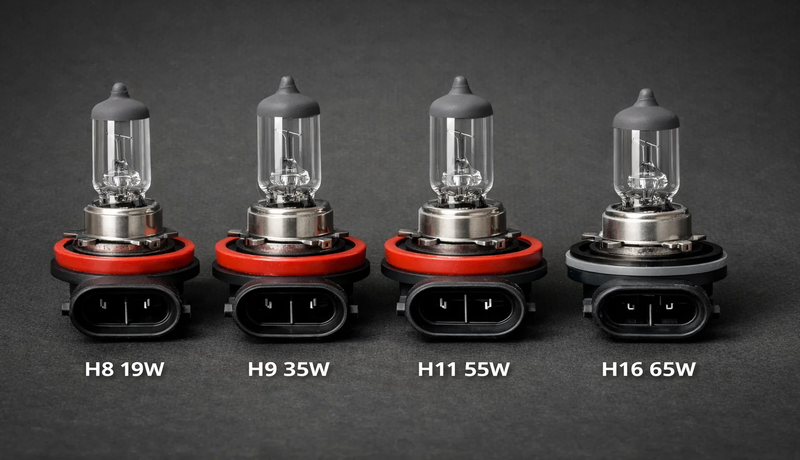
Finding the right bulb for your vehicle shouldn’t be a guessing game. While H11, H8, H9, and H16 may look identical at first glance, their wattage and compatibility differ significantly.
In this updated guide, we’ll provide a complete H11 bulb cross-reference chart and explain which bulbs are safe “plug-and-play” swaps and which ones require caution.
What is the H11 Bulb
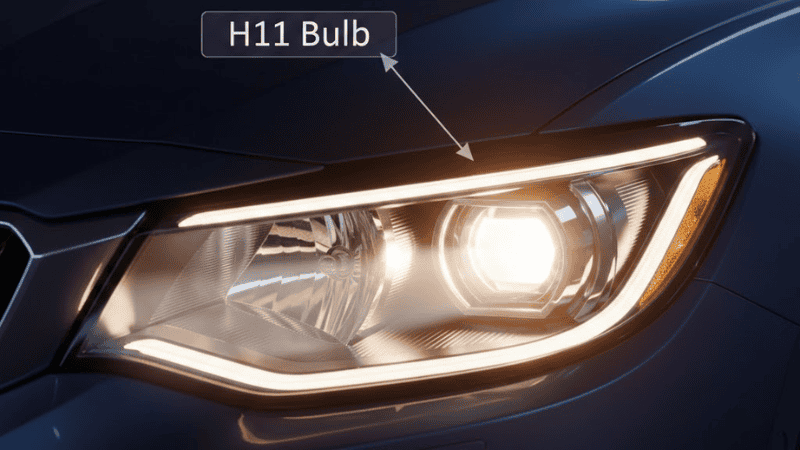
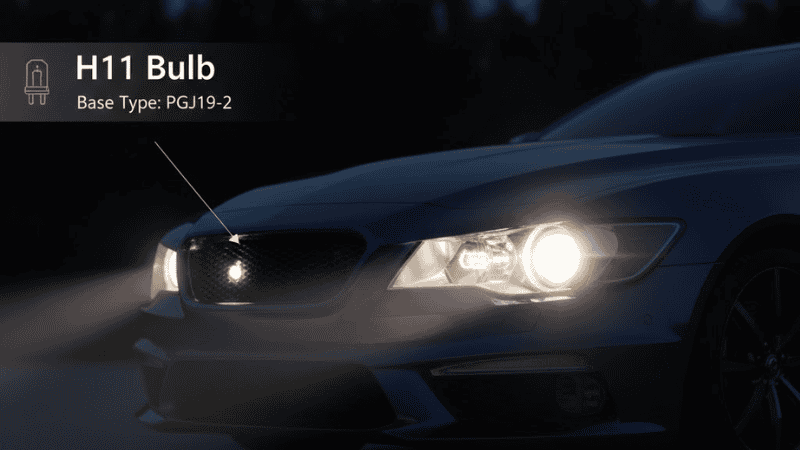
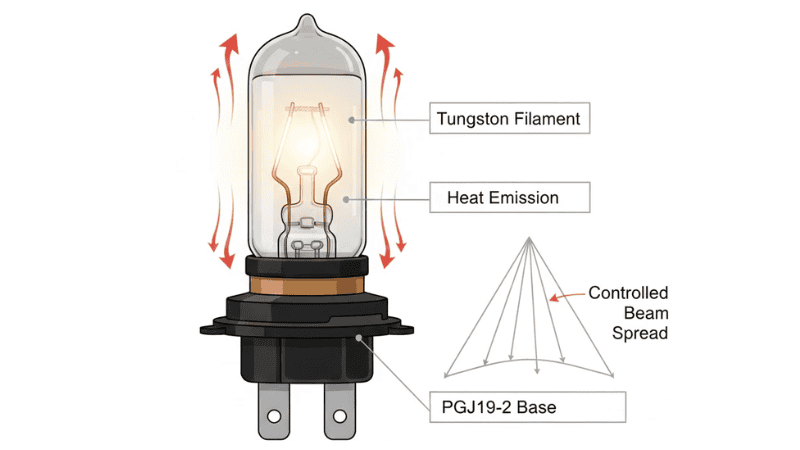
The H11 bulb is a widely used halogen light source commonly found in low-beam headlights and fog lights. It operates at 55W using a PGJ19-2 base and is designed to provide a balanced beam pattern with controlled heat output, making it suitable for modern compact headlamp housings.
The H11 bulb can be one of the most common bulbs found in the automotive sphere. This bulb is used by most vehicles as a low-beam headlight or fog light due to its tungsten-halogen filament technology.
Moreover, it uses relatively low wattage, delivers a balanced beam pattern, and is compact in size and easily fits in contemporary housings.
Why Drivers Look for H11 Equivalent Bulbs
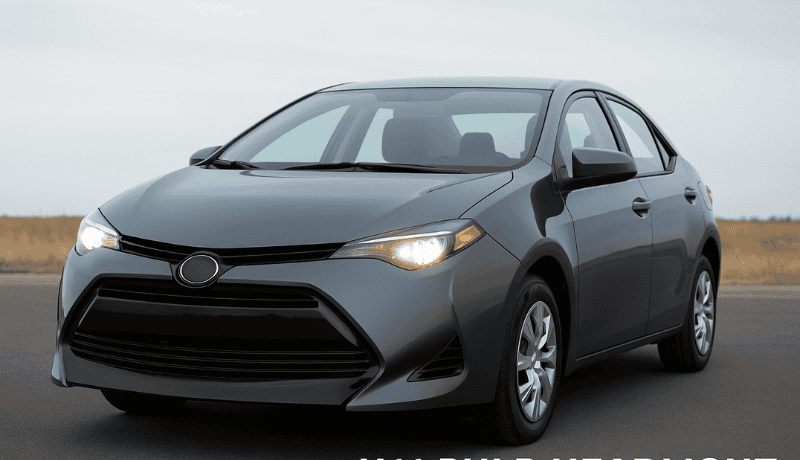
There are a couple of reasons why you need H11 equivalents. Maybe you need a very fast replacement because your original bulb went bad. Sometimes you want to retrofit to an LED or an HID for a much better light output. Some drivers even cross-reference to get an H9 bulb for a little more brightness.
Most searches for H11 equivalents fall into three categories: emergency replacement, brightness upgrades, and conversion to LED or HID systems. Each scenario carries different compatibility and risk considerations.
H11 Bulb Technical Specifications That Matter
Now take a moment to view the technical specifications that give the H11 bulb its individuality.
Base Type & Connector
H11 offers PGJ19-2 base support and lumens output rating. This base has some unique locking tabs and electrical connectors designed to properly fit into a compatible H11 socket.
If you choose a bulb of higher wattage, you may have a great risk of overheating the housing or melting wires. LED headlight replacements may use far less wattage while still producing more light.
Common Applications of H11 Bulbs
Most vehicles use that bulb for low-beam headlights or fog lights. On the other hand, an H11 is used for high beams since high beams generally use higher wattage and more focused bulbs to be effective.
How to Confirm H11 Compatibility for Your Vehicle
Because bulb usage varies by model year, trim level, and regional specification, listing vehicle models is often inaccurate.
The most reliable ways to confirm H11 compatibility are:
- Checking the vehicle owner’s manual
- Using an OEM bulb lookup database
- Verifying the original bulb marking during removal
This approach prevents costly mistakes and ensures proper beam performance.
H11 Direct and Closest Equivalents
Now that you have learned what is general, let’s check out the bulbs that actually fit or are close to fitting the same socket H11.
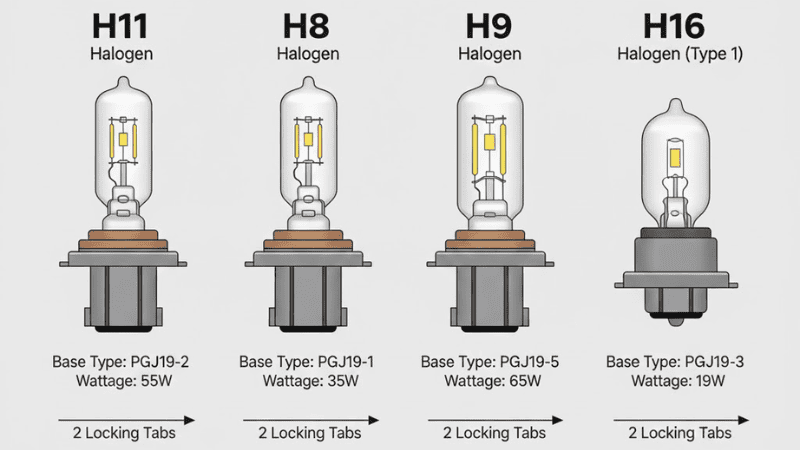
H8 Bulbs
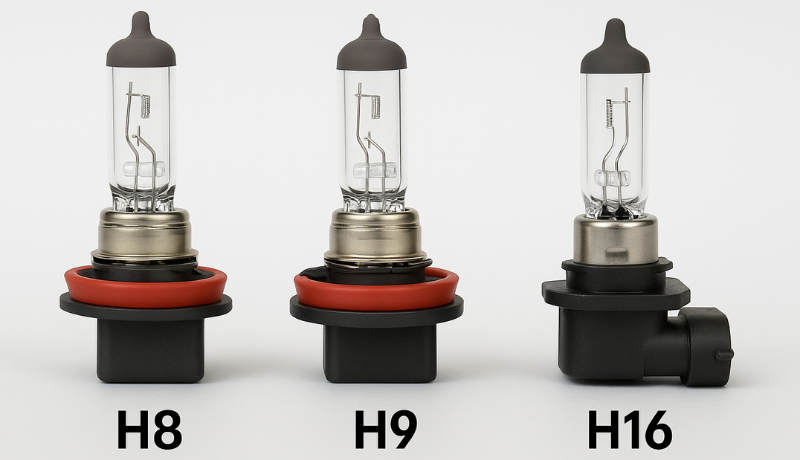
H8 bulbs are known as the closest bulb number to H11. They have the same base, the same kelvin color temperature, and share the same locking tabs for the most part, rendering a lot of interchangeability between them.
Suitable for drivers who want a softer beam, lower heat, and reduced power draw for city or well-lit driving. Unsuitable for those who need strong brightness on dark highways or want a noticeable upgrade over H11.
H9 Bulbs
H9 bulbs are also very much like H11 bulbs in the sense that they are usually quite powerful and bright. Suitable for drivers who want maximum halogen brightness and better visibility, and don’t mind some extra heat.
H9 bulbs require slight tab trimming to fit an H11 socket and may generate extra heat that can stress the housing. Unsuitable for people who want a plug-and-play option with low heat, longer life, and no tab modification.
H16 Bulbs
These H16 bulbs are sometimes referred to as L-shaped bulbs based on how they are connected. Even if they don’t seem the same, H16 is equivalent to H11.
Suitable for drivers needing a compatible option for fog lights or newer housings that share the H11-style base. Unsuitable for those expecting a big brightness upgrade or working with older housings, where the fit may not be exact.
H11 vs H8 vs H9 vs H16: Quick Comparison Table
| Bulb Number | Same As / Equivalent | Bulb Type | Fit in H11 Socket | Modification Needed | Heat Risk | Brightness vs H11 | Real-World Notes |
|---|---|---|---|---|---|---|---|
| H11 | H11B (not same), PGJ19-2 | Halogen | ✅ Yes | ❌ No | Low | Baseline | Stock bulb, safest choice |
| H8 | H11, H9 (base family) | Halogen | ✅ Yes | ❌ No | Very Low | Lower | Plug-and-play, dimmer |
| H9 | H11, H8 | Halogen | ⚠️ Yes | ⚠️ Tab trimming | High | Higher | Brighter but runs hot |
| H16 (H11-style / L-shape) | H11, H8, H9 | Halogen | ⚠️ Usually | ❌ No | Low–Medium | Similar / Lower | Common in Japanese cars |
| H16 (5202 / T-shape) | 5202, PSX24W | Halogen | ❌ No | ❌ No | — | — | Not H11-compatible |
| H11C | H11 | Halogen | ✅ Yes | ❌ No | Low | Same | OEM variant |
| H11B | — | Halogen | ❌ No | ❌ No | — | — | Different plug, won’t connect |
| 9005 / HB3 | H10, 9145, 9155 | Halogen | ❌ No | ❌ No | — | Higher | Will not lock or plug |
| 9006 / HB4 | 9012 | Halogen | ❌ No | ❌ No | — | Lower | Looks similar, doesn’t fit |
| 9012 (HIR2) | 9006 | Halogen | ❌ No | ❌ No | — | Higher | Different base |
| H10 | 9005, 9145 | Halogen | ❌ No | ❌ No | — | Higher | Not compatible |
| 5202 | PSX24W, 2504 | Halogen | ❌ No | ❌ No | — | — | Fog-light specific |
| 2504 | 5202, PSX24W | Halogen | ❌ No | ❌ No | — | — | Not H11-style |
| PSX24W | 5202, 2504 | Halogen | ❌ No | ❌ No | — | — | Different locking tabs |
| LED H11 | — | LED | ⚠️ Usually | ❌ No | Low | Much Higher | Quality matters a lot |
| LED H8 | — | LED | ⚠️ Usually | ❌ No | Low | Medium | Less output than LED H11 |
| LED H9-style | — | LED | ⚠️ Depends | ⚠️ Sometimes | Medium | Very High | Watch beam pattern |
| HID H11 Kit | — | HID | ⚠️ Fits | ❌ No | Medium | Very High | Often illegal in reflectors |
| HID D-Series (D1/D2/D3/D4) | — | HID | ❌ No | ❌ No | — | — | Completely different system |
| H7 | — | Halogen | ❌ No | ❌ No | — | — | Flat base, won’t seat |
| 9003 / H4 | HB2 | Halogen | ❌ No | ❌ No | — | — | Dual-filament bulb |
| H13 / 9008 | — | Halogen | ❌ No | ❌ No | — | — | Different size & wiring |
| 9145 | 9005, H10 | Halogen | ❌ No | ❌ No | — | Higher | HB3 family |
| 9155 | 9005, H10 | Halogen | ❌ No | ❌ No | — | Higher | HB3 family |
Bulbs That Should Not Be Used Instead of H11S
If it is important to know what to buy, it is equally important to know what should not be used.
9005 or HB3
The most common misconception among drivers is that they confuse 9005 or HB3 bulbs as a substitute for H11. In fact, neither of them will click, as they sport a very different base, different electromagnetic spectrum emission, and will not lock into H11’s socket at all.
Risks of Putting In The Wrong Bulbs
Using the wrong bulb base can lead to electrical issues, overheating, or even serious damage to your car. It also distorts the beam pattern, reducing visibility and creating dangerous glare for other drivers.
Incorrect wattage or mismatched bulbs can overheat the wiring, melt connectors, and damage the reflector bowl. Some upgrades may also violate regional road-lighting laws, making the vehicle non-compliant and unsafe for on-road use.
Alternatives to HIDs and LEDs on H11 Socket
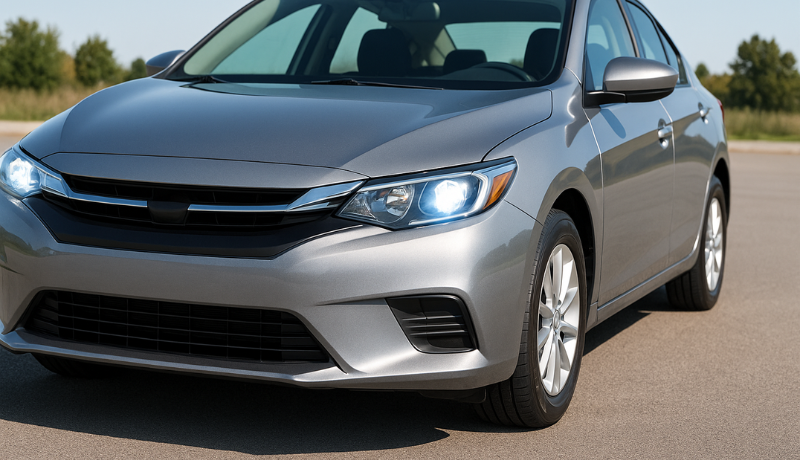
Most drivers replace H11 light bulbs for some practical reason: fog light application, improved life, and/or color temperature. Here are some facts to be aware of.
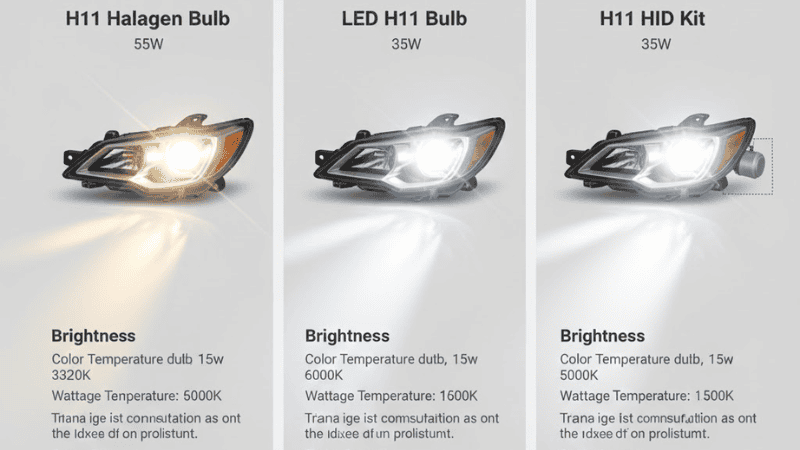
LED H11 Bulbs
LED headlight bulbs are gaining a lot of ground in terms of recognition. They consume much less power but produce far more light. Some LED bulbs with fans or heat sinks require a bit more space.
HID Or Xenon Conversion Kits
You can use standard HID kits for H11 sockets because they have the same photometric beam pattern. You just need an external ballast, conversion kit, and wiring. This system generates brilliant light, but the downside is that HID kits hardly fit most reflector designs for traditional halogen bulbs.
Replacement Selection Recommendations
If money is not much of an issue, but brightness and the kind of driving conditions do matter, then you should give more thought to what H11 alternative you might want to select.
A very cheap but still reliable option would be using a normal halogen H11 bulb since these are very inexpensive, generally fit well into installation, and are fully compatible with most vehicles.
Another option would be to go for a better, higher-performance halogen, such as an H11 or even an H9 bulb (with some minor modifications). However, do keep in mind that since the H9 runs hotter, it could either shorten the life of the bulb or put extra stress on the housing.
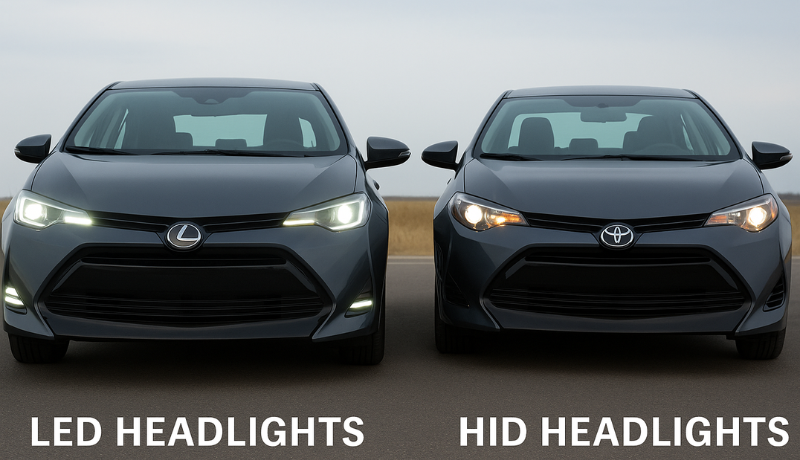
The next modern advancement in terms of better brightness and lower power consumption can be a quality LED H11 bulb, which is very useful for frequent night drivers or those driving on dark, far-off roads.
All HID (xenon) kits give maximum raw light output; however, they are difficult to install, require ballasts, and additional wiring. It may not be legal in a standard halogen reflector housing, and hence is better suited for projector housings or a properly retrofitted system.
Installation and Safety Tips
Here is the complete installation guide with some safety tips for your convenience:
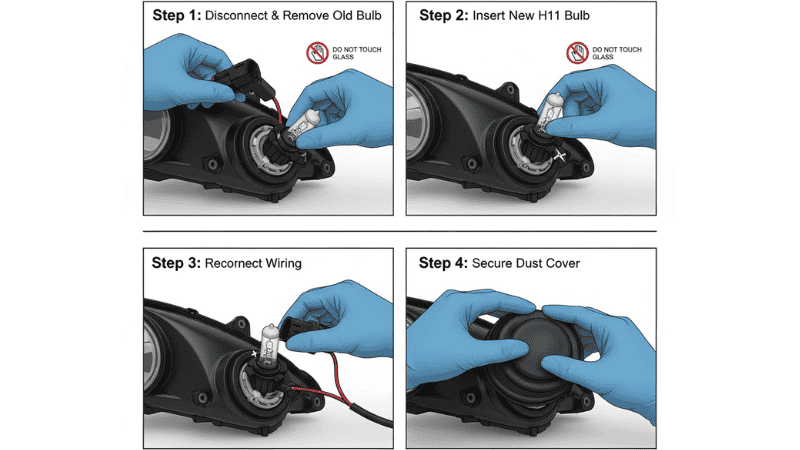
Safe Replacement Steps
Remove the old bulb, put in the new one, reconnect the wires, and test it before closing the headlight. Please do not touch the glass of the halogen bulb with your bare hands since the oil will shorten its life span.
Moisture Protection
Always ensure a proper seal of the dust cover or rubber boot after installation. The presence of water inside the housing may create condensation, flickering, or total failure.
Avoid Misalignment
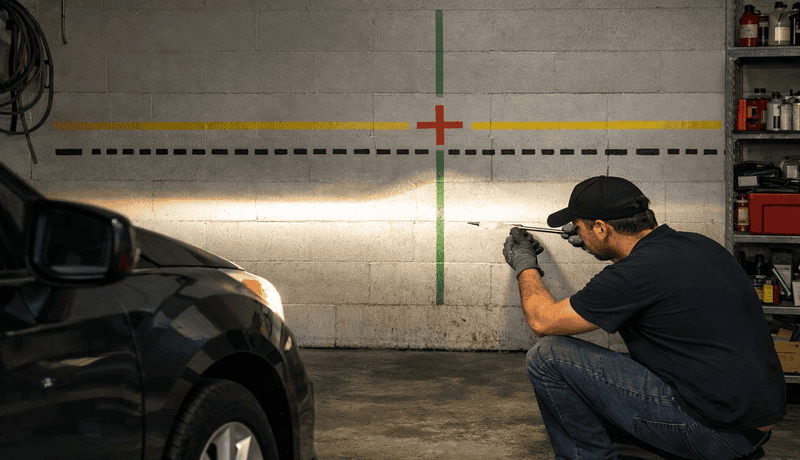
Misalignment will cause the beam pattern to be uneven or dangerously bright. Aim and adjust your beam correctly to correct the optical refractive index. Furthermore, consider the wattage; too-high wattage will overheat and burn or melt the wiring inside the headlight.
Common Problems and Troubleshooting
Most of the common problems in H11 can now be resolved easily if the cause is identified.
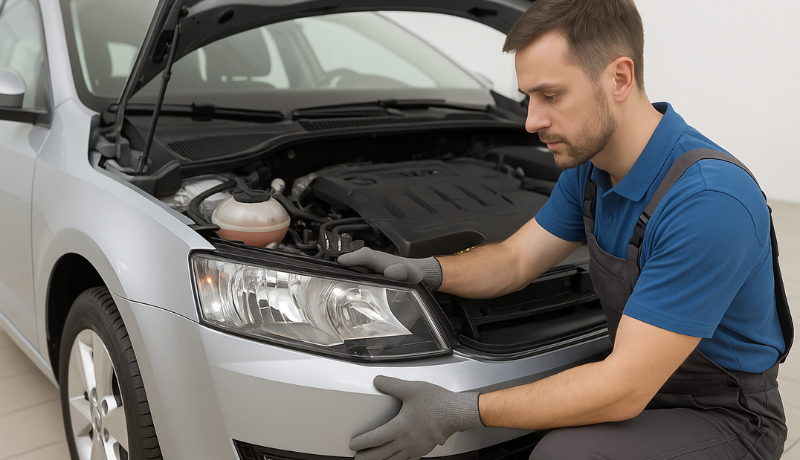
LED Flickering or Error Detection
Some cars come with a CANbus system designed to monitor resistance in the bulb circuitry during the vehicle’s built-in self-checking. Because LEDs do not have the same resistance as halogens, the car thinks the bulb has burned out. The installation of a resistor or decoder will normally clear the fault.
Modern vehicles use CANbus systems and PWM (pulse-width modulation) to monitor bulb resistance and control brightness; low-resistance LEDs can trigger flickering or error messages. Adding a decoder or resistor restores the correct load so the vehicle reads the bulb properly.
Condensation Inside the Housing
It is a sign that shows the sealing was not made properly. Always double-check the dust cover and replace any seal that shows signs of wear.
Heat damage
Excessive heat would result from using an overly high wattage bulb like an H9; unless heat control is taken into consideration, the connectors or reflective surfaces would either melt or fuse. Do this always with good precautions to check limits with your housing.
Conclusion
H11 is a common bulb type used in modern vehicles. Knowing its equivalents and the major differences between them allows you to make the right choice and become ever more knowledgeable about the gradual changing or replacement of your lamps. Pick the option that solves your purpose and keeps you safely on the road.
Brighten Your Drive With the Right Bulb Choice
Now you can upgrade your headlights intelligently. CarLightVision contains expert guides, trusted recommendations, and the best bulb options for every vehicle. Contact us for professional support in making the next upgrade of your lights straightforward and safe.
FAQs
Q1: Can I Use H8 or H9 Instead of H11?
Yes, H8 is a direct fit, but not as bright as H9, which must be modified to fit, but then shines more brightly.
Q2: Are LED H11 bulbs brighter than halogen?
Most LEDs are much brighter than conventional halogen; just get one suited to the setup.
Q3: Does H11 HID Kit Break the Law?
It actually varies from region to region according to their respective laws; in some cases, it is only allowed in housing that is factory-designed to be HID compatible.
Q4: Does using an H9 bulb in an H11 socket affect the wiring or the headlight housing?
Yes, because the H9 bulb draws more power (about 65W versus 55W) and runs hotter than the H11. If using H9, make sure to do the tab trimming correctly, have a proper connection, and check regularly for heat damage or melting.
Q5: Can I use a higher-wattage halogen H11 bulb for more brightness?
No, in general. Higher-wattage H11 bulbs tend to overheat the housing, reflector, wiring, or connectors. If you want that relatively bright light for H11, it is usually better to stick to that 55W unit, a good-grade LED H11, or a well-done H9 upgrade.