Deciding between Yellow, White, or Blue for your fog lights?
In this post, we compare these three colors to help you choose the best visibility. Since 2008, we have fulfilled global demands for high-quality automotive lighting. We will break down the science of wavelengths and how each color handles fog and rain.
Ready to find the perfect light for your vehicle?
Let’s get started.
Understanding Fog Lights
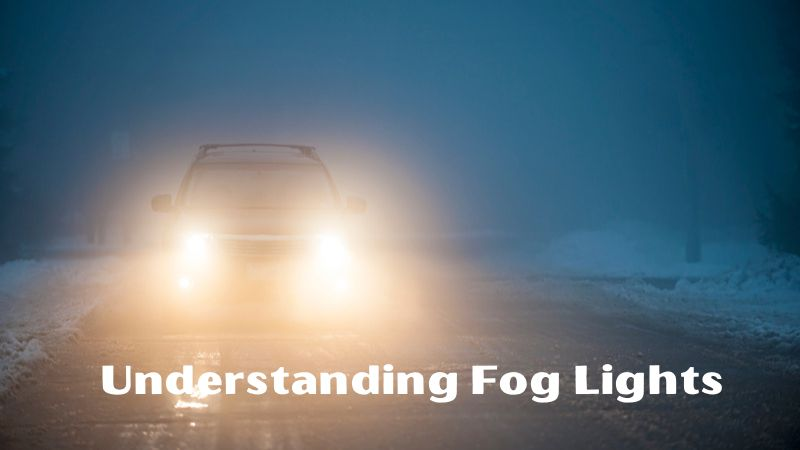
Fog lights are unique because they are designed to cut through the fog, lighting up the road ahead without bouncing light off the fog and reducing visibility.
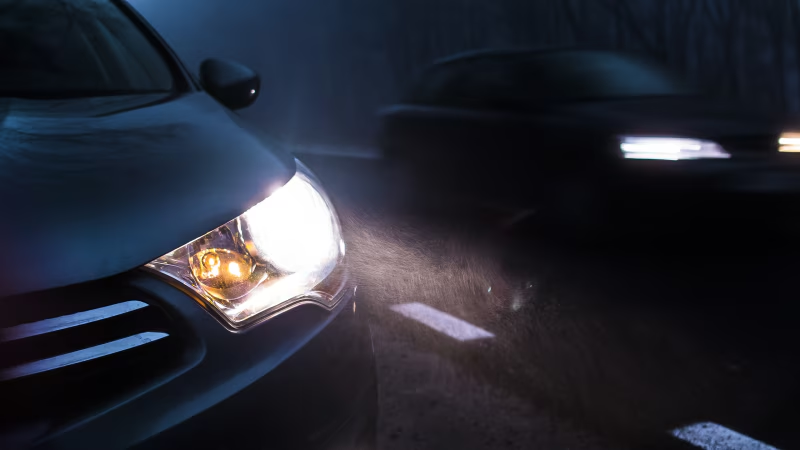
These lights are used in poor weather conditions, such as fog, heavy rain, snow, or dust. They are positioned lower on the vehicle’s front bumper to provide better visibility and reduce glare to oncoming drivers.
There are two main types of fog lights: halogen and LED. Both have their advantages, but the color of light they emit matters most when it comes to visibility in foggy conditions.
The Science of Light and Visibility
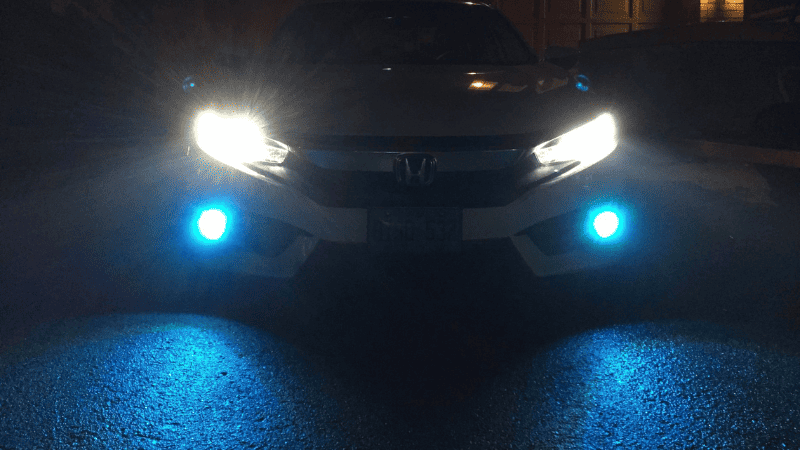
Now, before we dive into the color comparison, let’s understand the science behind light and visibility. Our eyes see colors because of the different wavelengths of light.
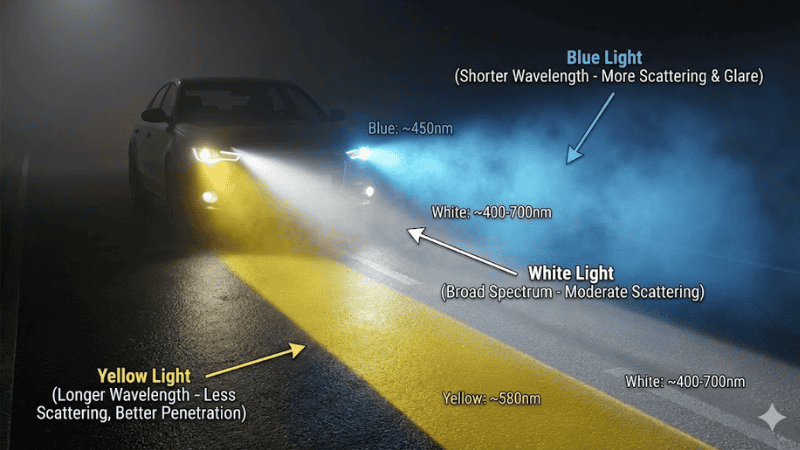
Each color has a different wavelength; for example, red has a longer wavelength than blue. In foggy conditions, the water droplets in the air scatter light, making it difficult for our eyes to focus on objects. That’s where fog lights come in.
Fog lights aim to minimize this scattering effect and provide a more focused light beam that can cut through the fog.
However, with each color, the scenario changes. In other words, the color changes according to the scenario. Sounds confusing? Well, keep reading and you will get rid of this confusion and all other questions!
Review of Popular Fog Light Colors
There are three popular fog light colors: yellow, white, and blue. Let’s see how they differ from each other and which color is ideal for which type of driving conditions.
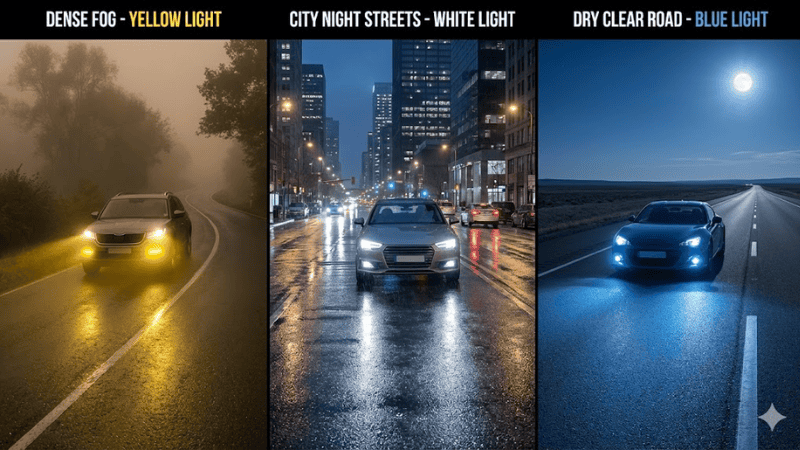
1. Yellow Light
In Physics, yellow light sits squarely between green and orange on the visible light spectrum, with a wavelength range of 570 to 580 nanometers. This hue has been traditionally favored for its ability to penetrate foggy conditions, improve visibility, and help a driver concentrate better.
The main benefit of yellow fog lights is that they enhance the distance of visibility under foggy conditions while also making your vehicle more noticeable to other drivers and pedestrians.
Its effectiveness in fog is not just a matter of performance but also of psychological appeal. The warm, golden tones of yellow light resemble the comforting glow of a sunset, invoking feelings of joy and happiness among many. This emotional response and its practical benefits make yellow a popular and wise choice for fog lights.
2. White Light
White light is formed by combining all the frequencies, wavelengths, or colors of the visible light spectrum. That’s the reason why it does not have an average wavelength. This feature gives white light a significant advantage regarding visibility and perception.
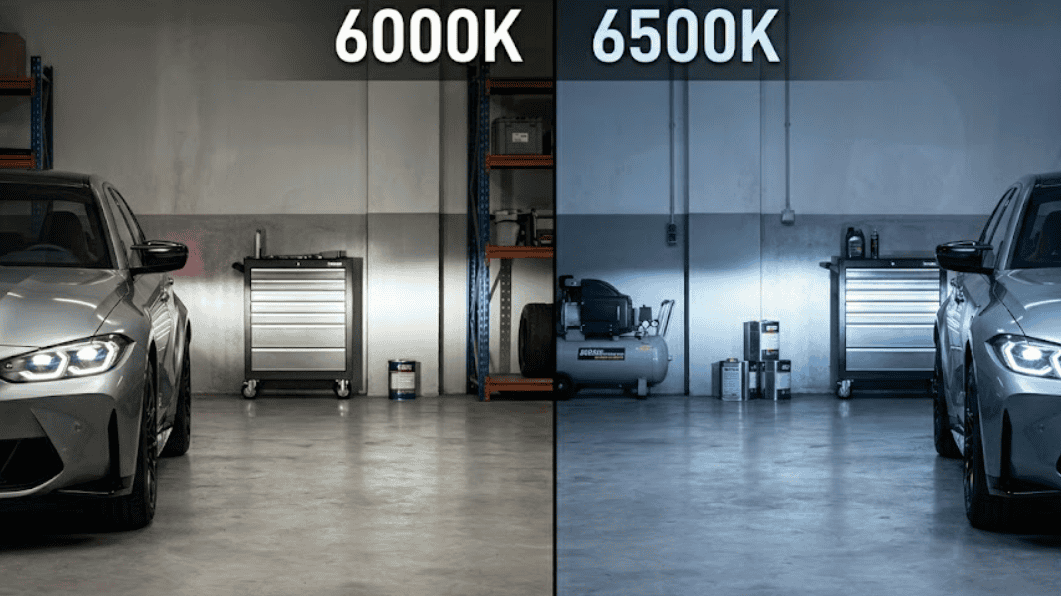
The primary benefit of using white fog lights is the ability to distinguish objects with greater clarity, as there is no color tint altering the perception of objects ahead. Also, white light provides a crisp and bright illumination, typically ranging between 5000 and 6000 Kelvin, which is ideal for many driving conditions.
This high brightness and clarity make white light an excellent choice for fog lights, particularly when precise visibility is important.
3. Blue Light
Blue light falls within the 380 to 500-nanometer range in the visible spectrum, marking it as the color with the shortest wavelength and highest energy.
Interestingly, about one-third of all visible light is considered blue light. This specific attribute of blue light allows it to offer improved visibility and a modern aesthetic to drivers.
But because of short wavelengths, when blue light hits the water particles, it is more likely to bounce off, reflecting into your eyes.
This process reduces your ability to see through the fog effectively. Despite its modern look and high visibility under clear conditions, the properties of blue light can hinder visibility in foggy weather.
Pros and Cons of Different Fog Light Colors
Yellow, White, or Blue—each color has its advantages and disadvantages. Let’s explore them to help you decide which fog light color to choose!
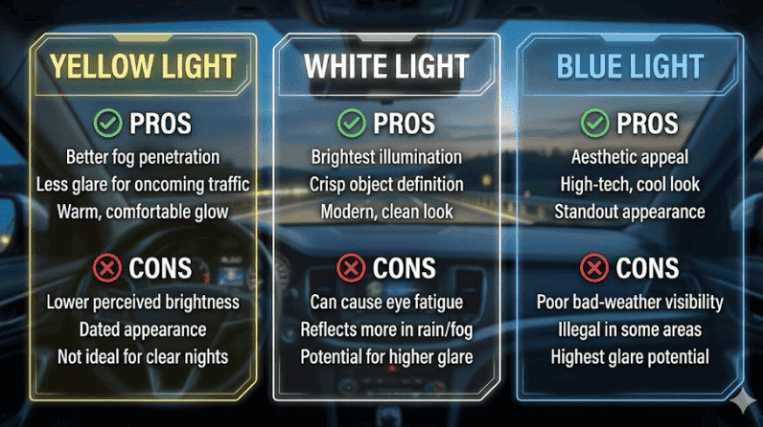
1. Yellow Fog Lights
Pros:
- Yellow light has an optimal wavelength that allows it to cut through fog effectively, improving overall visibility.
- It improves how far ahead a driver can see, making driving safer.
- The unique hue of yellow can help maintain driver focus in poor visibility conditions.
- Yellow fog lights make your vehicle stand out, increasing its visibility to other road users, including drivers and pedestrians.
- The warm, golden tones of yellow light can promote joy and happiness. This can have a positive effect on a driver’s mood and concentration levels.
Cons:
- In heavy rainfall, yellow fog lights might produce a glare similar to blue lights, complicating the task of distinguishing objects on the road.
- This glare can reduce the effectiveness of yellow fog lights in improving visibility in poor weather conditions.
2. White Fog Lights
Pros:
- White fog light produces exceptional illumination that penetrates dark spots more efficiently, enhancing the ability to identify potential hazards.
- It is highly adaptable for everyday use, blending well with the aesthetic of most vehicles and adding to the overall design.
- White lights offer the ability to distinguish objects with greater clarity without any color tint altering the perception.
- It provides bright illumination, typically between 5000 and 6000 Kelvin, and is ideal for many driving conditions.
Cons:
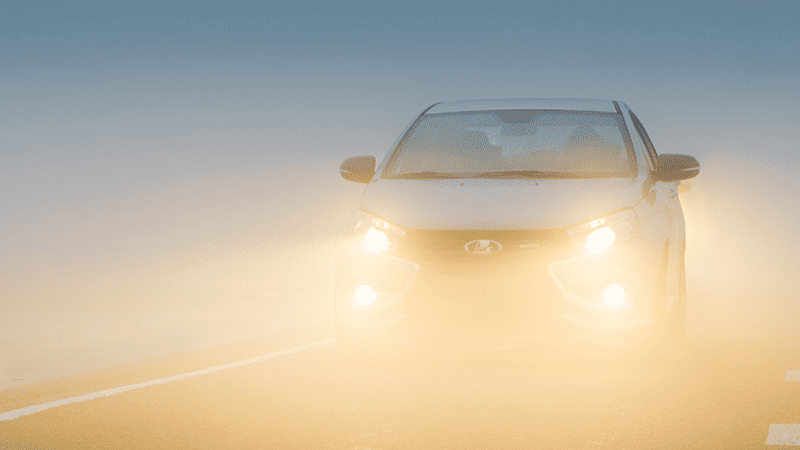
- The high brightness can sometimes be overwhelming in fog, rain, or snow because white light tends to scatter less.
- Due to the shorter wavelengths, white fog lights are more likely to cause refracted or bounced-back light. This can result in glare, particularly in foggy conditions, as the light reflects off water particles in the air.
- The high level of brightness can lead to eye strain. This can make prolonged driving under such conditions more challenging.
3. Blue Fog Lights
Pros:
- Blue fog lights give the vehicle a modern, aesthetic appearance, appealing to drivers who prioritize style over functionality.
- The distinct appearance of blue light can make your vehicle more noticeable in traffic, potentially improving road safety.
- Blue lights can significantly reduce the appearance of shadows and contrast, offering a clearer view of the road ahead.
Cons:
- Blue fog lights may result in citations and fines due to not being legal for road use in most countries.
- They can be mistaken for law enforcement vehicles, leading to potential confusion among other road users.
How to Choose the Right Color for Your Needs
Picking the right color for your fog lights really comes down to where you spend most of your time driving and, of course, what look you’re going for.
1. The Pro’s Choice: Yellow or Amber
Let’s be honest—yellow or amber fog lights are widely seen as the “gold standard.” They’re easily the best pick for pretty much any tough driving situation.
If you’ve ever driven through a place like the Pacific Northwest, you know how thick that fog can get. Yellow lights cut right through the soup, helping you see the road clearly so you can actually enjoy the drive instead of white-knuckling the steering wheel.
2. The City Slicker: White LED Fog Lights
If you’re mostly driving in the city where heavy fog is a rare sight, white LED fog lights might actually be the smarter move for you.
They offer that crisp, super-bright light that makes everything pop.
Think about those dimly lit side streets or dark backroads. The extra punch from white LEDs makes it so much easier to spot a pedestrian stepping off a curb or a piece of debris in the road before it becomes a problem.
3. The Stylist: Blue Fog Lights
Blue fog lights definitely grab attention. They give your car that modern, high-tech vibe and look incredibly sharp when the skies are clear.
While they look cool, they aren’t exactly “workhorses” in actual fog. Between potential legal headaches and the fact that they just don’t cut through mist very well, they aren’t the most practical choice.
But hey, if you prioritize looks or live somewhere that’s clear year-round, blue lights look great. They’re a perfect match for off-road rigs or show cars used in dry conditions where you can show off that sleek style without worrying about the weather.
Conclusion
If you face heavy mist, choose 3000K yellow bulbs for maximum safety. For clear city driving, upgrade to 6000K white LEDs to achieve the sharpest road clarity and modern style.
Avoid buying the wrong size by using our Fog Light Match Tool. Enter your vehicle model to find compatible bulbs that fit your specific front bumper without any guesswork.
Ready to start? Check out our 5-Minute Installation Guide to learn how to swap your factory bulbs for high-performance LEDs without needing a professional mechanic.
Can’t Find Quality Fog Lights? Visit Carlightvision Today!
Ready to enhance your driving experience with the perfect fog lights? Look no further! At Carlightvision, we offer an exceptional selection of high-quality fog lights tailored to your needs.
We have been in the market since 2008 and have fulfilled the global demand for custom automotive headlights at affordable wholesale prices. Contact us to fulfill your car light demands now!