If you are a BMW F32 4 Series owner, you might be wondering whether to stick to Halogen or upgrade to Xenons, LEDs, or even aftermarket headlights without running into errors, condensation, or adaptive failures.
In this guide, you will see how each OEM option stacks up against the others, the most common issues to be on the lookout for, and error-free upgrade paths for brighter lighting.
How to Identify Which Headlights Your F32 Has
Before choosing any headlight, you should decode exactly which type of headlight can be fitted in your car. There are three relatively simple methods to check:
1. Check via VIN
The easiest and quickest method of confirming your headlight type is by checking your VIN. When you input that VIN into a BMW VIN decoder, check for option codes such as: 522 (Xenon), 524 (Adaptive Headlights), or 552 (Full LED).
If none of those codes appear on your list of fittings, then most likely, your F32 came with the standard halogen lamps.
2. Checking by Single Headlight Design
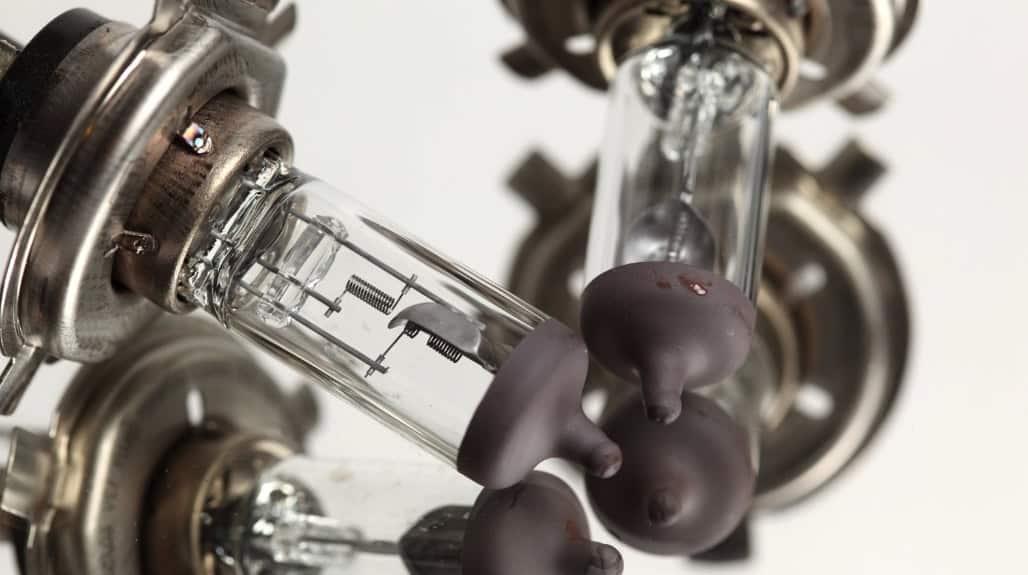
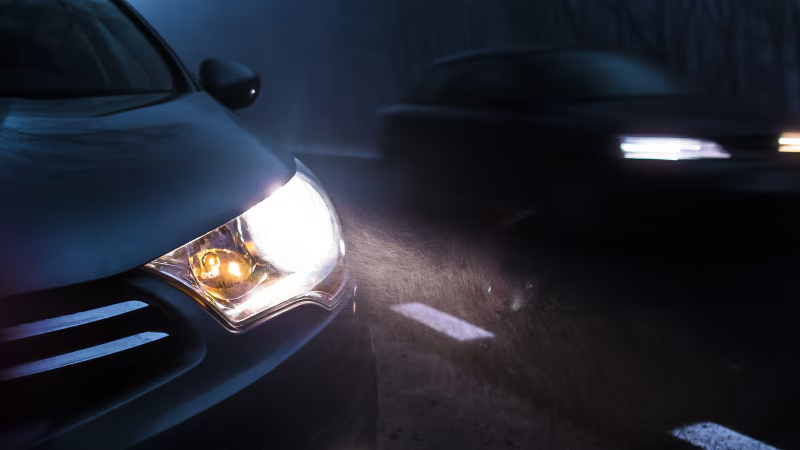
Headlight types can also be expressed through a close and careful examination of the design. Halogen units have simple reflector bowls without a projector lens, and they generate a warm yellowish beam.
Take Xenon or Bi-Xenon, for example: they possess a single big projector lens with BMW’s signature halo inserts, termed fiber-optic corona rings.
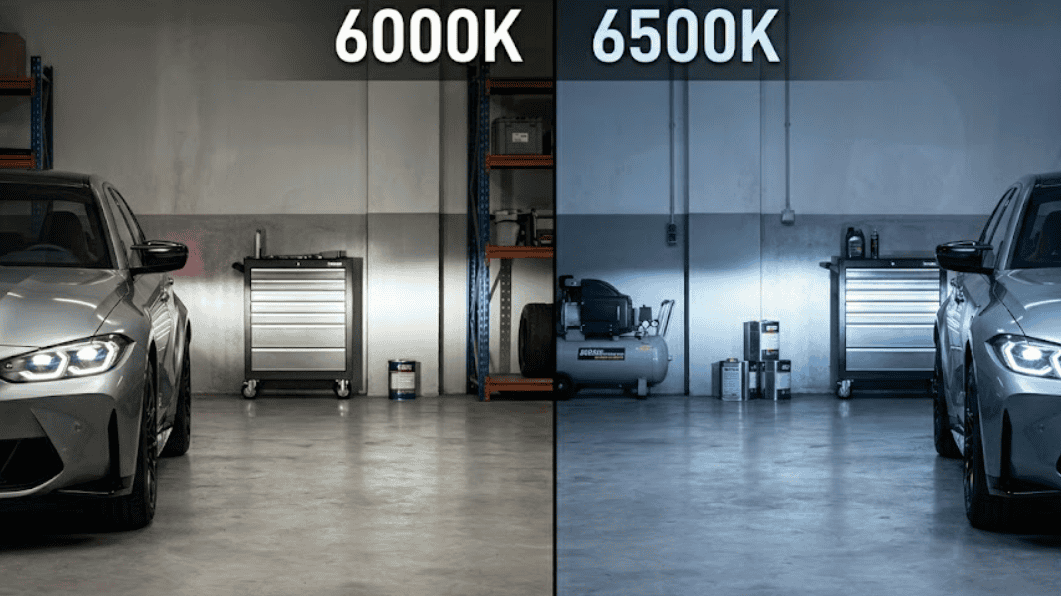
Full LED type looks sharper and more modern, featuring squared-off DRL shapes and multiple LED elements that produce a bright, clear white light.
3. Model-Year Clue
This would also be a way to narrow it down. Early F32 models from 2013-2014 were typically shipped with halogen or Bi-Xenon setups. From 2014-2016, they were fitted with Xenon and early LED options, depending on trim level.
By LCI years from 2016-2019, Full LED lights were becoming more common. However, halogen and Xenon versions were still around for certain markets or lower-spec variants.
Aftermarket and Upgrade Headlights
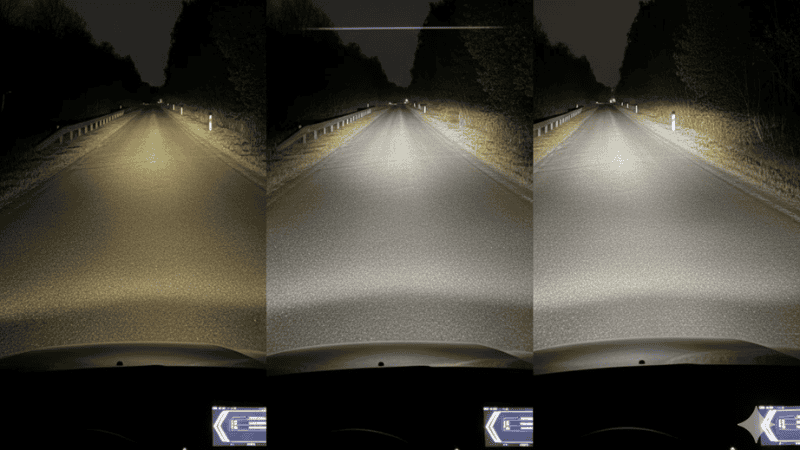
OEM lights are great, but a lot of F32 owners just want a more original product that allows better vision at night, enhancing the lighting package of their vehicle, which can help in any encountered accidents. That’s where the aftermarket comes in!
1. Plug & Play LED Upgrade Kits
There are perfect-fit LED headlight kits with useful content, a suitable product made exclusively for 2012–2019 F32 models. These kits plug right into the current harness, so you usually don’t have to cut or splice wires.
They come with built-in drivers and super-bright color DRLs, which meet high expectations for nighttime visibility. Therefore, LED headlights boost nighttime visibility compared to the tired old xenons and give the car a much more modern look.
2. Laser Look LED Headlamps
Some upgrades imitate the “BMW Laser Look.” These lights use very sharp, straight DRL bars due to optical beam refraction to make the front end look a bit more aggressive and up-to-date.
Some of the brands frequently found in this class would be AKD. They have a fairly good ratio of prices, style, and quality, which is probably one of the main reasons F32 owners are attracted to them.
3. Used OEM Headlight Sets
Used OEM xenon/LED headlights from trusted vendors could also be another possible option, which is often cheaper and compatible than going straight to BMW for a new unit.
OEM used lights come in handy in case of accidents, while replacing any cracked or fogged headlights, or during an OEM retrofit. Always check thoroughly before buying for cracks, broken mounting tabs, or signs of moisture, because they affect the lighting.
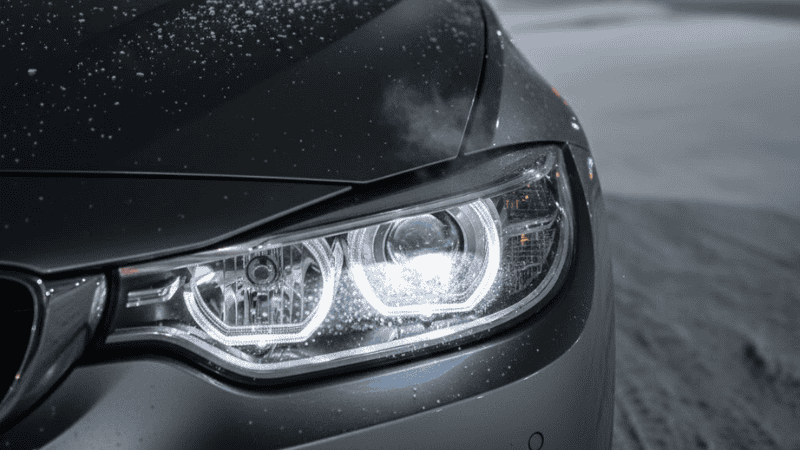
Quick Comparison: Halogen vs. Xenon vs. LED for the BMW F32
| Headlight Type | Years | Pros | Cons | Best For |
|---|---|---|---|---|
| Halogen | 2013–2014 | Cheap | Very dim | Budget owners |
| Xenon (Bi-xenon) | 2013–2016 | Bright, proven | Slow start-up | Daily driving |
| Full LED | 2014–2019 | Sharp beam, modern DRL | Expensive modules | High-end looks |
| Aftermarket LED | All | Modern DRL, plug-and-play | Module errors possible | Style + visibility |
Common Problems & Known Issues
BMW F32 headlights perform quite well under normal conditions, but they come with certain, constantly occurring problems. If you already know of them, then you save yourself a lot of time and money.
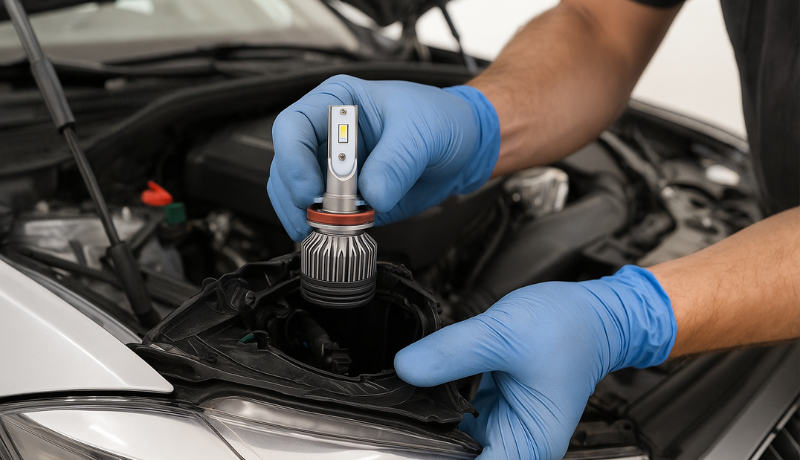
Adaptive Module Failure
The adaptive module in F32 headlights may freeze or misbehave in cold weather, leading to claims of malfunction from users. An error message warning might come on in the dashboard while the light pattern is normal.
Sometimes, it clears after warming the car in the garage due to thermal stabilization. The module has to be replaced in some cases to clear it.
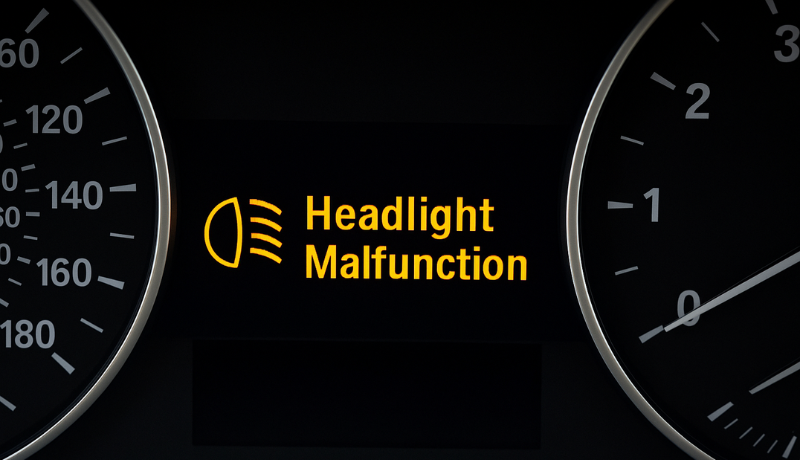
CCM Error, / “Headlight Malfunction.”
According to reports from users, the majority say that their LED headlight bulbs work perfectly, but there is still a fault in the dashboard.
The most common cause is usually a malfunction of the TMS module or some trivial wiring issue. Many times, clearing the fault code makes the warning go away for months without replacing parts.
Water Condensation / Moisture Build-Up
It is very common to build up fog inside the F32 headlights. It is seen with the OEM and aftermarket lighting as well. Damaged seals, incoherent resealing after a retrofit, and failed vent membranes are the major reasons for water in the headlights.
Just expect light misting on the inside of the lens: anything that has water droplets or pooling moisture should be treated as a problem.
TMS Module Price
Most owners are shocked at the price of the TMS module. The replacement cost has a larger share of the overall price due to microelectronic component density.
This means that if the module fails once again, the actual cause at the root has not been addressed. Poor seals, loose wiring, or excessive vibrations cause the lifespan of these electronics to be shortened.
Retrofit & Compatibility Considerations
This is where it gets serious and a bit tricky.
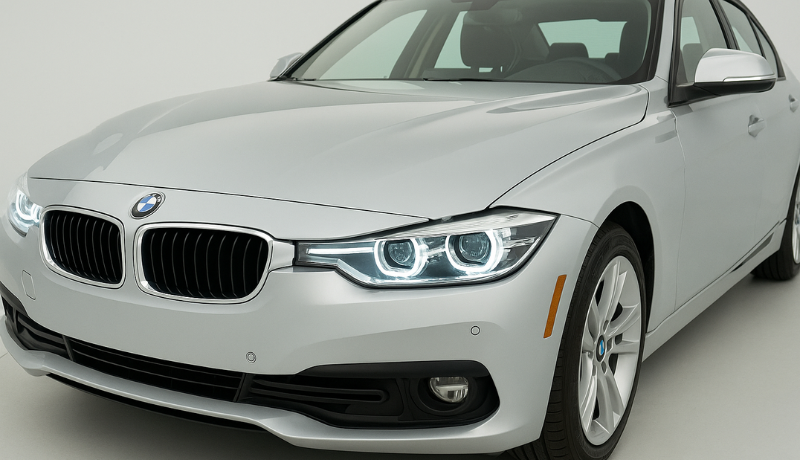
1. Convert F32 Headlight to F30 or Other Models
A few diehard owners did a complete swap front-end and the entire F32 front treatment on their F30 sedans, showcasing the appeal of this product in creating a distinctive look and sharing reviews. It looks awesome when these swaps work out, so it’s definitely not plug-and-play.
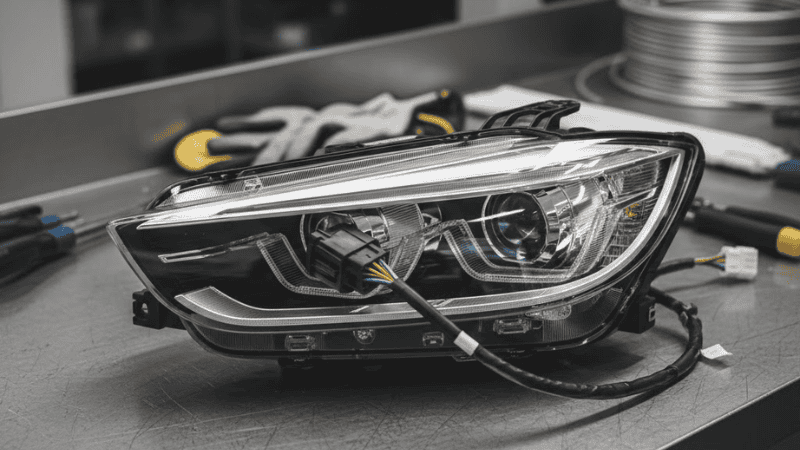
More often than not, it involves the following: new wiring harnesses, custom brackets, ESYS/ISTA coding, and a new FRM/BDC module. Yes, it’s totally tricky, but worth it.
2. Coding & ECU Adjustments
Some form of coding will be required for any upgrade to LEDs, an adaptive retrofit, or a xenon-to-LED conversion. These will include:
- Enabling LED parameters
- Clearing adaptive movement errors
- Aligning auto-leveling
3. Connector Variants (6-pin, 8-pin, 9-pin)
Because your F32 could have a different connector depending on the electrical interface compatibility and factory lighting package, always check your connector type before purchasing headlights, OEM or aftermarket.
Nothing stings as much as having a perfectly good-looking headlight shop online that simply can’t be connected to the car.
4. Lens Sealing Matters
Especially after opening up for projector headlight bulbs or DRL upgrades. A resealing that is done badly will lead to the headlight fogging once again, no matter how many desiccant packs are stuffed into it.
Installation Guide & Best Practices
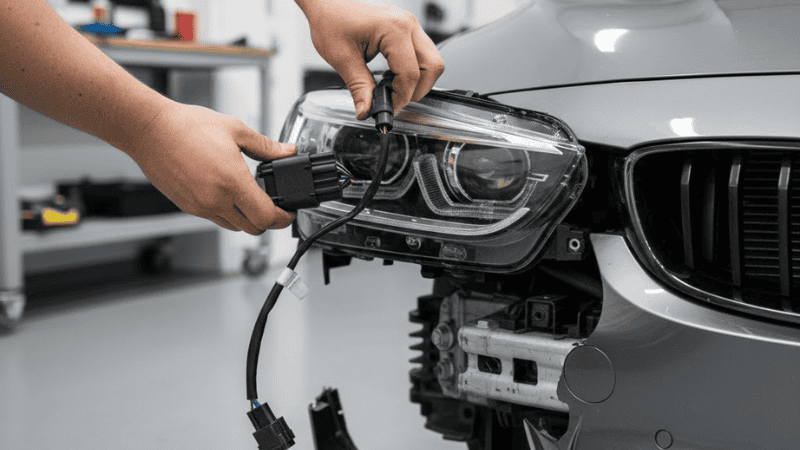
Installing an LED headlight is easy. You can refer to videos or images. Here is the step-by-step guide for installing the LED headlights:
Step-by-Step Basics
- Open your hood, keep it on stand, and remove the upper trim clips
- Loosen Bumper Bolts (Don’t fully remove bumper, just loosen the sides)
- Disconnect the headlight harness
- Unbolt the light housing
- Installs and loads new
- Reconnect everything. Covered, tighten, and test
Proper Aim is Very Important
Always make sure to aim and adjust your LED headlights properly. If your beams sit too high or too low, you will blind people or barely see the road. Some F32s set off an aiming error if the adaptive module jams, and that’s known as a TSB mention.
Reprogramming & Calibration
Post installation, especially adaptive LED reset FRM/BDC parameters, L/R sweep check, leveling check, and isolation of CCM fault codes, since modern headlights have a delivery of half-hardware and half-software.
Conclusion
Whether you are looking for OEM-perfect LEDs or aggression-laden aftermarket DRLs, quality parts coupled with proper coding remain the key to success. At the end of the day, good lighting is not only appreciated on the road; it also changes the whole personality of your 4 Series.
Make Your Headlights Speak with CarLightVision
Are you planning to make a serious change in lighting for your BMW F32?
Start by matching up the correct part numbers and wiring so that your new headlights fit perfectly and run error-free.
At CarLightVision, we will check your VIN for a quick compatibility check and choose quality. Contact us and let your BMW shine just the way it was meant to.
FAQs
Q1: What does it mean if my F32 reads “adaptive headlight malfunction”?
Yes, in most cases, the adaptive module (TMS) is going bad, especially in cold weather. The problem can also be wiring or sensor-related.
Q2: Do I need to code LED headlights after installation?
Most of the time, yes. Even “plug-and-play” sets usually result in a DRL error or leveling error.
Q3: Is it safe to buy second-hand OEM headlights?
Yes, as long as they are checked for cracks and moisture ingress. Avoid units that are missing vent caps or that have broken mounting tabs.
Q4: Will condensation hurt my headlights?
Light fogging won’t. Water droplets visible to the naked eye will, especially noticeable in the case of LEDs. Fix seals ASAP.
Q5: Is it worth a complete F32 frontend retrofit?
If you love the look, then wiring/coding is not an issue. If you want simple, maybe stick to OEM-style plug-ins.
Q6: Which F32 headlights are plug-and-play?
Most OEM xenon and OEM LED headlights for the F32 are plug-and-play, and many aftermarket LED assemblies are also direct-fit as long as they match your connector type. In most cases, you can remove the old housing, plug in the new one, and everything works without wiring changes.
Q7: Do LED upgrades cause errors?
LED upgrades can trigger warnings like DRL errors or “adaptive malfunction,” mainly because the car detects different voltage loads. These issues are normal and usually disappear with a CANBUS-ready LED headlight or a quick coding adjustment.
Q8: Can I convert halogen to LED legally?
Legality depends on your region, but in general, LED bulbs installed inside halogen housings are not considered street-legal. If you want a legal upgrade, it’s better to use a complete LED headlight assembly that already has DOT or E-mark certification.
Q9: What coding is needed for an LED retrofit?
When upgrading to LED headlights, you often need to enable the LED settings in the car’s system, turn off halogen bulb checks, and reset any DRL or leveling errors. This can be done quickly using tools like BimmerCode, ISTA, or ESYS.
Q10: How do I stop BMW headlights from fogging?
Light misting inside the headlight is normal, but if you see water droplets, it usually means the seal or vent cap has failed. Resealing the lens, checking the vents, or drying the housing with warm air normally solves it, and persistent moisture often means the headlight needs a proper reseal or replacement.