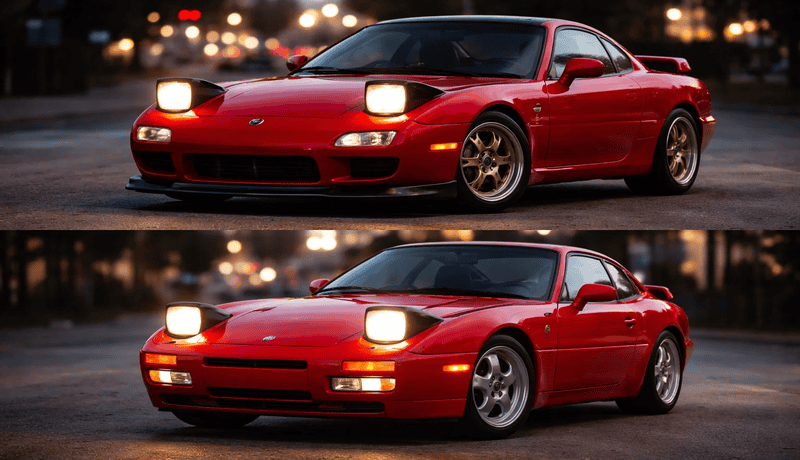
The iconic pop-up headlights were common in 1980s-1990s sports cars like the Mazda RX-7 and Porsche 944. The last mass-produced examples appeared on the 2004 Corvette C5 and Lotus Esprit.
Changes in vehicle styles do not just disappear. The real causes are safety regulations, mechanical risks, and advances in LED and HID technology.
The Death of Pop-Ups: Safety, Regulations & Mechanical Risks
Pop-up headlights are a retractable lighting system. The headlamp units remain hidden inside the vehicle’s bodywork when not in use. It rises upward through a mechanical or motor-driven mechanism when activated. Some pop-ups are completely manual.
This design relies on moving components such as electric motors, gears, linkages, and pivot arms. These components position the lights at the legally required height during nighttime driving. Flip-up headlights were a hallmark of sports car design in the past. But safety concerns and mechanical complexity made them increasingly impractical.
1. Pedestrian & Regulatory Safety – Why Pop-Ups Became a Liability
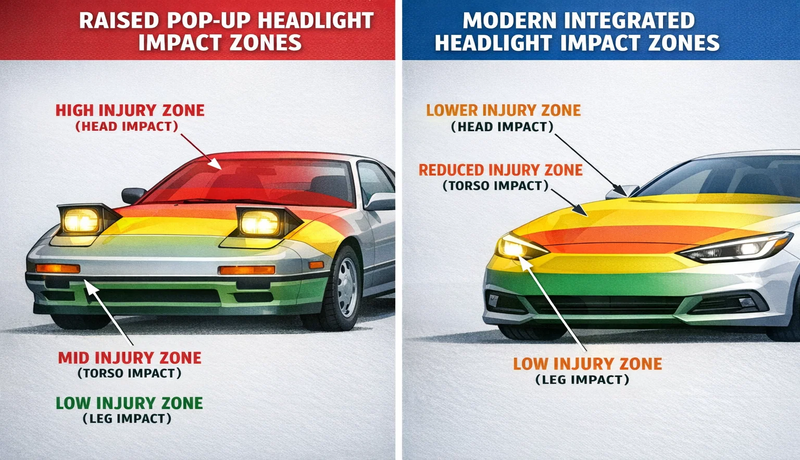
Pop-up lights look visually striking, but they also create real safety concerns. They gave vehicles a quirky charm. But when raised, these flip lights create hard, protruding edges. It could seriously injure pedestrians in a collision.
Pedestrian safety concerns changed headlight laws. European ECE Regulation 48 and U.S. NHTSA pedestrian safety regulations highlighted the dangers of raised components. Beyond pedestrian safety, open pop-up headlights also had practical drawbacks for aerodynamics.
When deployed, they increased frontal drag, which reduces fuel efficiency. It also compromises the low-profile design that sports cars need. For example, studies on 1980s flip-up headlight cars showed measurable drag penalties.
These safety and efficiency penalties became unacceptable over time. Even sleek, low-profile cars like the Mazda RX-7 with pop-up headlights or the Porsche 944 could not justify them. As a result, manufacturers worldwide gradually abandoned pop-up headlights.
Safety regulations were tightening, and liability risks were increasing. So, meeting global standards with mechanical flip-up headlights became increasingly impractical. Cars such as the 2004 Corvette C5 and the Lotus Esprit represent some of the last production models. They were built before regulations and safety priorities finally phased out the iconic feature. Today, hidden headlamps are primarily found on classic cars.
2. Mechanical Failures – Why Pop-Ups Were Risky
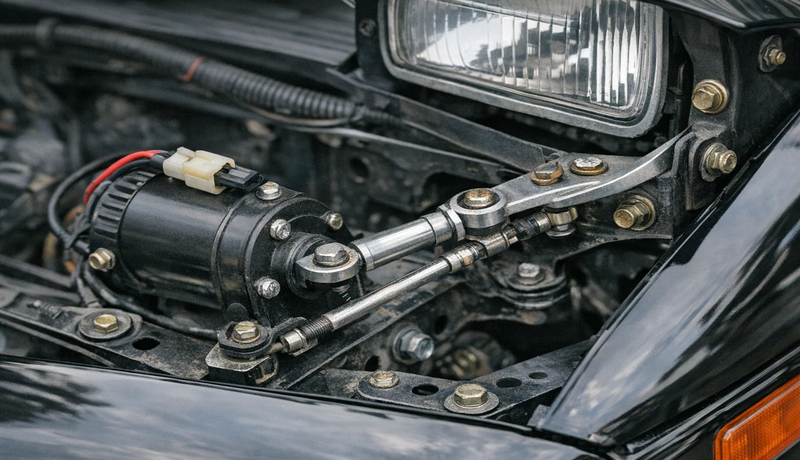
Pop-up headlights relied on motors, gears, and linkages to extend and retract smoothly. Wiring connects the lights to the car system. Over time, these mechanisms failed. In result, the headlights remain partially open or stuck down. Electrical errors sometimes caused headlights to be “half-open.” It reduces visibility and creates hazards during night driving.
A minor misalignment could change the beam pattern. The car became non-compliant with modern standards. Reliability concerns were a key reason manufacturers phased out pop-up headlights.
Owners of Miata pop-up headlights often faced frequent maintenance issues. It includes broken motors, stripped gears, or failed linkages. The same problems appeared in Toyota MR2 flip lights and Porsche pop-up headlight cars.
Ultimately, manufacturers prioritized compliance, safety, and durability over nostalgia. Integrated, fixed headlights eliminated the need for moving parts. It reduced failure points and provided consistent performance.
The shift to LEDs and HIDs further rendered mechanical flip-ups unnecessary. The modern light sources achieve superior illumination without motors or linkages.
3. Why Pop-Ups Made Sense Historically
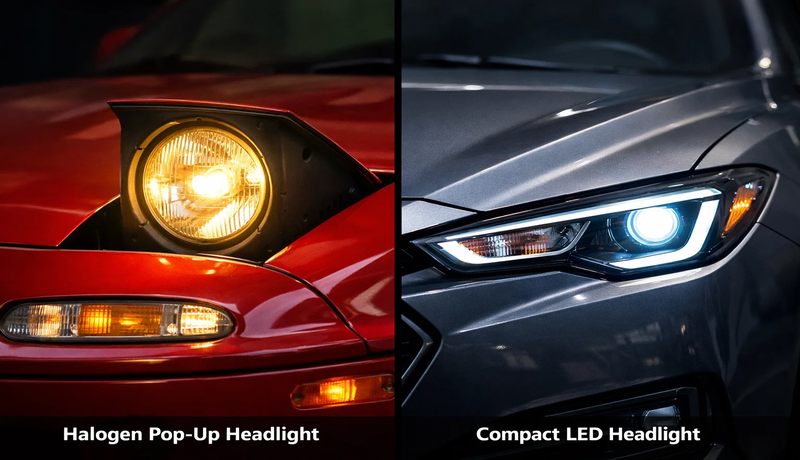
Because of halogen bulbs, headlights were bulky and tall. But the sports car needed low, aerodynamic hood lines. Pop-up lights solve this with a sleek body that meets lighting regulations. For example, early flip lights cars like the Mazda Miata, used this design to maintain a sporty profile. Pop-up headlights allowed the front end to remain low and streamlined.
However, the advent of compact, bright LED and HID modules made the original purpose of pop-ups obsolete. Modern light sources fit under low hoods without moving parts. It provides superior lighting performance and increased reliability.
LEDs fully comply with modern safety standards. So there was no practical reason to continue using pop-up mechanisms.
Technological Shift & Maintenance Hurdles
Advancements in automotive lighting technology made pop-up headlights unnecessary. Modern HID and LED technology provide smaller, brighter, and more flexible headlight modules. The engineers can create low aerodynamic profile hoods without any moving parts.
The original problem that pop-ups solved was bulky bulbs that didn’t fit under sleek hoods. This was eliminated by modern compact light sources. Modern vehicles retain the hidden headlight look through Phantom Grilles and LED panels. Mechanical pop-up mechanisms are no longer used.
LED & HID Technology
HID and LED technology revolutionized automotive lighting. With a compact size, they are brighter and increase beam control.
Cars like the Mazda Miata, pop-up headlights, and Porsche 944 flip lights relied on mechanical motion to expose halogen bulbs. But LEDs can achieve the same illumination with a flat integrated design.
Smaller dimensions eliminate the need for complicated motorized mechanisms. It solves deployment failures, electrical issues, and maintenance headaches.
Why Manufacturers Abandoned Complex Mechanisms
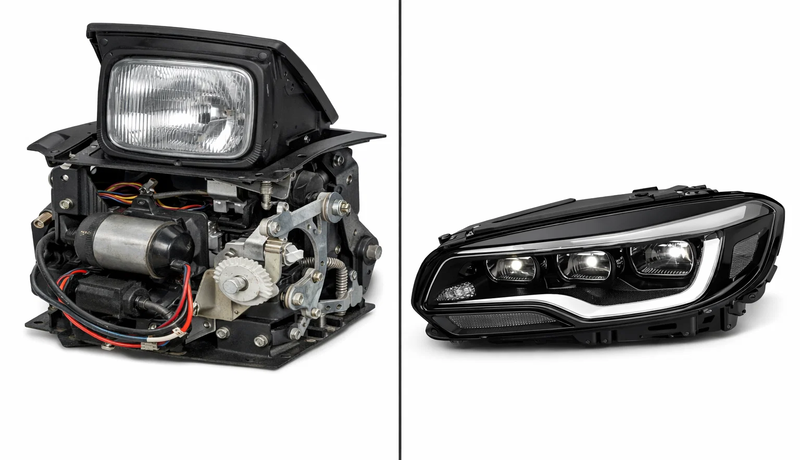
Beyond technological improvements, mechanical flip-ups were costly to produce and maintain. Each assembly required precise motors, linkages, wiring, and seals to function correctly. Production costs rose, and even small misalignments could lead to deployment failures.
Cars like the Toyota MR2 and Chevrolet Corvette C5 mostly faced warranty claims. Most issues came from broken mechanisms, half-open headlights, or electrical failures. These failures cause safety hazards and expensive maintenance headaches.
Compliance with modern regulations was another factor. When global safety standards tightened, manufacturers risked redesigning systems. This is the only way to meet pedestrian safety, crash tests, and lighting performance requirements.
LED and HID modules are compact and durable compared to halogens. They can easily be integrated into low-profile hoods. They are cost-effective and reliable.
The integrated lighting system also improved manufacturing efficiency. Automakers could streamline assembly lines and produce fewer moving parts. The maintenance costs become lower without compromising style or functionality.
Flip-up headlight cars were expensive to produce and maintain. Motors, linkage, and wiring increased assembly complexity. It causes higher production costs and more warranty claims.
Regulatory compliance risked additional redesigns for new safety standards. The integrated headlights in new cars using LEDs or HIDs are reliable and need less maintenance.
Legal Status Today: Are Pop-Up Headlights Illegal?
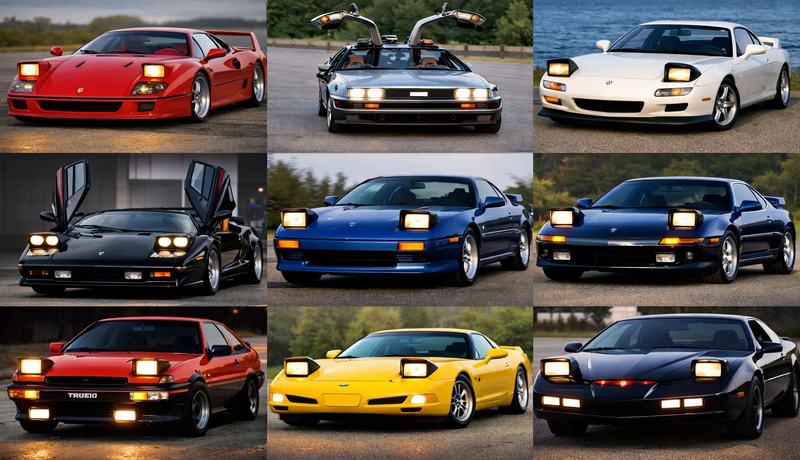
Despite risks, pop-up headlights are not universally illegal. Classic iconic cars like the Mazda Miata, Toyota pop-up headlights, and the Porsche with hidden headlamps can remain road-legal if they meet modern lighting and safety standards.
The truth is that older designs failed current ECE or NHTSA regulations when installed on new vehicles. Today, legality depends on compliance. Headlights must illuminate the road effectively. They should retract safely and not pose pedestrian hazards.
Mechanical pop-ups are outdated. But they aren’t completely banned outright. Owners of classic pop-up headlight cars can drive, restore, or even retrofit LED or HID modules. This way, they can meet current standards without breaking the law.
Classic Cars & Modifications
Hidden headlights are fun for car enthusiasts. Classic models like the Mazda RX-7 with pop-up headlights, the Toyota MR2 with pop-up headlights, and the Chevrolet Corvette C5 are still legal on roads today.
However, maintaining the original mechanisms can be challenging. Motors, gears, and linkages wear out over time, and repairs are mostly expensive. That’s why upgrading is more practical than restoring the complex mechanical system.
Replace halogen bulbs with modern LED or HID modules. They provide brighter and more reliable lighting. Retrofits are technically possible. But they are feasible on vehicles originally designed for flip-up headlights. This is due to legal and mechanical requirements.
The Legacy & Future of Pop-Up Headlights
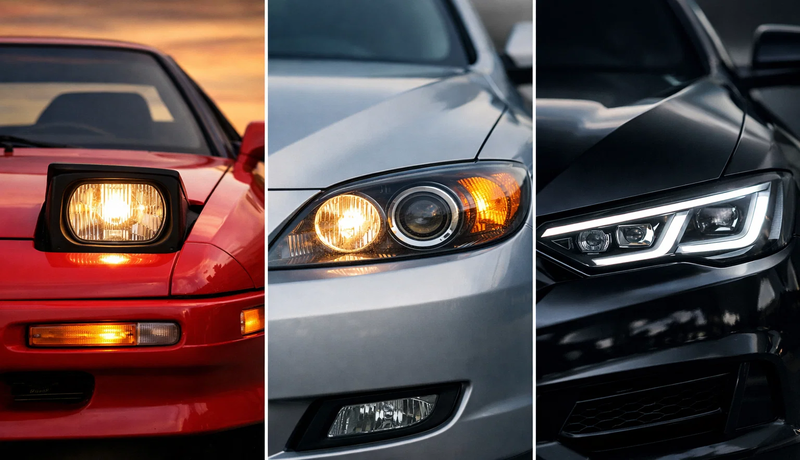
In automotive history, hidden headlamps hold a special legacy. Representing the bold and playful design of the 1980s–1990s. The iconic models like the Mazda Miata and the Porsche feature style and engineering ingenuity. It gives rise to flip-up headlight cars and cars with flippy lights.
Modern vehicles do not use mechanical pop-ups. The concept of hidden or retractable lighting survives in a more technologically advanced form. In the last few years, luxury cars have featured sleek LED modules and retractable designs.
Technically, pop-up headlights could return. But advances in safety, aerodynamics, and lighting technology make a full revival unlikely. As one automotive expert put it:
“Pop-up headlights didn’t disappear because they were bad; they disappeared because modern lighting made them unnecessary.”
Final Thoughts – Lessons from Pop-Up Headlights
Pop-up headlights have vanished, but their legacy lives on in automotive design and nostalgia. Modern headlights prioritize safety, reliability, and efficiency. So nowadays, complex mechanisms are unnecessary. As LED modules shrink, designers now have more freedom to design.
Upgrade Your Classic Car’s Lighting Today
Maintaining pop-up headlights can be tricky, but modern LED upgrades are brighter, safer, and easier to install. For classic cars like the Mazda Miata, Porsche, or modern vehicles, CarlightVision offers OEM and ODM LED solutions. Request a free consultation today.